Today is not that day: Alzheimer’s hurts, especially when the patient is self-aware
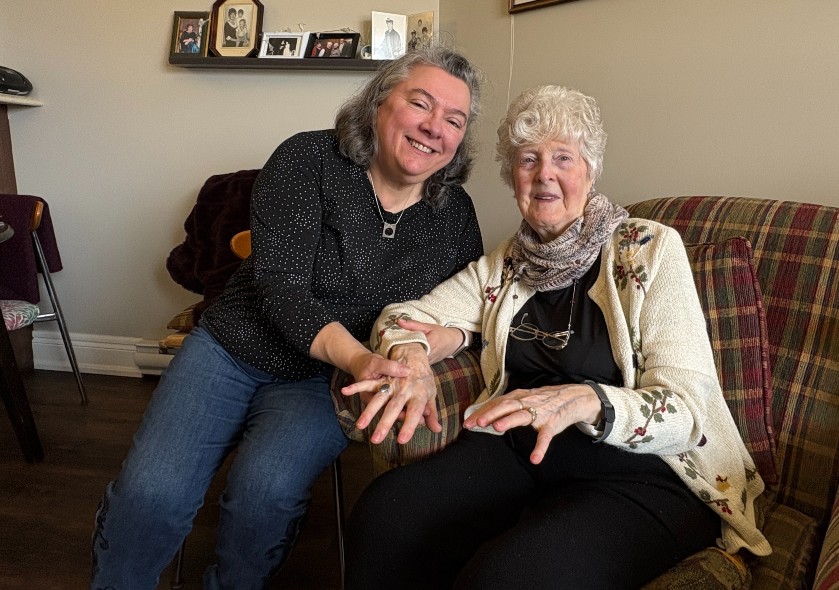
Most Saturday mornings, we head over to Mom’s for a visit, with a purpose. This is the time when Martha, my wife, gives my mother, Sheila Gushue, a manicure complete with polish.
It’s relaxed, it’s focused, it’s a spa moment. We put on some quiet music, and Martha buffs and polishes Mom’s nails. She loves it, extending her hands and relaxing in a lovely sensory experience.
It’s a nice moment each week for Martha, too. She lost her beloved mom in 2023, and finds this weekly ritual a way to feel daughterly, as it were, by doing something kind for the mom figure in her life.
I often tag along, but I haven’t always been there.
Well over a year ago, the two of them shared a conversation that stands out as an insight for me into Mom’s experiences with Alzheimer’s disease.
On one visit, Martha arrived to find Mom feeling unsettled. Martha asked my mom what was wrong.
“What if I look in the mirror and forget my own name?” What if, she asked, she forgot her son’s name, her daughter’s name, Martha’s name …. everyone?
Martha has always been a quick thinker, and I have to say she had a good response on the spot.
“Well, Sheila, that day may come … but today is not that day.”
It did the trick. Mom’s shoulders relaxed a bit, and she nodded. “That’s right,” she said. There’s nothing, she added, that she could do about it now.
They sat down, held hands, and got on with her nails.
I’ve learned a lot of words and concepts about Alzheimer’s, memory care and related subjects since Mom was diagnosed more than two years ago.
One of those words is “anosognosia,” which is what happens when a person with Alzheimer’s does not know or realize that they have a cognitive problem, or specifically a cognitive deficit.
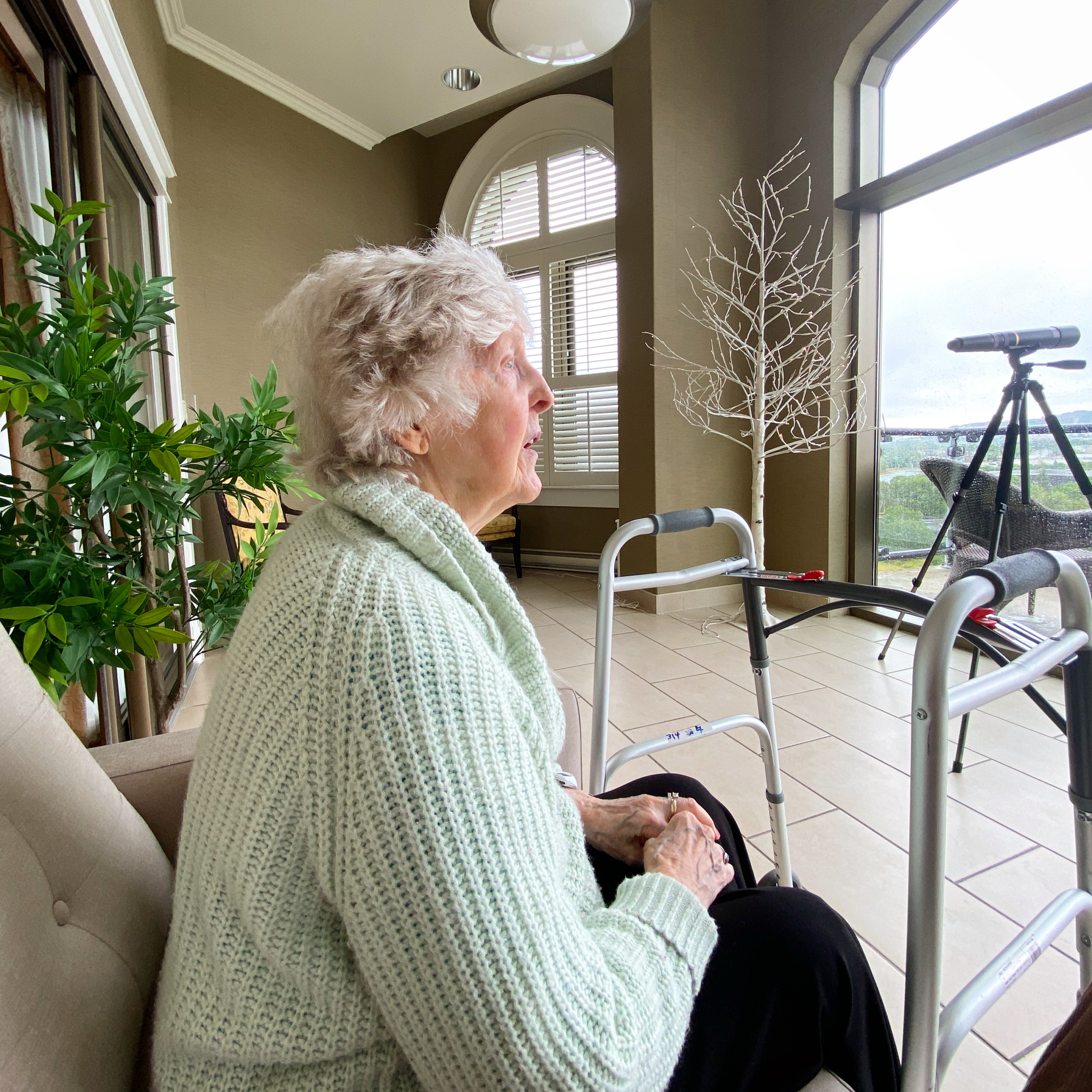
What Mom displayed in that conversation with my wife is not that. Far from it.
Indeed, Mom was very aware early on about her condition and the state of her brain.
Yes, like many people, she had moments of denial — a highly common factor in the periods before, during and immediately after a diagnosis, I have learned. For Mom, it was an unease during the testing period. When she met the clinician who did a lengthy assessment leading to the formal diagnosis we were all expecting, I think Mom was still holding out hope there was another explanation.
That said, Mom accepted the diagnosis and understood that there were good reasons to explain why she was struggling with language, for instance.
Mom has said some remarkable things while dealing with the fading of her cognitive powers.
One time, a couple of years ago, she was flustered when she couldn’t recall the details of an earlier conversation.
“Oh, my hippocampus is failing me!” she said, holding her hands up.
I kind of loved this moment in our chat: it reminded me that Mom is well-read and has always had a remarkable vocabulary. It also demonstrated to me that Mom remembered what she had learned about the hippocampus, the part of the brain that works closely with short-term memories.
It’s one of the first targets of the disease.
I have to note, though, that as the months have passed, and the disease has progressed, and Mom’s faculties have diminished, I am much less likely to hear such wonderful phrasing.
That is not easy to think about it, but it’s the truth of this brutal disease.
Bit by bit, I’m losing the qualities that make up my mom. It’s this tragic aspect of Alzheimer’s that can grind you down.
For now, Mom still knows who I am, who all of us are, and, yes, who she is.
That day may come. For now, we’re doing everything we can to make sure her days are happy, content and satisfying.
And even if that day comes, we’ll still hold her hands and do what we can to give her comfort and ease.