Should MUN ever have taken on the GEO Centre?
When the philanthropist and businessman Paul Johnson died in 2015, he left behind a mighty physical legacy, especially in the St. John’s area.
Now, one of his favourite projects is in doubt, as Newfoundland and Labrador’s only university grapples with a financial crisis, declining enrolment and other infrastructure badly in need of repair.
Through the Johnson Family Foundation, Johnson spearheaded a number of projects close to his heart. The Grand Concourse, which upgraded and extended a network of walking trails throughout the city, is one of the most obvious. It’s an amazing thing: you can walk from the most easterly points of Canada’s most easterly city for hours and hours and not repeat a step.
Johnson kept a low public profile during his life. I talked with him only once; when we were introduced earlier that evening (it was at a fundraiser), he was so quiet that it took me a minute or three to clock that I was standing next to the Paul Johnson.
We chatted about one of his passions: history. Not just history, but community heritage. He had spearheaded the Railway Coastal Museum on Water Street West, turning the old railway station into a tourist attraction — albeit one focused on a rail system that ceased to exist in 1988. It’s an interesting place, but the nostalgia of the place is probably lost on younger patrons.
He also pushed for and built the Johnson GEO Centre on Signal Hill, where most of the the facilities are below-ground. Focused on geology, it opened in the early 2000s.
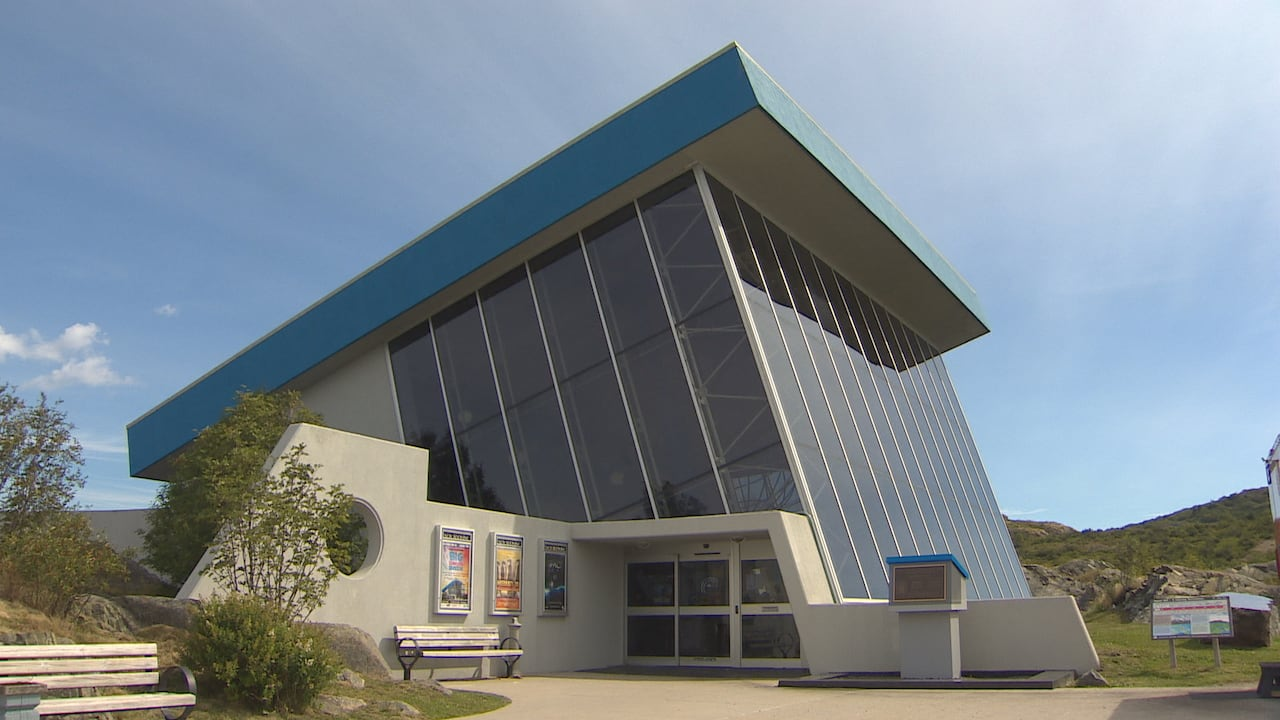
Johnson was remarkable about getting these projects launched, and he was known for being fastidious with details as he expected to see them (rewriting the text of interpretative heritage boards, for instance; the saying about paying the piper and calling the tune comes to mind).
Keeping these legacy projects going, though, is a whole other problem.
More than three years after Johnson’s death, in early 2019, the foundation running the GEO Centre effectively put itself out of business by gifting the centre and adjacent lands to Memorial University. (The Railway Coastal Museum was turned over to the City of St. John’s.)
It was an unusual gift, to say the least. A university news release at the time said “the value of the Johnson GEO Centre and assets is estimated at more than $20 million, which would make it the largest single gift ever received by Memorial University.”
While then-president Gary Kachanoski said in 2019 “the Johnson GEO Centre aligns well with the university’s teaching and learning, research, and public engagement mandate,” that is definitely no longer the view of the institution.
In short, MUN is paring back. And how.
Earlier this week, it announced it was putting several high-profile properties on the block, including the much-regard Harlow campus outside suburban London in the U.K., the Signal Hill Campus (which was created out of the former Battery hotel), the Ingstad Building on Elizabeth Avenue, just west of the main campus, and the Johnson GEO Centre, also on Signal Hill.
A CBC News report on why Memorial University is selling properties:
In a statement, Memorial president Janet Morrison and Board of Regents chair Justin Ladha indicated the decision was about academic priorities in a tight fiscal time. “It is an opportunity for Memorial to right-size its physical footprint and focus on what matters most,” said Morrison, who took over the reins in August and who has not been shy with warnings that cuts were likely. A few months earlier, the university said it needed to deal with a drop of almost $21 million in base funding.
There won’t be a bailout from the provincial government. Premier Tony Wakeham, who took the Tories back to power in the fall, told CBC this week he would “not balance the books of the university on the backs of its students.” A return to a tuition fee freeze is also pending, on government order.
It doesn’t seem like the university is banking on much of a windfall from its real estate sales, including that of the GEO Centre.
“The potential revenue from the sale of each property has not yet been determined and was not the driving force behind this decision,” its statement said. In other words, the savings will come from not paying operating expenses.
To be honest, it never seemed like the GEO Centre was a natural fit for the university, even with the rosy assessment projected almost seven years ago about research and instruction. University folks have told me over the years that the GEO Centre, attractive as it is, never felt like an integral part of the institution.
More to the point, public outreach is definitely not a top priority now at the university. Last summer, MUN eliminated funding for the Harris Centre and the Office of Public Engagement.
In a time when belt-tightening is escalating, not easing, it would be a hard argument to run a museum, especially one that is not on the main campus.
The Johnson Family Foundation itself, incidentally, no longer exists; the Canada Revenue Agency has its final filing records here, and the foundation noted that it wound up its affairs in 2020.
Johnson Insurance, the company that made him wealthy, is no more. In 2023, it and Anthony Insurance came under the umbrella and thus branding of Belairdirect.
More than a decade after Johnson’s death, the future of one of his favourite projects is quite in doubt. As the university’s statement put it: “If a sale or transfer is not completed by December 2026, operations will cease and the building will close.”
Until then, it will be business as usual at the centre, which will be welcoming visitors this year. I’ll definitely aim to stop by for what may well be a final tour.