Snow days: After years of covering them, I now get to just live them
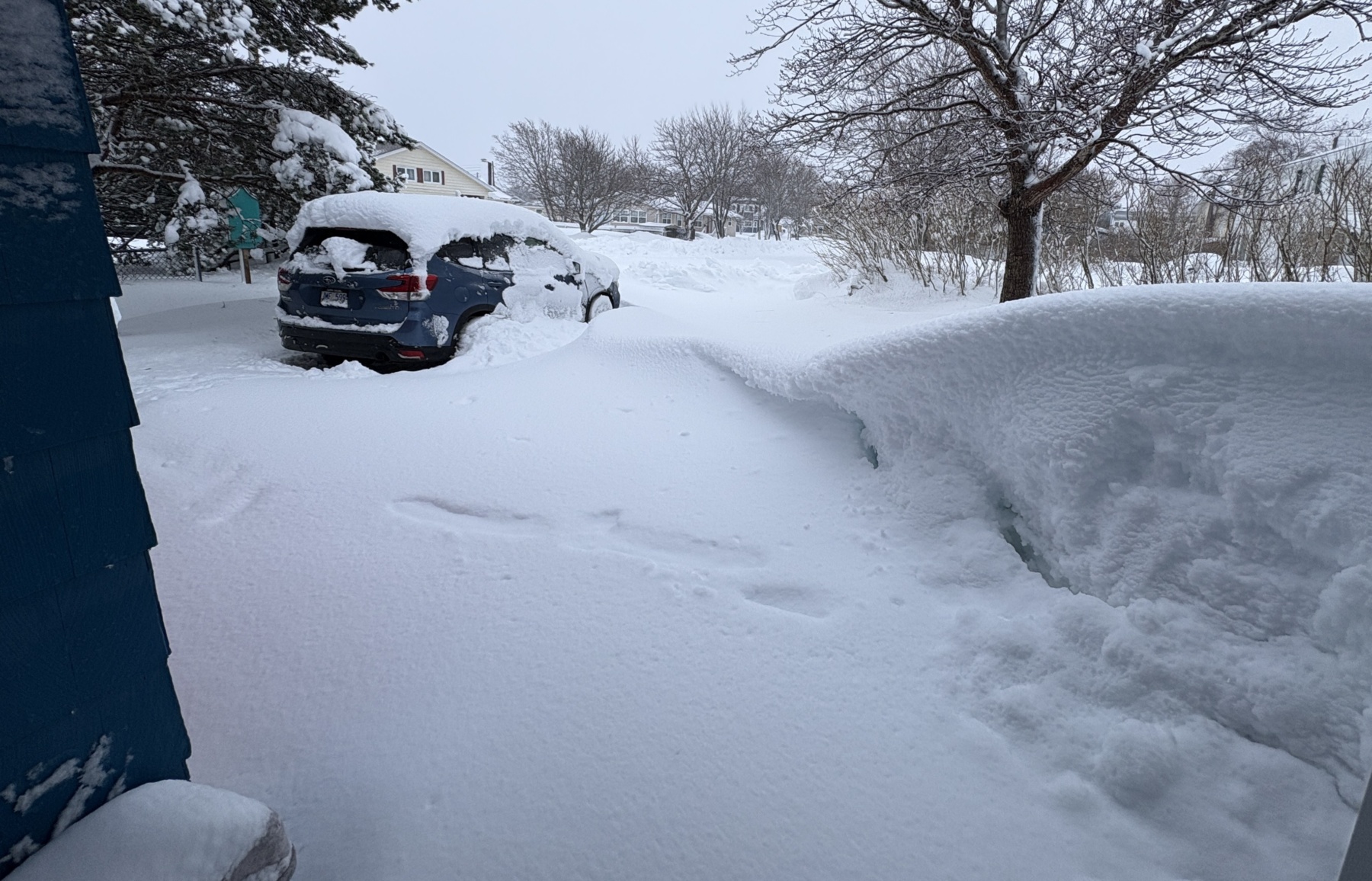
It’s a snow day in St. John’s, and even more so just outside the city, where the snowfall accumulations are really piling up. An odd thing about St. John’s in winter: the closer you are to the sea, and sea level, the less snow you often have landing on your doorstep.
That seems to be the case today. Snow started falling last night, and while the east end of town got about seven or eight centimetres before midnight, Paradise — the angelically named town west of the city — had double that. (For a live look at downtown St. John’s, here’s a webcam view from the top of The Rooms.)
This morning, the snow is really coming down, and there are expectations of about 60 centimetres coming for some areas. Here’s an animation that independent meteorologist Eddie Sheerr shared on Facebook this morning, show six hours of movement of a pretty intense storm.
Electricity has been out for about 3,000 Newfoundland Power customers, the bus service is off today, and most people will be hunkered down at home.
I’m one of them, and this continues to be the first winter in a very long time where I can say I have a “snow day.” (Being retired sometimes feels like every day is a snow day, regardless of the weather.)
In journalism, a snow day is what other people experience, and what we cover. I always went to work, even though that could be challenging. We made it, though. We sometimes set up a driving system with someone assigned to the sturdiest rig to pick people up and then get them home.
When I moved back to St. John’s after a while in Paradise (trust me, I remember quite well how wildly different snowfall out there can be!), I sometimes would walk to work. I tended to have early morning shifts, and there was something surreal and occasionally serene about walking along (sometimes on) the windswept Prince Philip Parkway around 5 in the morning and not seeing another soul.
The idea of course is that someone needs to bring you the news, and here’s the other rub: there often is no news, other than the storm itself. The places journalists tend to go — the courts, the government offices, council chambers — are usually closed by the weather.
In other words, getting to work is one issue, and then getting the work done is quite another.
When the audience’s interest peaks
It gets even more challenging. I voraciously studied audience habits over the years, and had access to a variety of tools to study metrics, in real time and otherwise, of digital engagement.
Here’s something I learned. The audience’s interest in a storm is usually highest *before* it even happens. Forecasts of coming storms? Intense interest, even days out. As soon as the storm hit — or to be even more precise, as soon as school closure announcements went out — audience interest took a dive. Just plummeted.
In other words, while we were slogging to get the story, much of the audience’s attention was elsewhere. Binging Bridgerton, I guess …
The difference is when a storm truly disrupts daily life. When public services are upside down — such as when there is a massive outage, or a state of emergency has been called — the news and especially radio broadcasts become lifelines. I was very proud to be there for that. (At CBC, a “lite” version of the site is available for these situations, and when data can be touchy.)
Most storm days, though, were not that kind of emergency, and often some of the worst (Hurricane Igor, for instance) happen outside of winter.
As envious as I often was of people who would post photos of cosy fireplaces, storm chips or making living-room forts with the kids, I loved the work. Getting through storms is part of the job. There was also a sense of satisfaction in getting home and warming up with a hot meal and family.
For this week, Martha and I had planned to get out of town for a couple of days. We called down those plans as the forecast shaped up, and are looking forward to a March mini-break.
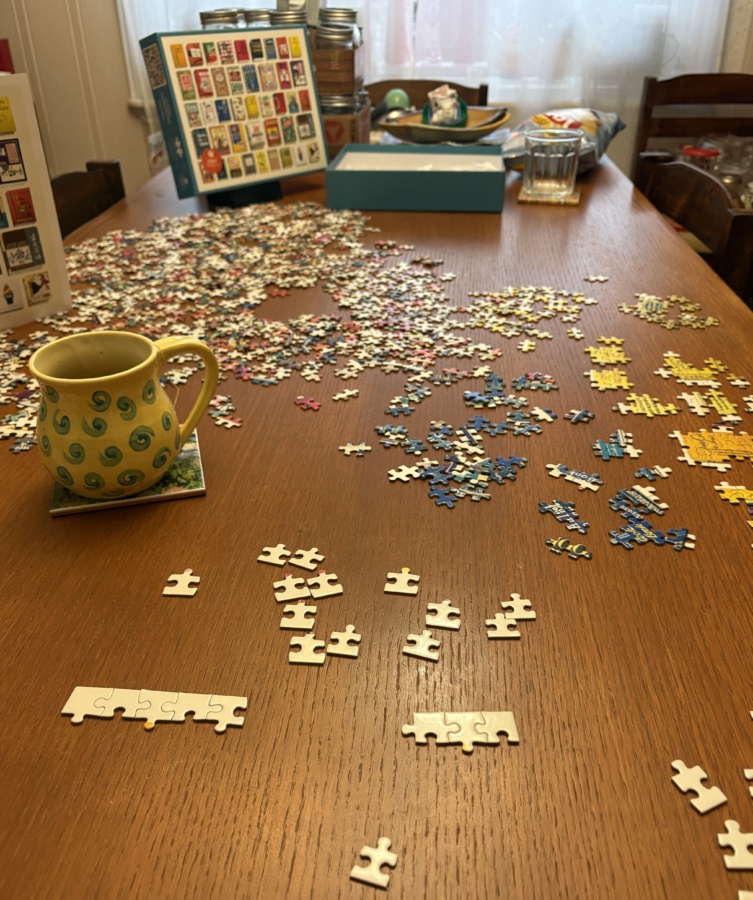
We are still continuing with some plans, like eating up the comfort food we had been packing away, and cracking open the jigsaw puzzle we were going to take with us.