The Newfoundland geologist who changed the world — or at least our understanding of it
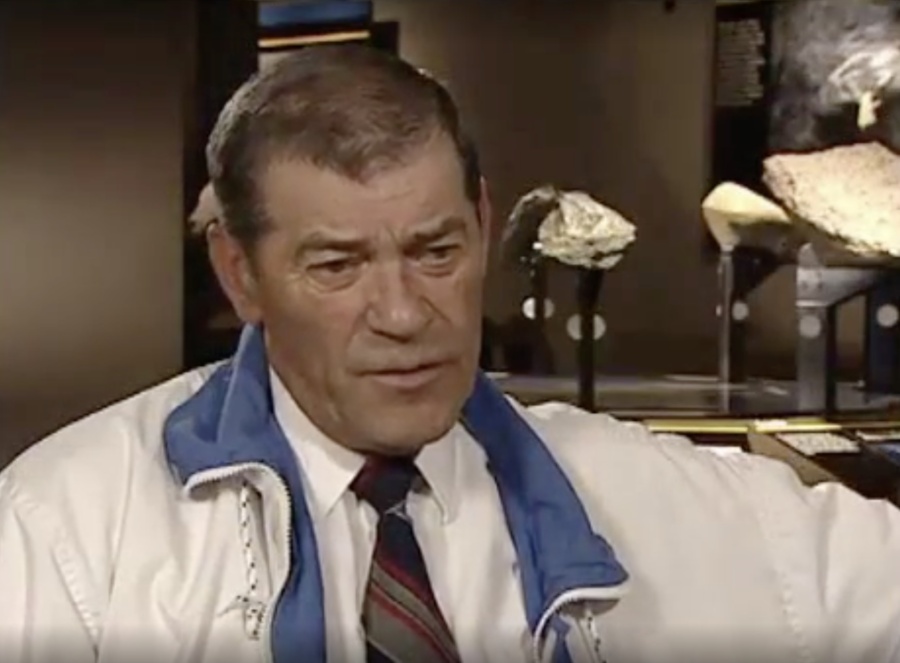
His name was Harold Williams, and he was often called Hank Williams. Like the country star, he had musical talent — he could expertly play the fiddle and the accordion — but, if I can get away with a pun, rock was more his thing.
Or rocks, really. Rocks that he said had a mighty story to tell, if we would stop, look closely and learn.
Williams was a remarkable geologist, and his work advanced what we now accept to be true about plate tectonics and how the continents formed and reformed over many hundreds of millions of years.
He earned a stellar international reputation as a scientist, although in his own much-loved home, he was not very well known. Williams died in 2010, and I believe that he is still under-appreciated to this day.
Harold “Hank” Williams was the subject of an episode of Land & Sea that I had the pleasure of fronting (it’s embedded below, if you’d like to see it). The focus of the episode, which aired in early 2003, was geology, and how Williams’s work in Newfoundland and elsewhere greatly influenced public understanding of not just the science but the very Earth.
To shoot it, our crew in the late fall of 2002 went to Gros Morne National Park, which has often been called the “Galapagos of geology” because of the sheer variety of geologic features to be found there. I treated the park itself as if it were one of the characters in the documentary.
[You can see the doc below. This version went online after a repeat in the 2010 season, so the resolution is on the smaller side.]
Williams taught at Memorial University in St. John’s and was honoured posthumously as one of 100 luminaries as part of the university’s recent centennial.
He was far from any stereotype of a stuffy academic. Hank was in his late 60s when we made the documentary, and he was still fairly spry as we made our way around the park.
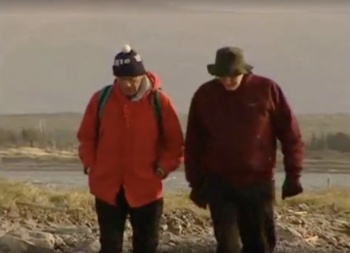
Though his key areas of field research were elsewhere, he was so familiar with places like the Tablelands, Green Point and Cow Head that he had given personal tours for many years to scientists and others.
He thought highly of Gros Morne’s appeal, and in fact led a successful campaign that brought UNESCO World Heritage Site designation to the park in 1987. He spoke passionately about this during our interviews, including his belief that protecting the park was of paramount concern.
Hank was a legend in the world of geology. What put him on the proverbial map was a literal map.
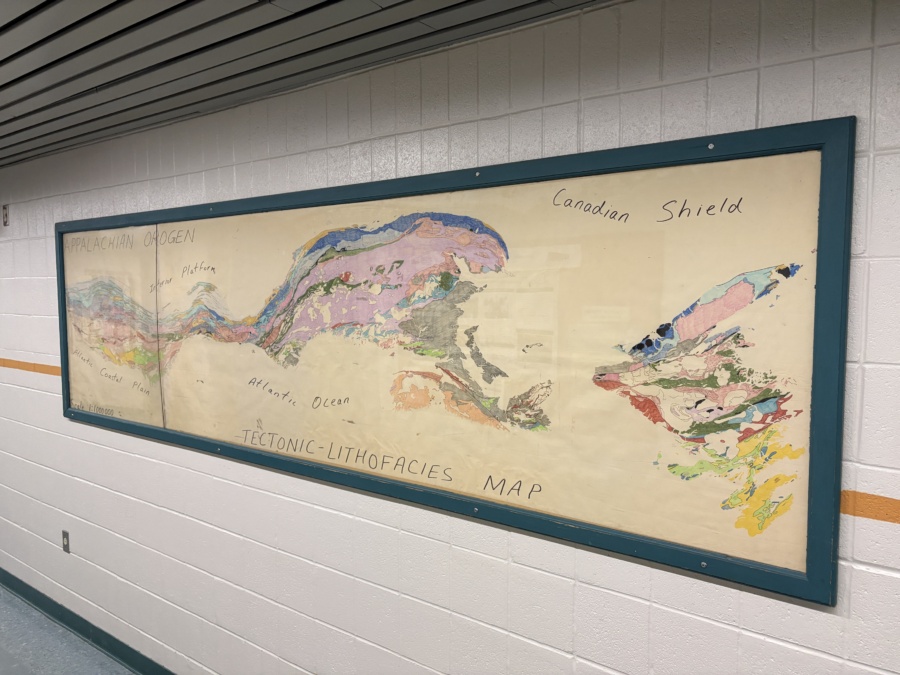
Hank painstakingly mapped out the variety of stratigraphic units of the Appalachian Mountains, a 3,300-kilometre stretch that covers the eastern seaboard of the U.S., and continues into Canada, right through western Newfoundland.
Hank’s massive map, produced in the 1970s, provided visual proof to back up the work of his mentor J. Tuzo Wilson of the University of Toronto. There, on paper, people could see hundreds of millions of years of change, evidence that the oceans collapsed into each other, destroying what had been there before.
While the map showed how oceans had opened and closed, Williams also found a wonderful way of describing it. Drawing on his love of traditional music, he called it “the Harry Hibbs effect” or “the accordion effect.” The visualization of an accordion opening and closing helped lay people make sense of plate tectonics.
The map proved to be in great demand. “The bottom line on the map is that it made money,” Hank told me during an interview. He was quite proud of that fact.
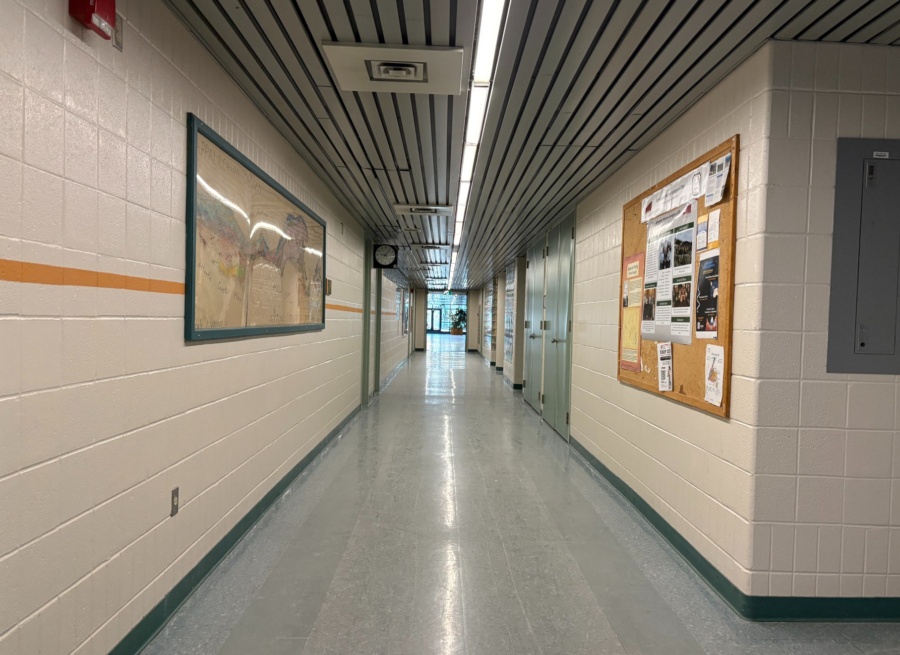
Hank’s original hand-drawn map — which in my mind is a top-tier artifact of Canadian science history, and which would be better suited to a museum — hangs simply in a corridor at Memorial University, in the Alexander Murray earth sciences building. You can find it in the hallway that connects to the engineering building.
I used to pass by it frequently during my walks to get a bit of fitness in. I was always struck, particularly in the years after Hank’s death, by how students and others would just glide by, perhaps oblivious to the significance of what is on the wall. It feels like such a shame.

During his own lifetime, Williams was hardly a local celebrity, despite his high standing globally in his field.
“I guess it’s kind of typical that a prophet is unknown in his own land,” expert Robert Grantham told me for the Land & Sea documentary. “He’s very well known elsewhere, and especially in the geoscience community, and has made the rocks of Newfoundland and Labrador well known by his work… His impact is global.”
Hank told me during the production that he didn’t much care about all of that. He cared about what the rocks had to say. “You’ve got to give the rocks a chance to speak, tell their story,” he said. “When you look at as many rocks as I have and don’t believe the rocks, you better forget about it.”
The title of the documentary — The Truth Lies in the Rocks — comes straight from Hank and his understanding of the immense importance of geology.
I have a profound respect for Land & Sea, which is still going strong under the stewardship of Jane Adey.
All these years later, I’m grateful still to Land & Sea‘s Pauline Thornhill and Bob Wakeham for giving me a chance to tell the story, and for my producer at the time, Ted Blades, for freeing me up to work on it.
It was wonderfully shot by Ty Evans; Bob Sharpe joined us in Gros Morne to collect spectacular sound. Editor Arlene Patty Dillon put it all together.