Clip these wings, please: Those creepy AI videos with dead celebrities need to stop

I think it was the Graham Chapman one that made me laugh out loud.
It was one of those reels that are all over Facebook: AI-generated matchups that “reunite” the supposed original actors with the contemporary versions of the actors.
Except if the actor is dead.
In that case, they usually walk on, flash a smile, embrace or touch their younger self and often wave at the camera … all while sporting wings.
No matter what you believe about the afterlife, if someone is famous or at least was on TV, you get to go to a heaven with wings.
I’ve lost count of how many of these things I’ve seen. Big TV shows and movies came first, and now it honestly feels like someone has been raking through nostalgia lists looking for ones that haven’t had the “then and now” treatment.
The image above features screengrabs I made with my phone once I knew I wanted to write about this. It didn’t take long!
You’ll see Graham Chapman there, the Monty Python member dressed in as King Arthur and then matched with wings. I can only imagine how Chapman himself would have reacted!
There are also Christopher Reeve from Superman; Farrah Fawcett from Charlie’s Angels (on the nose, no?); Cloris Leachman from The Mary Tyler Moore Show, with a pair of wings that look like an old rug; Sean Connery in his The Untouchables role, sporting a manly bit of wingage; Peter Graves from Airplane!, whose deceased version brought his own lily; River Phoenix from Stand By Me, whose final self has wings that waft up high in the air; Gene Wilder from Willy Wonka and the Chocolate Factory; and Anissa Jones, who played Buffy on Family Affair as a young child and who (as every gossiping kid in the Seventies heard) died as a teenager of a drug overdose.
AI video tools are now so commonplace that anyone anywhere can make them. And they do.
Journalists have shown a lot of the content farms flooding Facebook with videos and those incessant “and then the room went silent” text posts are coming offshore, from (according to this report) places like India, Vietnam and the Philippines.
Cheap to make (all you need are photos, some prompts and a few minutes of processing time), they can earn revenue from Facebook, which pays creators based on engagement.
What engages people? Emotions. Anger or upset are very effective (have you ever wondered why influencers so often make a recipe in a needlessly complicated way? Vent, vent, vent in the comments!), and so too are other emotions.
These awkward angelic death tributes I imagine are intended to touch the heart, and thus drive engagement.
I think they more likely touch my stomach.
The main complaint I hear about these videos is that the AI figures don’t much resemble the final actors. This does happen, and it seems to be because the AI is using a single photo; when it locks into that frame, it’s at its most realistic.
Complaining about that alone, though, feels like saying a rotten, inedible meal also had the wrong kind of dressing on the salad.
After all, these things are being cranked out, perhaps by people who have no clue who these folks originally were.
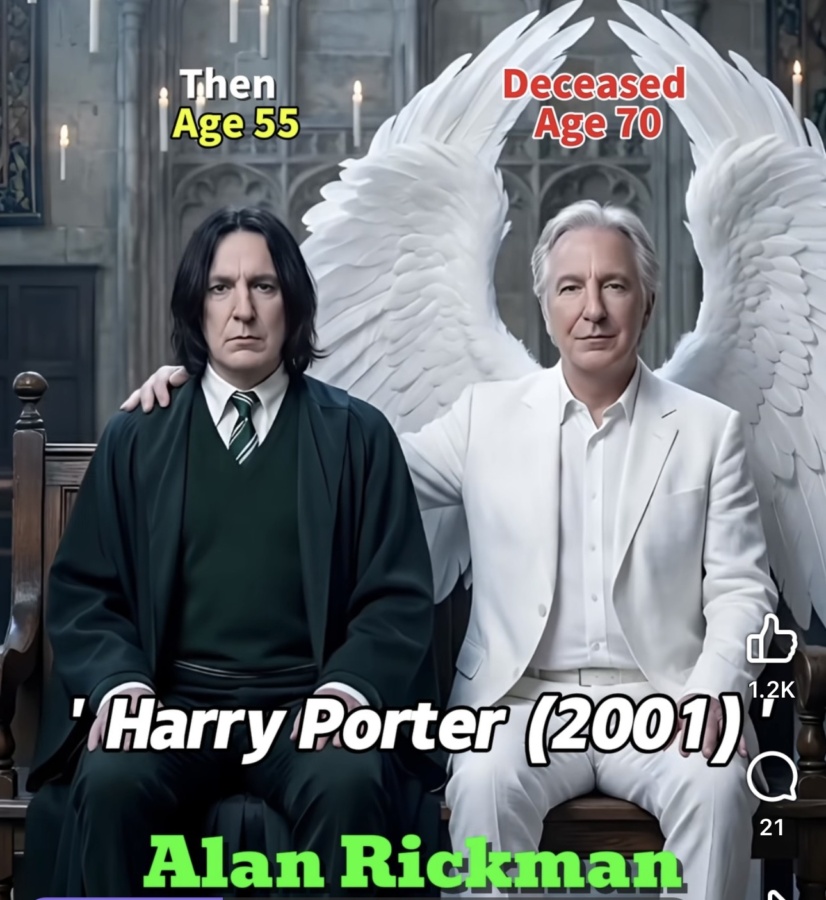
I cackled when I saw that Alan Rickman, for instance, had been in Harry “Porter”:
There are more, of course.
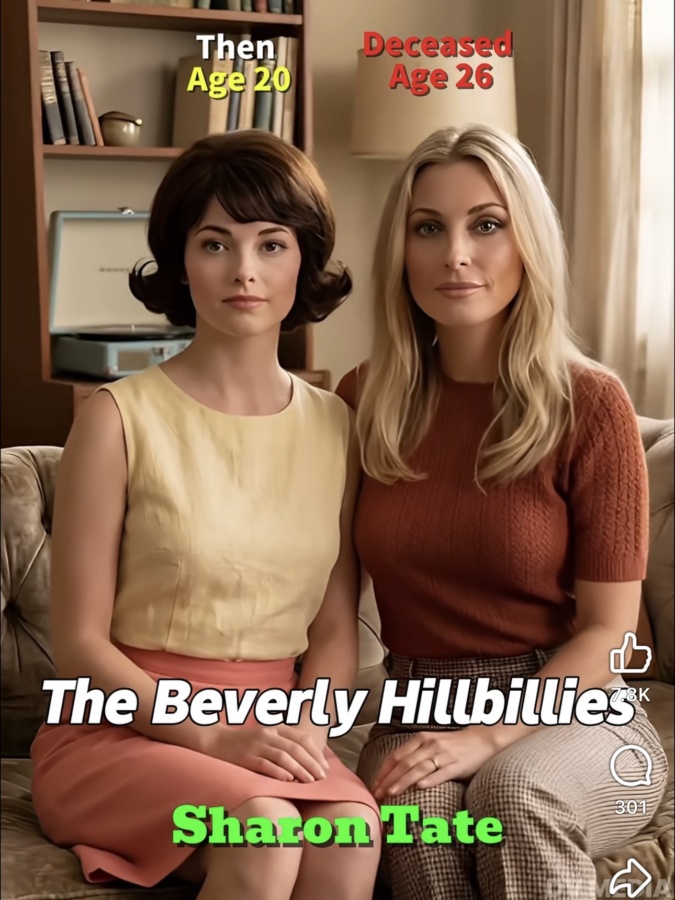
Sharon Tate appeared in a reel about the Beverly Hillbillies, and not only had that uncanny-valley look in her rendition, but didn’t even get wings. Tate is, unfortunately, best known for her death, as she was infamously murdered by Charles Manson’s followers in Los Angeles in 1969.
It’s not uncommon to see an error, too. In a reel that was a supposed Fleetwood Mac reunion, Lindsey Buckingam sat down down next to his supposed younger self … except that it was Mick Fleetwood.
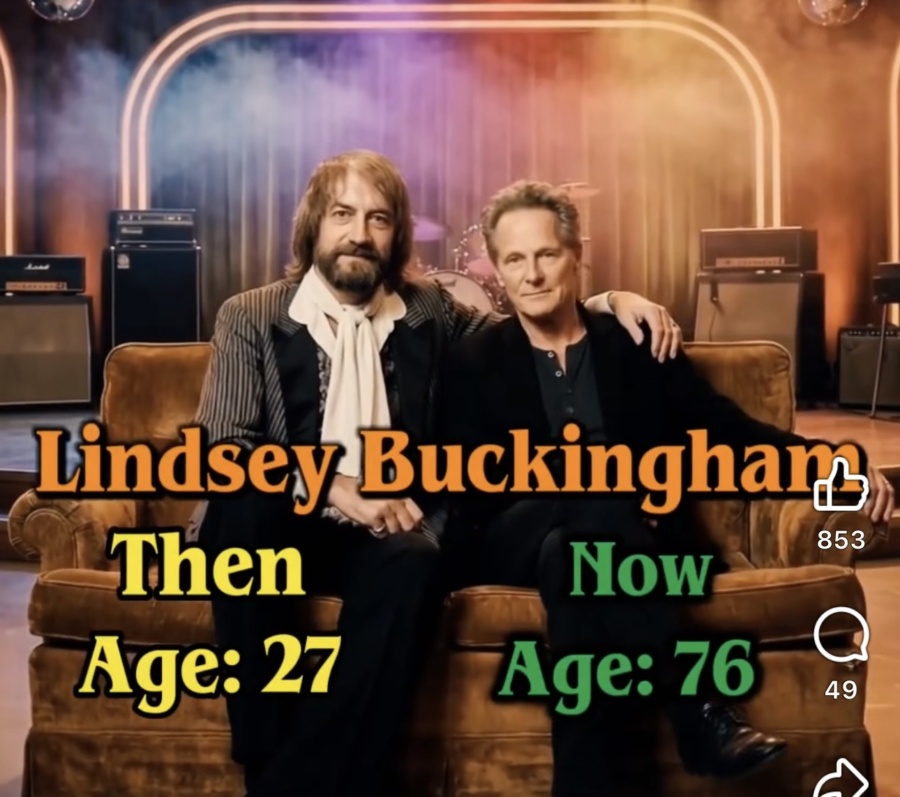
Fleetwood had been matched with another, beardless version of himself; I guess the AI figured the dude with the beard was Buckingham.
Last summer, Meta — the company that owns Facebook as well as Instagram and other platforms — said it was doing something to combat what it charitably called “unoriginal” content. The emphasis was protecting creators who make real content only to see their work ripped off by others:
Too often the same meme or video pops up repeatedly ‑ sometimes from accounts pretending to be the creator and other times from different spammy accounts. It dulls the experience for all and makes it harder for fresh voices to break through.
By that point last July, Meta said it had taken down “around 10 million profiles impersonating large content producers.” The company also said it had taken action against about 500,000 accounts engaging what it called “spammy” engagement.
The proliferation of these creepy afterlife videos, though, shows the limits of Facebook’s own battle to police itself.
A final thought.
The whole thing about angelic wings is to fly, is it not? Why, then, does Graham Chapman not flutter into the frame from above? That certainly feels more in keeping with a true Python.