Reading list: Some of the books I’ve read so far this year

Winter is a good time to read. Can’t get around much anymore, to tweak the Duke Ellington standard.
I always love seeing people’s reading suggestions (my want-to-read list is hellaciously long), and I thought it might be helpful to recap quickly some of the books I’ve read or more likely listened to in the first weeks of the year. I keep track of these things over at Goodreads.
So, in no particular order …
Dead and Alive: Essays, by Zadie Smith. I admire her novels, but I think essays may be where Smith brings the full force of her talent. I thoroughly enjoyed this book … especially her takedown of the algorithms of social media and their infernal effects on the young.
The Book of Dust Vol. 1: La Belle Sauvage, by Philip Pullman. A mission this year is to read Pullman’s prequel trilogy to His Dark Materials. One down. Oh, and it’s tremendous.
Notes on Grief, by Chimamanda Ngozi Adichie. A powerful, brief book, arising out of a New Yorker essay by the great novelist, who captured her emotions in the wake of the death of her father. My own dad died in 2024, and found this book so helpful. I also this winter read Adichie’s Dream Count, which is astonishing.
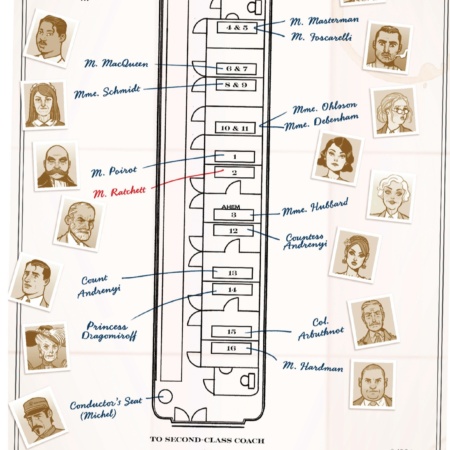
Murder on the Orient Express: The Graphic Novel, by Agatha Christie and Bob Al-Greene. Just like the original novel, but imaginatively adapted to the medium; see the page above, which outlines the cabin placements in the fateful coach. Perfect for a cosy afternoon with a good chair and a mug or two of coffee.
Burning Down the House: Talking Heads and the New York Scene That Transformed Rock, by Jonathan Gould. As a huge Talking Heads fan since the late Seventies, I was left disappointed by this book. Well researched (and, like an eager undergrad, the author feels obliged to prove it with endless verbiage), but oh so snarky. The definitive book is left undone.
Blood Orange, by Harriet Tyce. When the latest U.K. series of The Traitors started, and one of the Faithful confided she wrote murder mysteries, I hunted this down. The protagonist is a hot mess of a lawyer whose personal and professional worlds collapse. It was fine, and I would read more of her work.
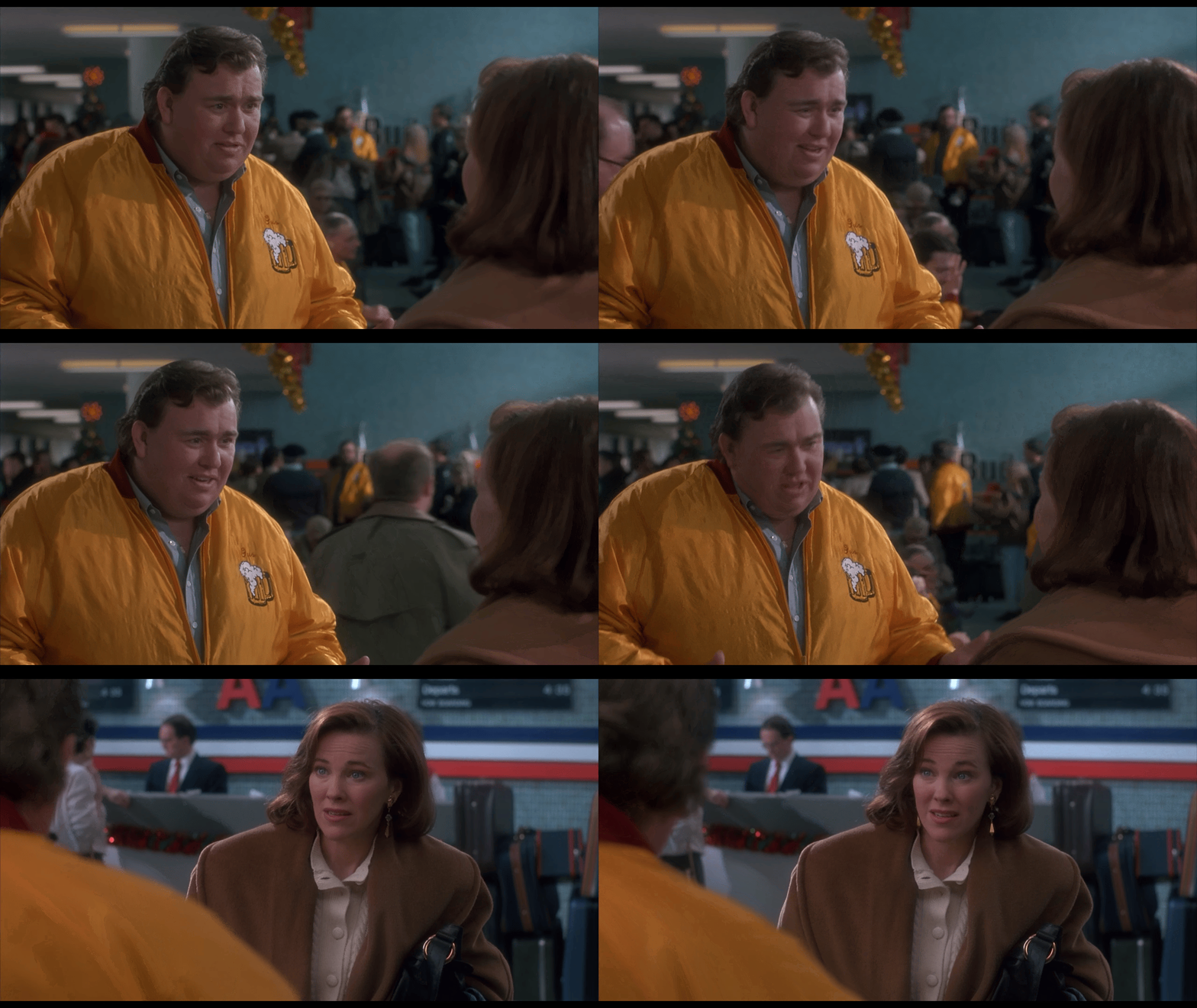
John Candy: A Life in Comedy, by Paul Myers. Who couldn’t love John Candy? That theme weaves through this biography of the Canadian comedy legend, who died much too young, and seemed aware (his father died young) that his life might be limited. I was moved by parts that showed Candy’s loneliness, even when he was literally the life of the party.
People of the Book, by Geraldine Brooks. It took the better part of two decades to get around to this one. Oh, I wish I read it earlier, so I could enjoy it again. This is a beautiful book about beautiful books, with a modern-day (fictional) plot about the preservation of a (real) Hebrew illuminated masterpiece, interwoven with stories of the people who handled the text through time.
Margo’s Got Money Troubles, by Rufi Thorpe. Entertaining enough, this is the story of a young woman who finds herself trying OnlyFans to get out of a tough situation. An adaption for Apple TV+ launches next month.
Against the Grain: Defiant Giants Who Changed the World, by Terry O’Reilly. I’ve always enjoyed O’Reilly’s programs (and podcasts) for CBC Radio. This book builds on the research about mavericks who don’t have a lot in common, other than sticking with their convictions … and being proved right. This book led me also to Katalin Karikó’s wonderful memoir Breaking Through: My Life in Science, from which I took a quotation for this blog in February.
There were some others, too. I might do a post about thrillers and mysteries, when a few more pile up.
Posts I’ve done about books can be read here. In January, I posted about some of my favourite books about 2025. If you’re like me, and tend to have multiple books going at the same time, you may like this Virgina Woolf observation that I posted on Saturday morning.