Saturday digest: Uploading your photos to AI is much riskier than a virtual hairstyle

Bald as I am, I don’t give a lot of thought to hairstyle ideas. But the concept has very much been on my mind lately, because of an inundating number of ads for AI-powered apps that offer dizzying choices for switching up your look.
Dizzying, indeed, because the risks for these “fun” apps are serious, if not grim.
I’ve seen several online ads recently that pitch the ease of customizing hair styles. I was curious to see what they wanted, and a few taps later, there it was: all I needed to do was upload several photos of myself, from different poses.
This is of course where things can go haywire. Once you’ve uploaded your photos, you don’t know where they might end up. This is especially so because the Wild West nature of AI has new players emerging all the time… and even the biggest companies are not subject to much if any regulation.
Because I have been reading up on these apps, I seem to be seeing these kinds of ads more often. (Thanks, algorithms!) I’ve also been deliberately seeking out the privacy policies of different apps, as well as researching the risks.
The hazards of uploading your photos are real and have been demonstrated over the years, but the continuous and astonishing improvements in AI video keep raising the stakes.
What risks? Let’s start with deepfakes, in which a synthetic version of a real person does or says fictional things. Deepfake scams have been used to make phone calls with a voice; get ready for fake video calls from supposed loved ones.
Identity theft is another, and then there’s fraud. As the technology improves, we can expect biometric details available online to be so good that criminals could wield them to access supposedly safeguarded things, like bank information or unlocking your phone.
There are civil liberty risks, too. This article from the Harvard Gazette demonstrates how different apps can identify photos published elsewhere based on uploads; policing is one application, and there are risks with misidentification, but imagine what bad actors can do with access to that kind of technology. It’s staggering.
It’s human nature to hop on the bandwagon, as this essay on Medium notes:
The pattern is predictable and powerful. A new AI image style goes viral on social media. Influencers and celebrities participate. Friends start sharing their transformed photos. FOMO kicks in. Before you know it, millions of people are uploading high-resolution photos of themselves to AI platforms they’ve never heard of before last week.
The hairstyle appeal is just the latest way apps have sought to get your attention. Various tools over the years have allowed you to swap faces, age or de-age your face, try on a tattoo, imagine yourself as a cartoon character, conjure up a virtual wardrobe, change your ethnicity … it goes on and on.
The gambit, though, is often the same: to play, you need to need to pay, and you do that by giving up yourself.
The Reface app, as an example, says its purpose is “fun” but reading the fine print on various apps underscores the inherent risks. Opt-in consent is technically necessary, but that can happen when you opt to upload. Here’s typical language in the fine print: “We may collect biometric data, including photos and videos, facial data, racial data, and recordings of voice, including a voice print.”
Think carefully before parting with pictures.
Last hawker standing, and other quick bits
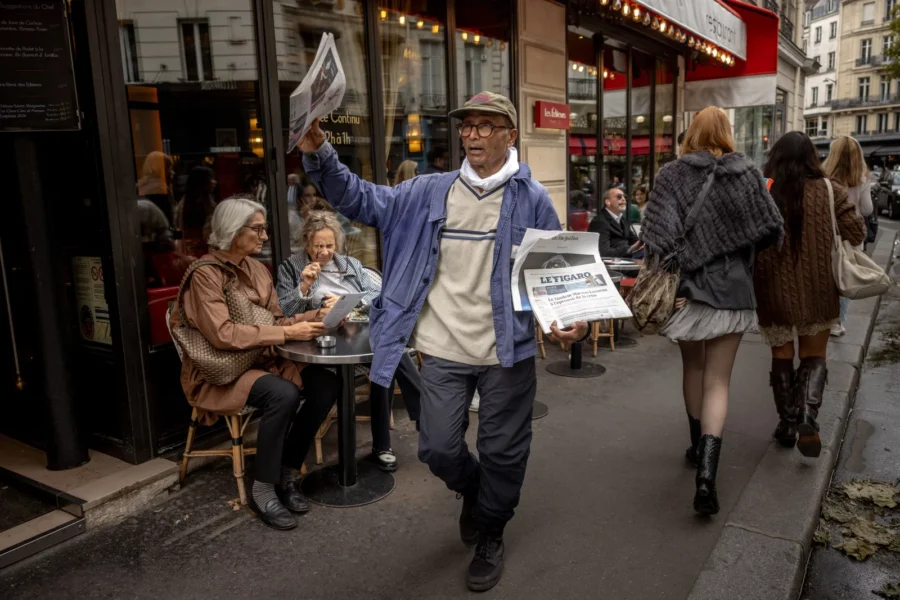
I love this story. The last remaining newspaper hawker in Paris works 10 hours a day and seven days a week, is 71, emigrated from Pakistan to France decades ago, and is now a knight.
The Battle of the Brads (Gushue, no direct relation, and Jacobs) gets underway at the Brier in St. John’s this afternoon.
The Winterset longlist is out. Great titles here.
In a post yesterday morning, I noted that the PUB — which regulates gas prices in Newfoundland and Labrador — might use an interruption to hike gas prices again, because of the war in the Middle East. And … it did, right away. Gas prices this morning are up more than 12 cents a litre.
Tom Yorke of Radiohead has shared a two-hour-ish mix that plays before the band’s shows:
The Astronomy Picture of the Day is all about lunar eclipses.
As the clocks get set to spring forward, a researcher says history shows that British Columbia’s move to year-round daylight time will end badly.
A McDonald’s video — of its CEO taking a tentative bite out of a burger — has had the competition chewing it up.
Winnipeg Jets goalie Connor Hellebuyck had no apologies Friday for having yucked it up with Donald Trump, who made a dig about the U.S. women’s hockey team after the U.S. men’s team won gold.
About the Saturday digest
On Saturday mornings, I post about a variety of things. You can find prior posts collected here.