Get paid to play, or the other way around? The murky side of online game offers

Imagine earning supper money from playing a game that you’d play anyway … tempting, no?
That in a nutshell is the pitch from companies like Freecash, which work in an area of the online economy known as GPT, or “get paid to” do something for whoever is footing the bill.
Freecash is a legitimate company, although there are some buyer-beware caveats.
What’s had my eye lately are the shadier players in this world, and things are definitely not legitimate there. More on that in a moment.
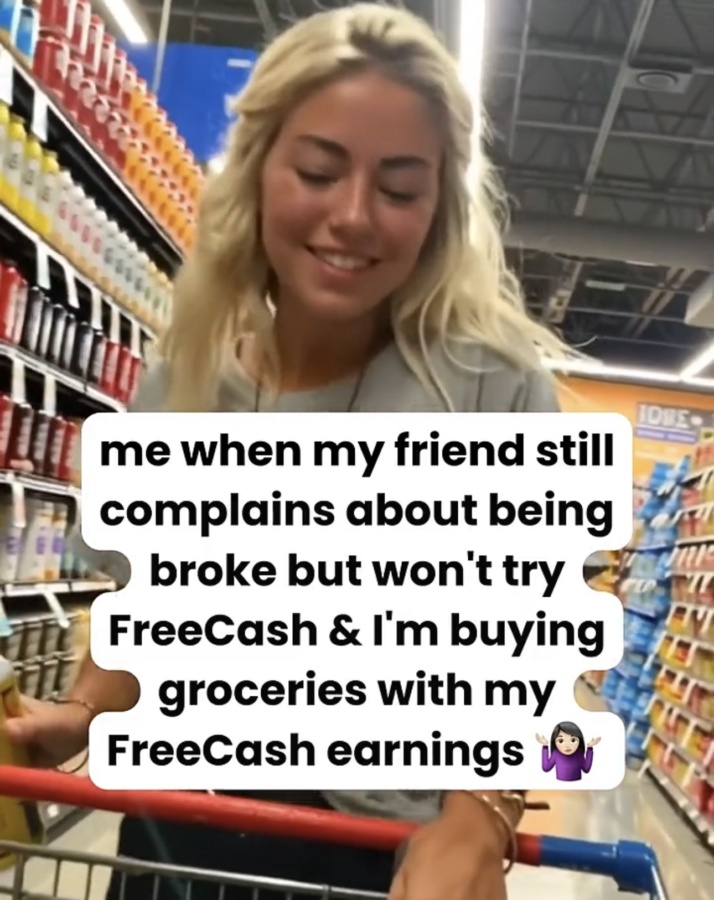
The online ads for the legit companies make it all seem breezy enough. In one for Freecash (see the screengrab above), a mom talks about how she made money from a few offers by playing the kinds of games that she (and her kids, she notably mentions) already like. The sum of $183.19 appears above her. She says it’s not enough to pay the rent, but enough for dinner with the husband.
Is earning that much money so passively really that simple? No.
What about other companies hawking the same kind of deal? Well, there be dragons.
For actual companies like Freecash, the business model is about connecting clients (game developers testing a new app, say, or a market research company looking for people to complete surveys) with potential users.
But it turns out that most users earn only a few dollars. I came across a testing video that generally approved of the Freecash plan, but noted that the big-earner offers are not that easy. One was for a game that would pay a user $175, but to get the cash, you have to complete the entire game in 28 days (no easy feat, if you think about the time required to master skills and level up continuously).
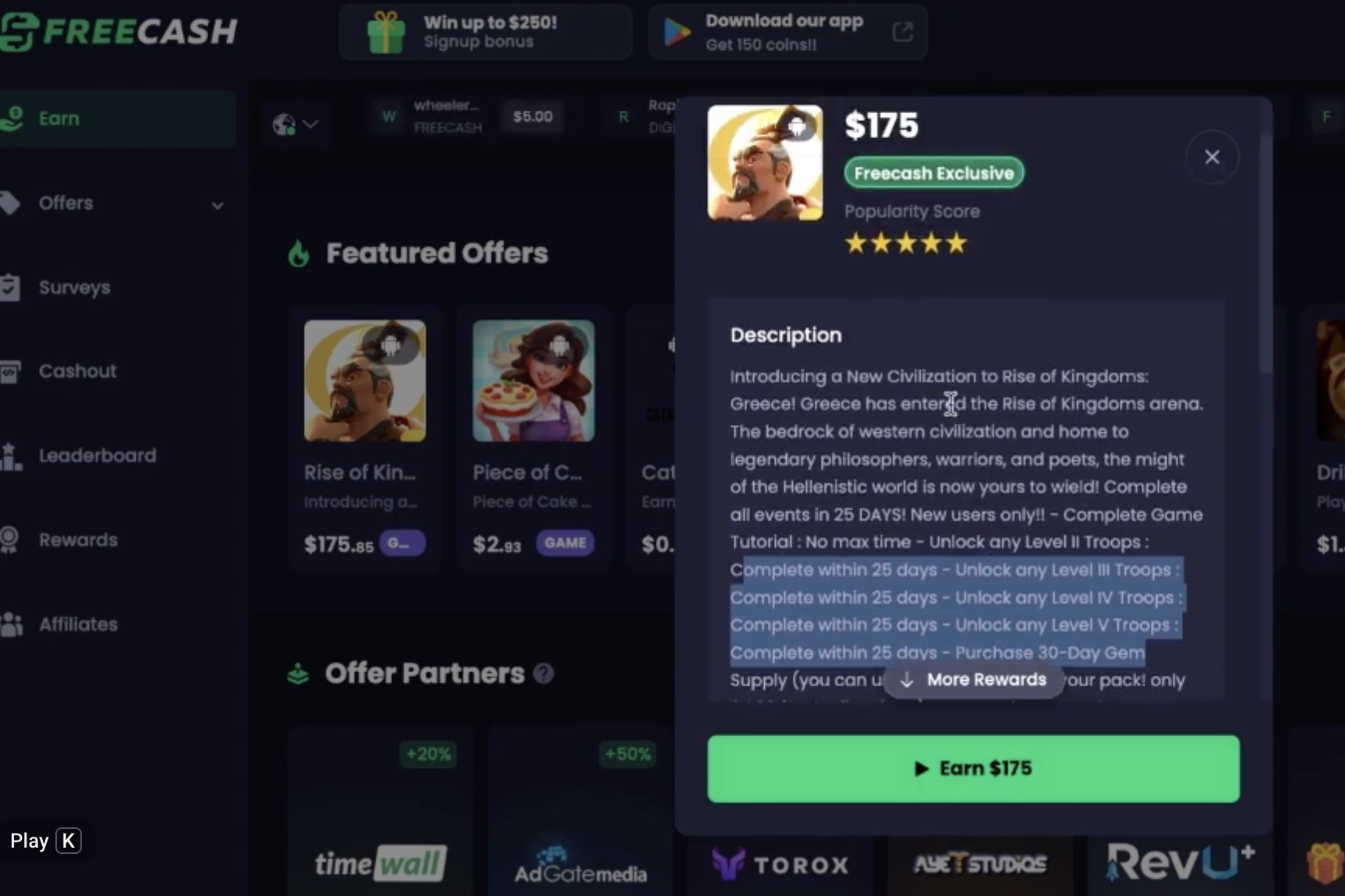
As well, the provisions also mean an in-app purchase of a “30-day gem.”
In other words, you have to spend money to make money.
That’s a hard “hmmm.”
Things get even more suspicious when you go off the legitimate trail, and these tend to be the “offers” that come to you not through an app but an appealing invitation by text.
It’s not uncommon for shady companies to want to pay you in crypto — and for you to put some actual cash on the table purportedly to “unlock” what you’ve supposedly earned.
Here’s an indication of just how crooked things are getting in the GTP arena.
Only a few years ago, complaints about the practice were scarce. In fact, the U.S. Federal Trade Commission had received no complaints whatsoever in 2020 about GTP scams.
The number of complaints in 2023 was about 5,000, and then four times that in just the first half of 2024.
From an FTC statement in late 2024:
Task scams often start with a text or WhatsApp message to a consumer about online work, but with few specifics. When consumers respond, they’re told they’ll be completing tasks related to things like “app optimization” or “product boosting.” Once they start doing tasks in an online app or platform, consumers may even receive small payouts from the supposed job, giving them confidence it’s a legitimate job. Then the scam pivots, asking consumers to put their own money in to complete the next set of tasks, always with a promise it will lead to more money coming back, but once they send it, the money is lost for good.
For the legitimate sector, what you do with your own time is your business. But doing some research ahead of a download would be a good idea.
The personal finance site Penny Hoarder noted that Freecash has fielded common complaints, like being disqualified from an offer, or a task taking longer to complete than expected.
An independent review by the consumer site Dollarsprout found that Freecash, for instance, will indeed pay you — but you should be realistic about potential earnings.
For instance, a moderate user will make about US $10 to $50 per month. Not per day, per month. Heavy users, who are really grinding the time, “can plausibly earn $100 or more per month, most likely through a combination of leaderboard payouts, high-value offer conversions, and affiliate earnings.”
Affiliate earnings? Well, some ads you will see have people talking about the service being so good, they recommended it to friends. If that has a whiff of multi-level marketing to it, you’re right.
(For potential conflicts of interest, personal finance sites like the ones above earn income from linking out to affiliates like the products they review. Another thing to bear in mind, although I did read fairly critical coverage.)
So, maybe you can make $181 while just playing a few games. The chances of that are not high.
I want to return to something that has been nagging me. I’m reminded again of the mom in the ad saying she gets games her kids like. (There’s another, featuring a mom who says she and her kids played the games for “nothing crazy, just a few hours!” and got enough money “for pizza tonight.”)
Is that a not-so-subtle suggestion that parents can just turn the phone over to the youngsters and let them grind for coins? Little Liam’s first side hustle, anyone?