Montserrat: Mountains and monks, art and endless skies
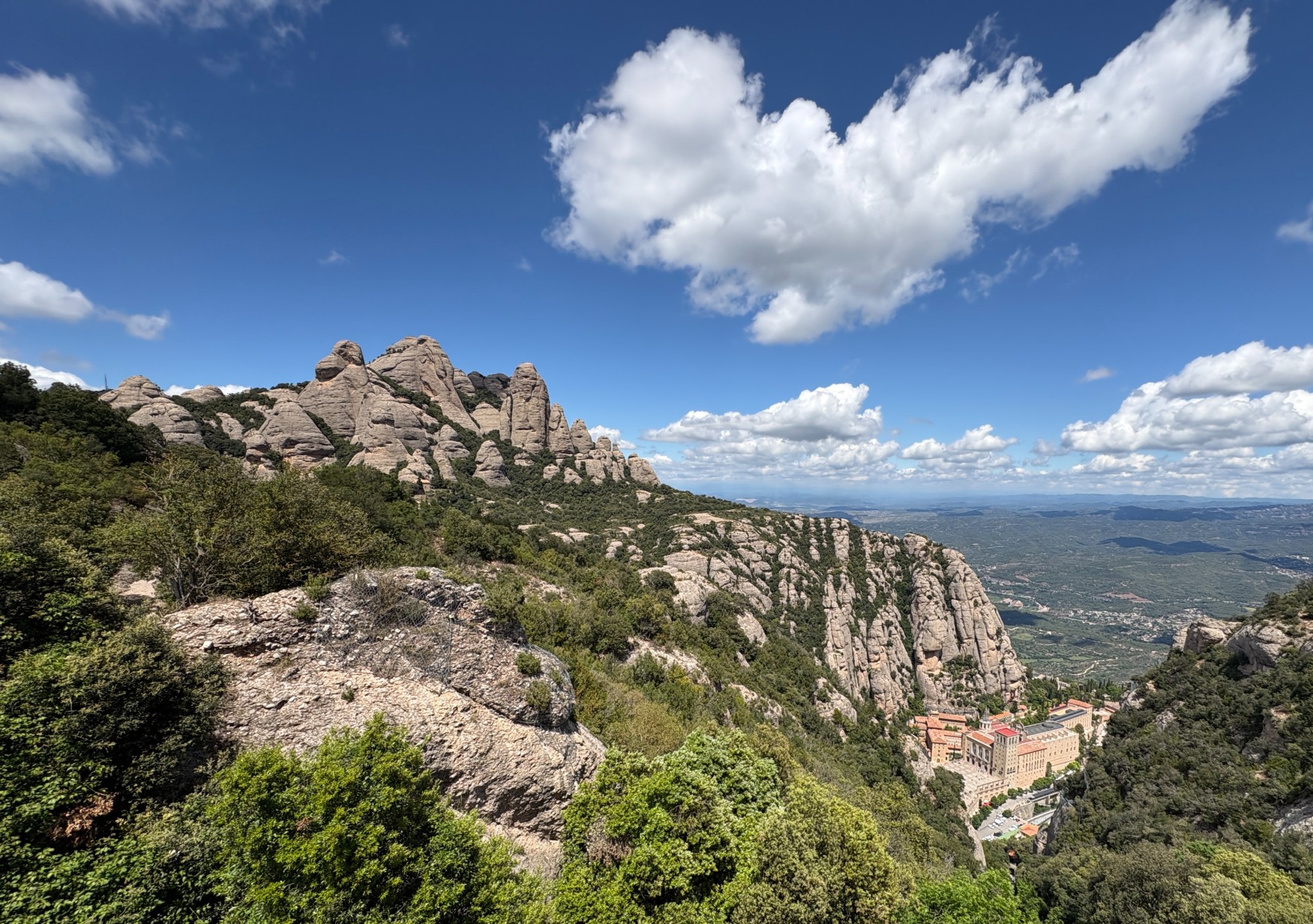
Montserrat is many things: a mountain, a monastery, a municipality, a park. It’s one of the most stunning places I’ve ever seen.
Martha and I caught a bus from Barcelona on Wednesday morning, making a short voyage in about an hour and a half. To get there, you ascend via hairpin turns in a highway that encircles the mountain.
On arrival, you see the popularity of the attraction: there’s not endless, Disney-style parking, but there were plenty of cars tucked into spaces as we made our way to the drop-off, parking by other buses. (There’s also a train connection from the city.)
The mountain is the main attraction, but this place is also famous for its thousand-year-old monastery, Santa Maria de Montserrat. It operates to this day with a small number of Benedictine monks, although almost everyone you will see will be a tourist or a staff person taking care of attractions.
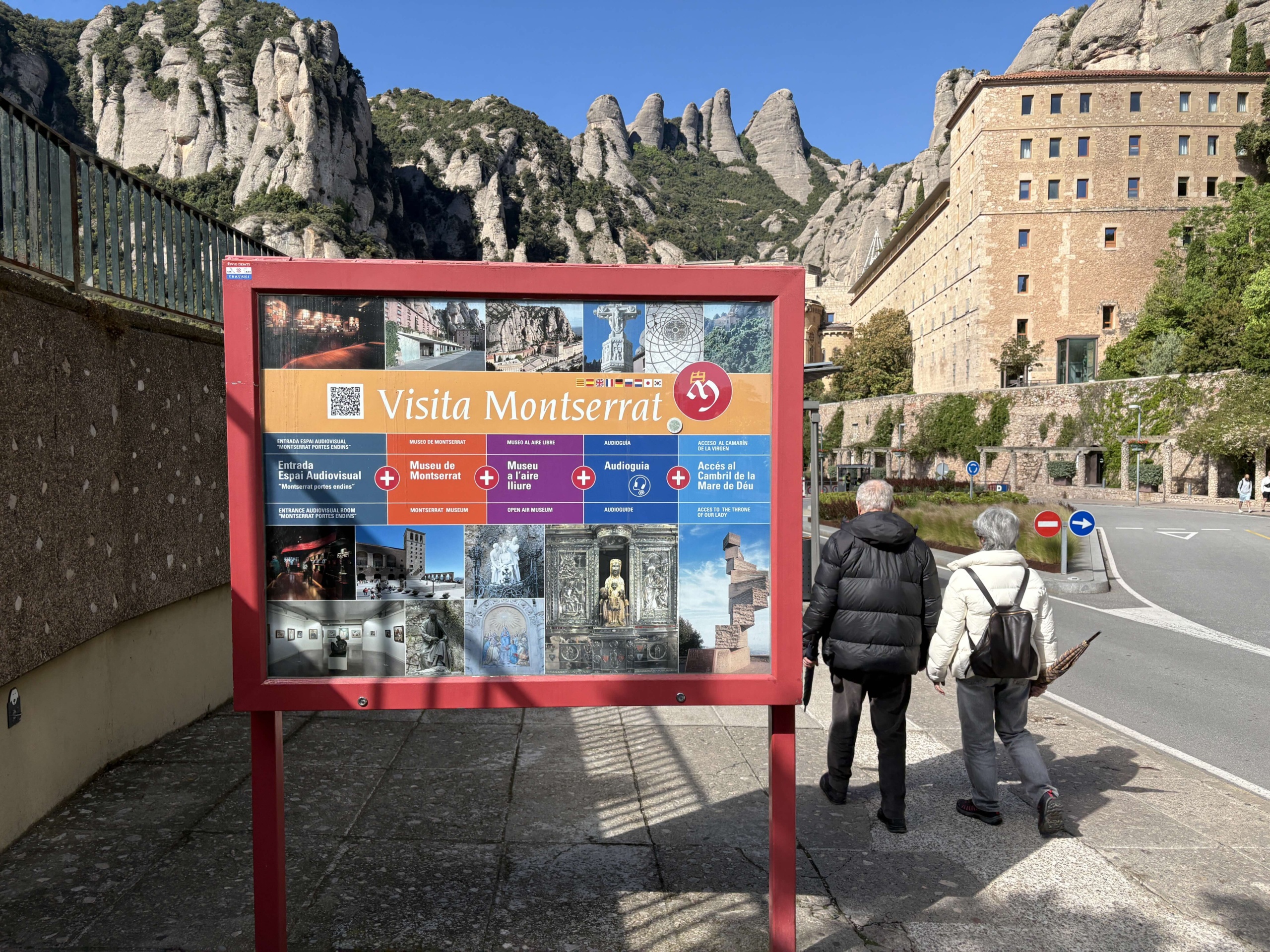
The mountain is known for its unusual pillars and finger-like shapes — sometimes they’re called the frares encantats, or enchanted friars, a nod to the monks who sought to be closer to heaven by working at the top of the summit. The shapes have not always been there, of course; they’re the result of erosion and rainfalls over hundreds of thousands of years.
Views at Montserrat are a key reason to go, and you’re rewarded with every turn, after each ascent.
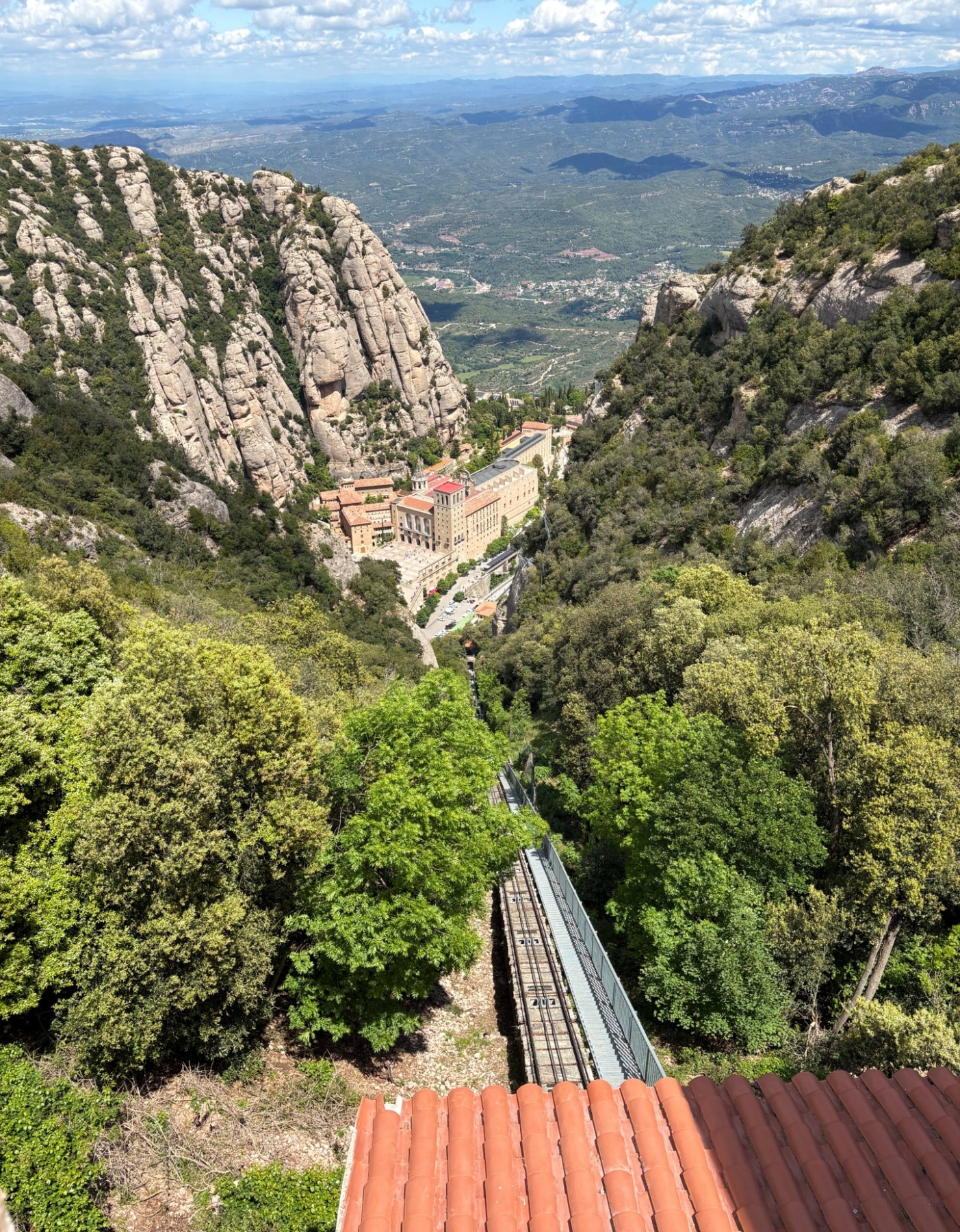
The photo above is after taking the Sant Joan funicular train, a zipper railway that runs up a steep hill. You’re welcome to hike up if you like, but I think most people take advantage.
The photo at the top was from the hill that we hiked up. In each, You can see the monastery and nearby buildings, including a prodigiously stocked art museum, at the base.
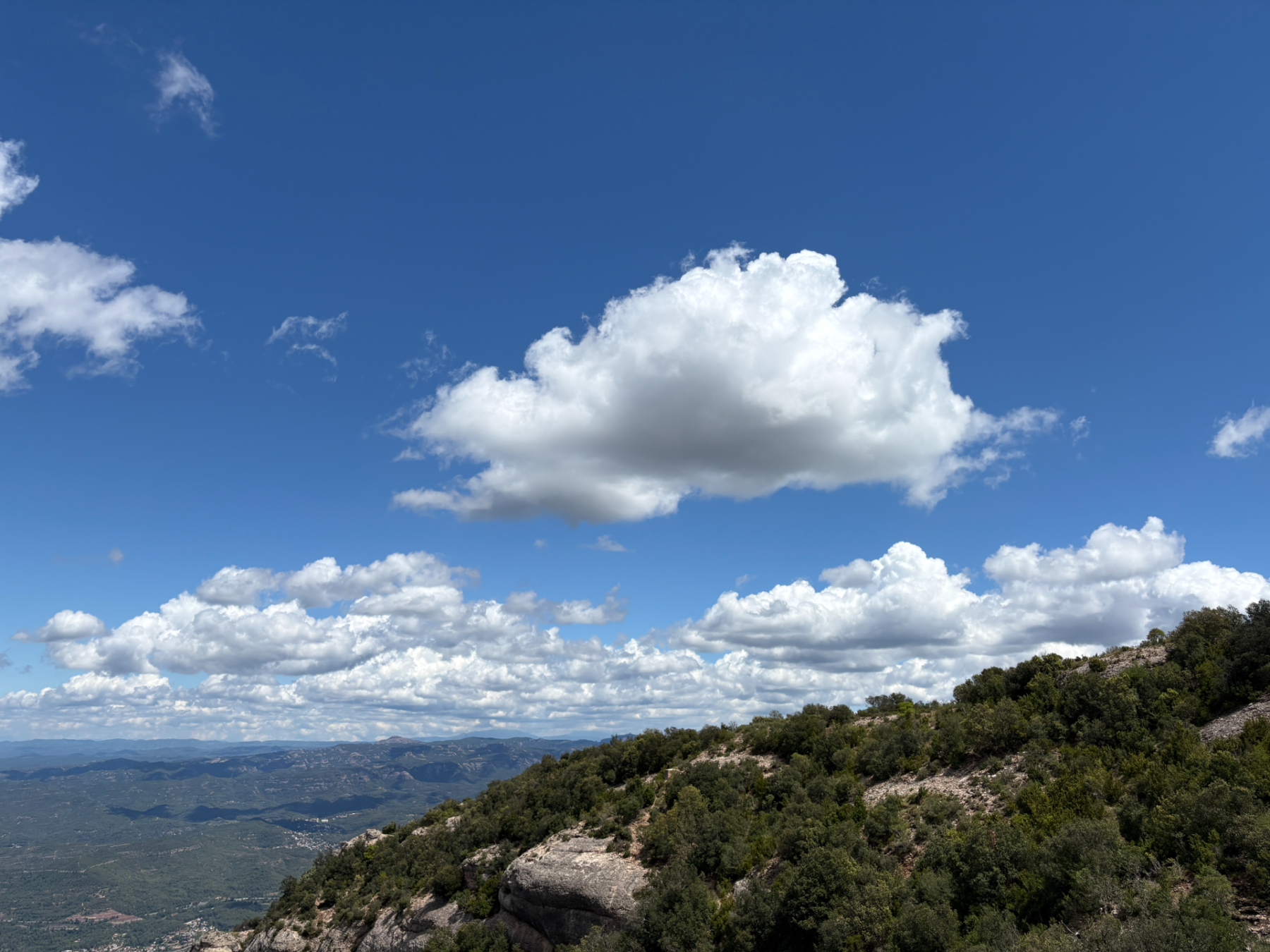
The day we went happened to be sunny, and the clouds in the sky were rich and plump … some looked fluffy, others looked like great dollops of shaving cream. Martha had been to Montserrat before, and knew that the weather there can also make the views dramatic. I imagine the mood would have been quite different under steady rain.
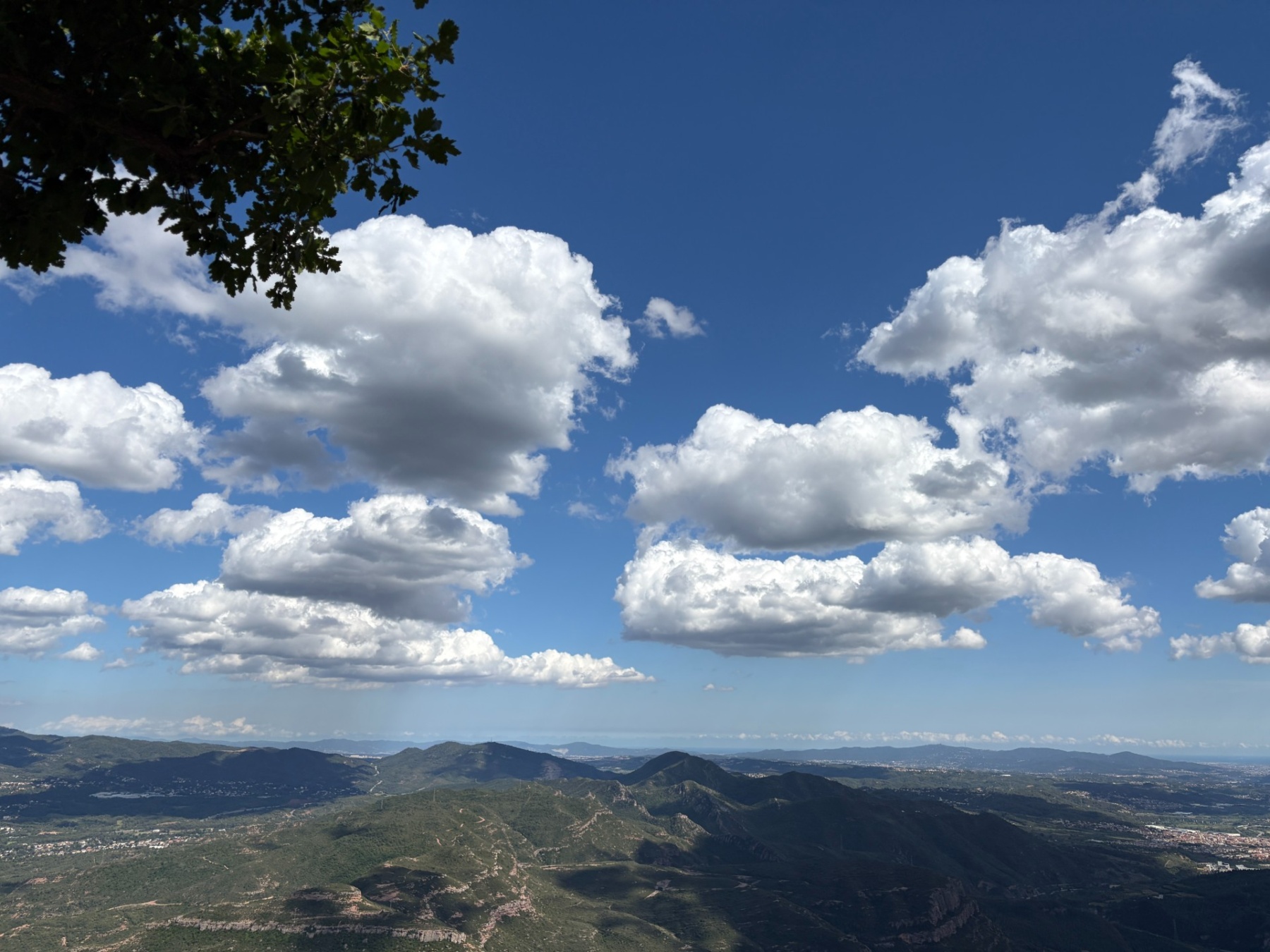
In Barcelona, we’ve learned that wayfinding often comes down to two visual cues: toward the sea, or toward the mountains. Montserrat, which is about 50 km or so outside the city, offers on a bright day unimpeded views, and you can make out the ocean as you gaze over all the hills.
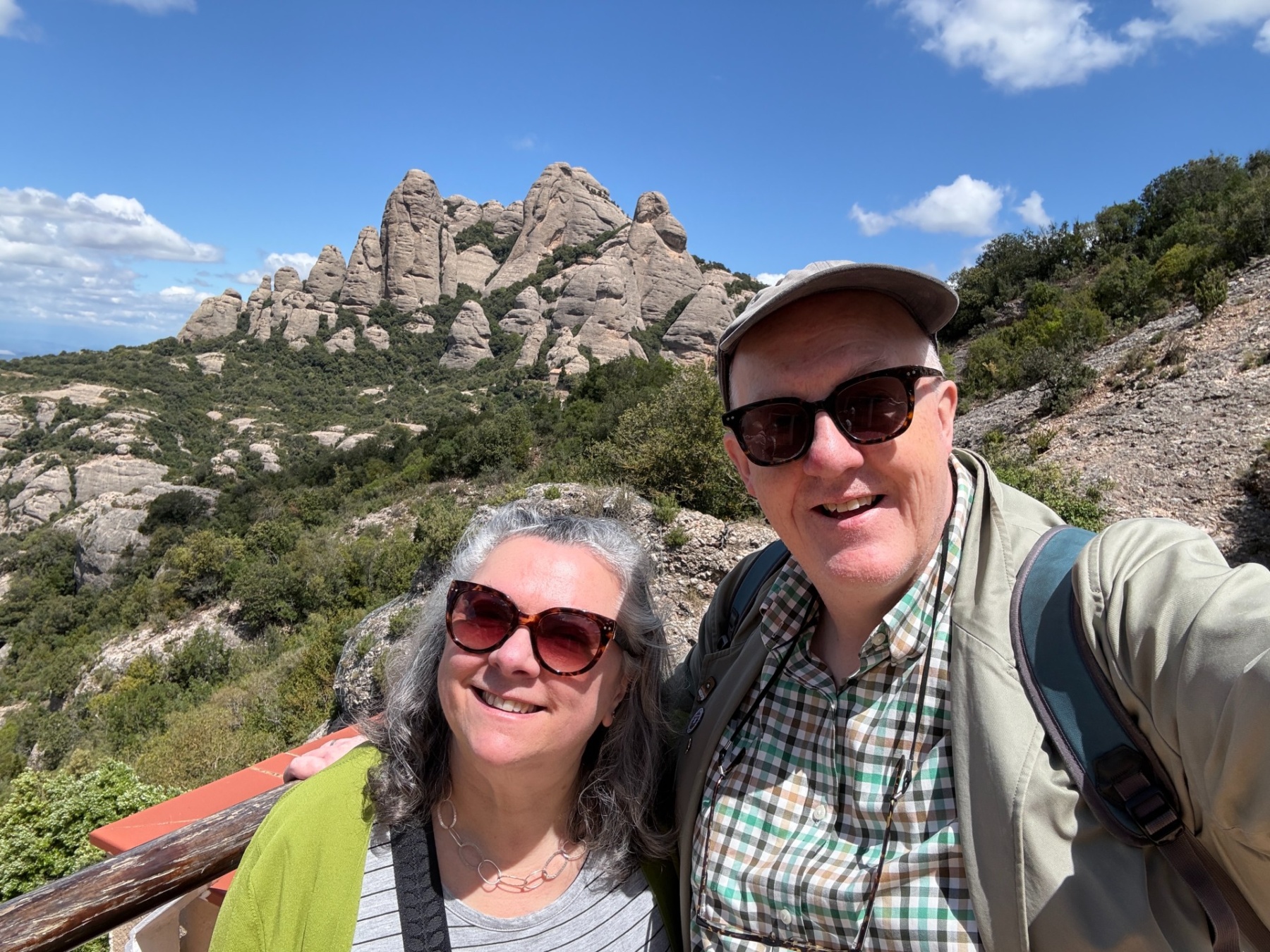
We put aside a full day for the excursion: that’s because the bus we booked leaves at 5 p.m. That left ample time to amble about.
We left a lot of things unseen during this visit, including a fair bit of the monastery itself.
We instead concentrated on the museum, which has an impressive collection of art, much of it Catalan.
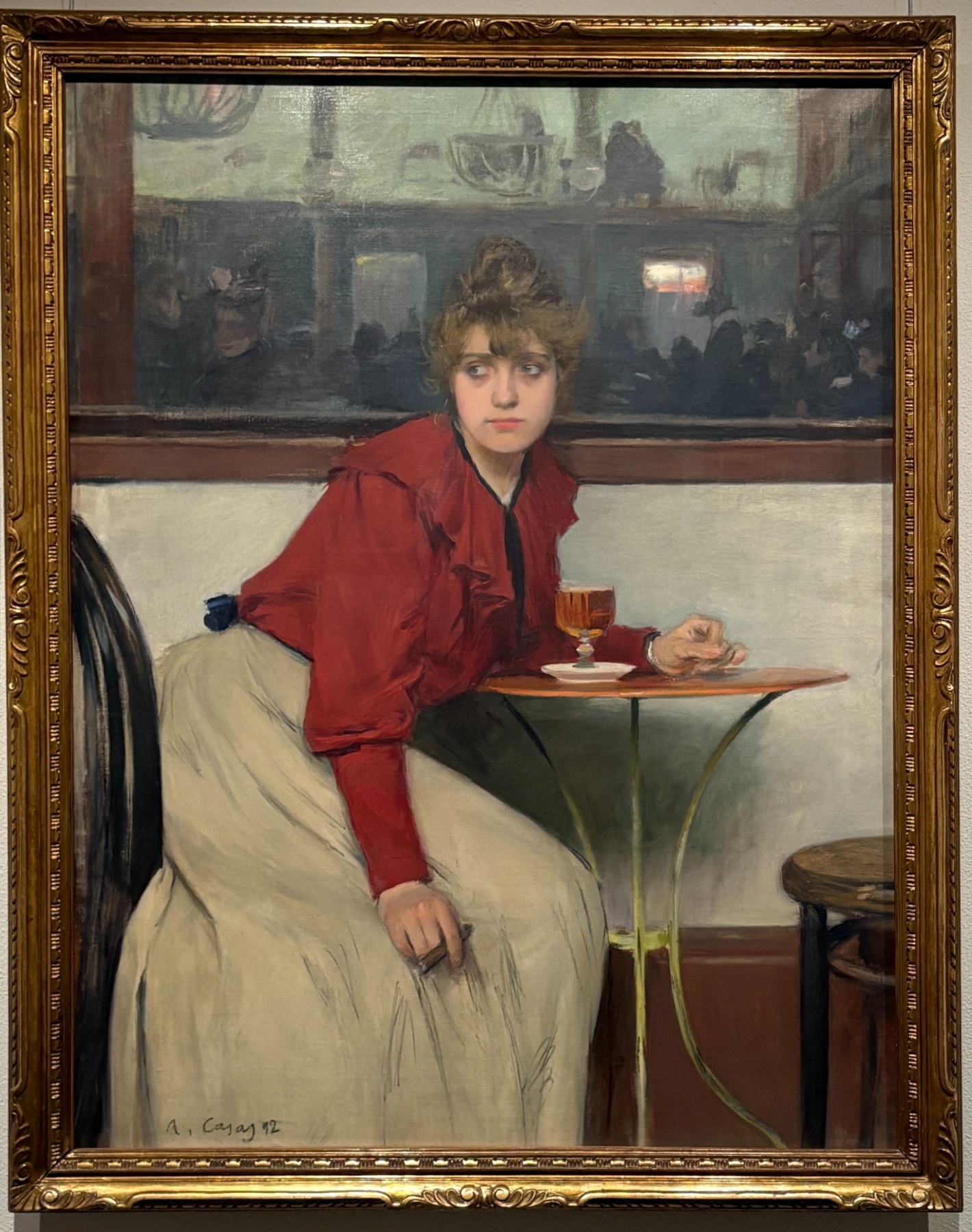
Ramon Casas’s Madeleine — featuring a young woman seated alone a tavern table, nursing a glass of absinthe with one hand and a cigar in the other, the world reflected in a mirror — is recognized as a masterpiece of the late 19th century, and it seems to be a symbol of Catalan feistiness, even if it depicts a Parisian scene. The young woman’s face is everywhere in the adjoining gift shops in Montserrat, adorning key chains, mugs, notebooks and many other things.
A few steps inside the museum tells you there are heavy hitters in the museum: Salvador Dalí, Joan Miró, Pablo Picasso .. they’re all there. Picasso was not Catalan but lived in Barcelona during some formative years, and among his work on display is a portrait of a fisherman done when he was just 13. The range also includes holy work (not surprising, as there’s a basilica around the corner) and some modern paintings and sculptures, too.
What I’ll remember most about Montserrat, though, are the vistas: endless skies, clouds, mountains that seem to be ever-reaching upward, even when you realize erosion has been ever so gradually whittling them away.
I hope to come back again some time to while away an afternoon.