Nabokov’s caution to writers and other artists (and politicians, too)
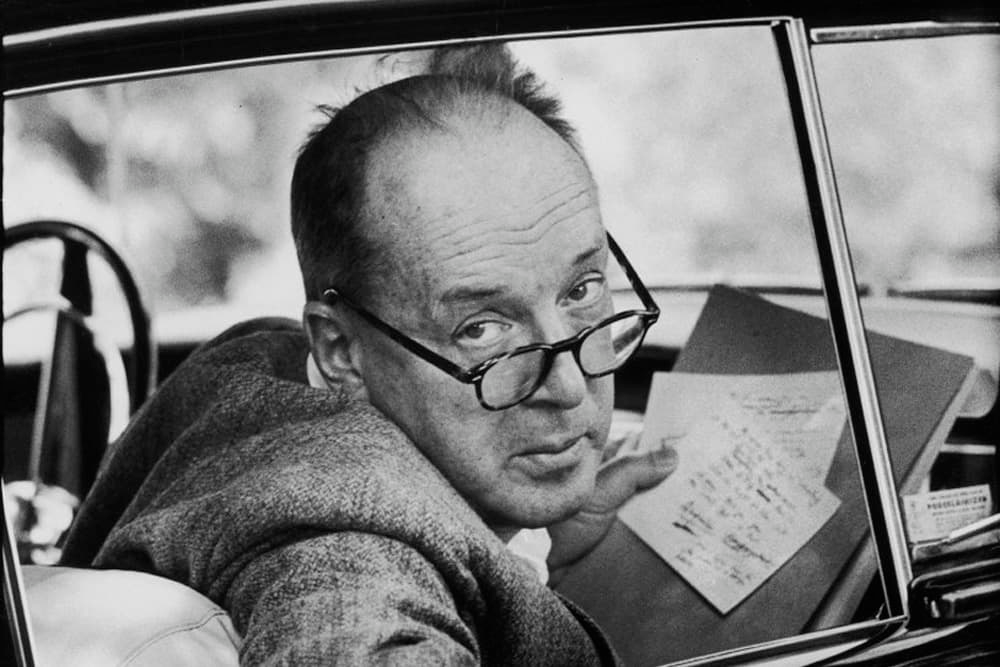
“For better or worse, it is the commentator who has the last word.”
— Vladimir Nabokov
This observation from Vladimir Nabokov is spoken by one of the Russian-American novelist’s characters, and not a nice one, either. (The author himself was a bit of a piece of work, to be fair.)
In Pale Fire, a lengthy unpublished poem is left behind by a poet named John Shade. The work is brought to the public — but is thoroughly changed in “editing” by his neighbour, an academic (his profession is no coincidence) named Charles Kinbote.
Kinbote makes the comment while justifying himself, and it seems to be Nabokov’s commentary on intellectuals vs. artists, creators vs. interpreters.
I studied literary criticism as part of the requirements for my degree, and I cannot say I was thrilled with the process. One of the goals in that era (the mid-Eighties) was to subject the text to multiple lenses, and see how it held up from, say, a postmodernist view, or a feminist, or through structuralism, etc. “Mental gymnastics” was a phrase my wife, who did the same program before me, used to describe the lit crit world.
I recall being influenced at the time by Stanley Fish’s Is There a Text in This Class?, which seemed to be required reading in English literature classes in those days. Fish’s point: meaning is fluid, and can be determined by the readers, as if wresting it away from the author. This came to mind after coming across Nabokov’s tension between writer and scholar. There’s someone else in the room, too: the reader.
This is a concept that may seem a bit high falutin, but it’s been a recurring theme throughout my life.
One of my favourite movies (and my friends Rick and Samantha will back me up on this, as the three of us all loved it) is Whit Stillman’s 1990 comedy Metropolitan, about a group of New York debutantes … and an Upper West Side college kid who crashes into their world.
There’s a scene where that boy, Tom Townsend, is sitting up late in his rented tux at a fancy after-party with Audrey Roget, the bookish student he clearly fancies. She challenges him (of all things!) on his admiration of the critic Lionel Trilling, and then finds out that Tom has not actually read Jane Austen directly.
“You don’t have to have read a book to have an opinion on it,” he explains. “I prefer good literary criticism. That way you get both the novelist’s idea as well as the critic’s thinking. With fiction, I can never forget that none of it ever really happened, that it’s all just made up by the author.”
The movie, by the way, is quite good, and deserved a Criterion edition some years back. It’s still turning heads, too.
These thoughts are back in my head again this week. I’ve been reading Minor Black Figures by Brandon Taylor, which is about the visual arts. Similarly, though, there are threads running through about meaning and interpretation; early in the book, the explosion of interest in the Black Lives Matter movement alters how the protagonist’s work is interpreted and maybe even defined. Taylor also delves into representation, and the gatekeeping that can happen on that front.
Which led me back to Nabokov.
While the insight is a particularly skewed and sarcastic take on academia (itself a great frontier of gatekeeping), I also see it applying to politics.
It’s been much regarded that politicians can make speeches and decisions, but their ultimate legacy depends on the interpretation of what they do. Sometimes, that’s been the role of the press or news media; as time passes, it falls to historians, political scientists and other scholars.
The role of the media has certainly been diminished. There’s a famous quote — “I never argue with a man who buys ink by the barrel,” or a variant — that has been attributed to many people over the years, likely starting with midcentury U.S. lawyer Roger Branigin. The idea is that newspaper pundits, back in the era of printing presses and when ink was actually bought by the barrel, had considerable if not unbeatable clout.
Nabokov’s example is specific: it applies to one case of two fictional characters, about a poem that was a figment of his imagination, and which exists only in a novel.
And yet, the insight flies out of that book, and relates to an age-old tension about texts and meaning, and who gets to decide.