You’ll never walk alone: How a football anthem connects and comforts Alzheimer’s families
There are many songs that came out of the British invasion, but there’s one — a veritable anthem to this day for football fans in the United Kingdom — that often comes to mind when I think about Alzheimer’s disease.
Gerry and the Pacemakers released a cover of the Broadway tune You’ll Never Walk Alone in the fall of 1963, just as Merseybeat was cresting in England, and shortly before Beatlemania swept the U.S.
The song was quickly adopted by hometown Liverpool F.C., and in fact became part of the team’s crest. It has a long, deep and often emotional history with Liverpool and many other football fans, including its resonance and connection to a decades-long search for justice in what’s called the Hillsborough disaster. In 1989, police and ambulance service failures led to the deaths of 97 people in a soccer stadium crush — and it took decades for the truth to finally come out, and for families to be reassured that the fans themselves were not responsible for their own deaths.
To this day, and not just in Liverpool but around the U.K., You’ll Never Walk Alone remains one of the best-known football songs.
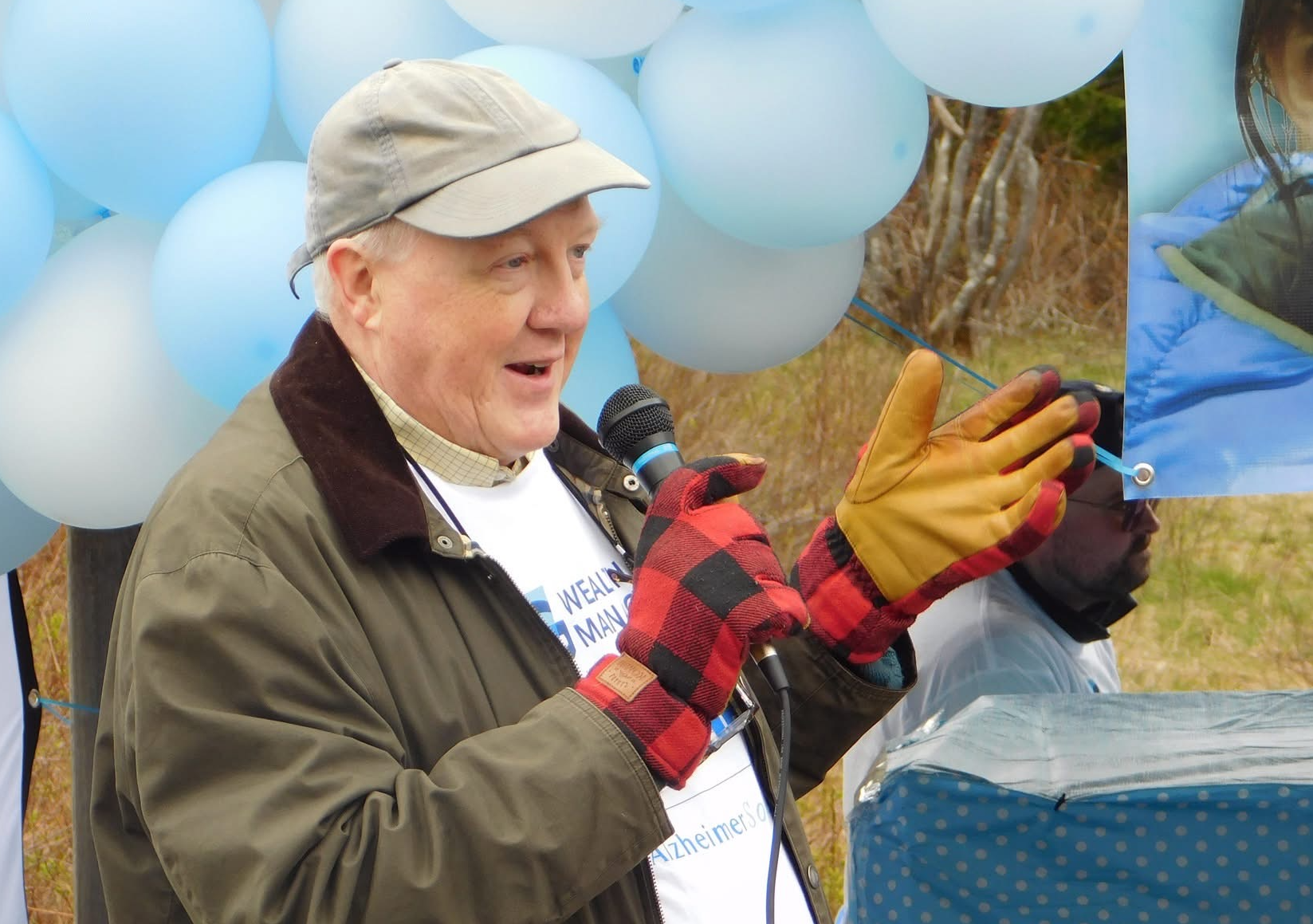
The words and the melody came to mind to me last Sunday, when I rose to say a few words to dozens of volunteers who gathered on a chilly but clear afternoon to raise some money for the Alzheimer Society.
I was surprised and honoured when Shirley Lucas, the chief executive officer of the Alzheimer Society in Newfoundland and Labrador, asked me — as a voice from the families living with the disease — to say a few words at last week’s annual fundraising walk at Pippy Park in St. John’s. (I was very pleased that the Alzheimer’s Diary I’ve started is resonating with others.)
I wasn’t entirely sure what I would say, but I changed tack anyway thanks to the main speaker: Lt.-Gov. Joan Marie Aylward.
While delivering her remarks, Aylward reflected on the earlier years of her nursing career when she worked at St. Patrick’s Mercy Home in St. John’s. She described how one family reacted when they learned their loved one had been diagnosed with dementia.
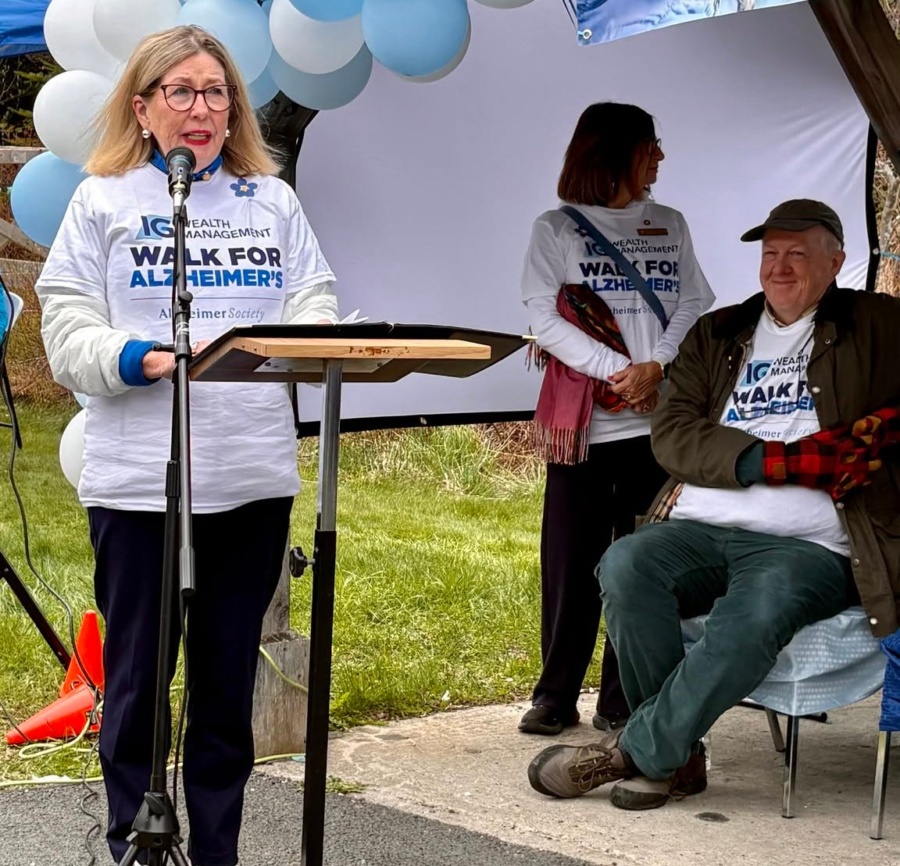
As she told the crowd, the family learned they would not have to walk alone.
Well, there’s my theme, I thought. Aylward’s words sparked a sudden interest to talk about a song that has had great meaning for me, particularly in the last couple of years.
I am sure I rambled a bit as I told the crowd about You’ll Never Walk Alone. I find it difficult to this day not to choke a little bit when I see an emotional, full soccer stadium singalong — of hairy-arsed men, I believe I described them on the day — get through a song that’s much more than a footie anthem.
“Walk on through the wind/ Walk on through the rain/ Though your dreams be tossed and blown,” the song goes.
Is that not perfect to describe what life becomes like for Alzheimer’s families? How difficult and challenging it is to walk when everything — once in a while, at the very least — can feel blown to the wind?
As I found out, I am far from the first person to make this connection. More on that shortly.
The importance of connection
I have been very grateful for the services — the very existence, really — of the Alzheimer Society over the last couple of years. With my mom’s diagnosis in the spring of 2024, I was referred to the local society office in St. John’s. Within days, I was in touch with a young woman named Denver, who is what they call our navigator. She pointed me to references, checked in regularly and had helpful suggestions. Two years later, her support continues to be invaluable.
I have largely depended most on the association’s vast website, which has countless articles, guidance and other resources for families and caregivers of people with Alzheimer’s, as well as other groups.
Upon my retirement, I finally had time to attend First Link, a weekly seminar for families and others. I’m in the midst of attending the program now. Ideally, I ought to have attended soon after Mom’s diagnosis; all of these materials would have been so much more appreciated then.
Nonetheless, I’m grateful to be able to attend. At no charge to participants, the society taps into community resources — often with people who bring their clinical expertise to the sessions — for in-depth guidance on the disease, and what families can expect. For most, clearly, it can be very challenging.
I expressed that gratitude in my short speech on Sunday … and leaned into the message of the song.
While researching this column, I learned that others have drawn upon the song’s poignancy and resilience in the context of facing a progressive, relentless brain disease. I read this article about a choir in Minnesota which sings You’ll Never Walk Alone and other songs. The founders “set out to create an environment where people with Alzheimer’s and their caregivers felt supported and comfortable.” I did not have to strain to imagine that.
I also learned the song’s name inspired the title of the following documentary about dementia in Flanders, the Dutch-speaking part of northern Belgium:
Later, on Sunday afternoon, I paid a visit to my mom.
She remarked on my shirt, and I told her about the walk, about the children whose faces were painted, about the people I met, about all the teams who took part (some for years), about the colour-coded flower badges that people wore, each shade indicating their reason for taking part.
Mom gave me a hug as I talked about what I had to say. We were all there together, I told her. We come from different areas, but we came to walk as one, and to walk on.
As the song says…
You’ll never walk alone
Walk on, walk on
With hope in your heart
And you’ll never walk alone
You’ll never walk alone
