Carl Sagan on what strong emotions can do to you (and to rational thought)

“Where we have strong emotions, we’re liable to fool ourselves.”
— Carl Sagan
Carl Sagan uttered these words in the groundbreaking TV series Cosmos, which aired on PBS in the fall of 1980. Sagan’s documentaries, and the accompanying bestselling book, had the unusual effect of turning a scientist into a celebrity.
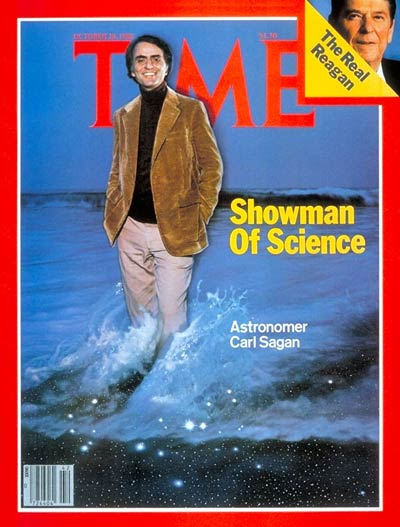
It’s important to note the popular impact of Sagan’s work. While the series was airing, he appeared on the cover of Time magazine, itself a marker of the zeitgeist, a pinnacle no doubt for a person’s career or of something commanding public attention.
Sagan had many things to say in Cosmos, and in other works, but I’m focusing here on critical thinking: of the importance of bringing reason to the fore. It’s important to feel emotions, but as Sagan knew, they can fool you. And you do indeed feel foolish when you understand a truth that has been clouded by strong emotions.
This applies to societies, not just individuals, and we see this played out over and over again. One of my longstanding interests as a journalist has been public health, and the more you learn about it, the more you appreciate the paradox of public health.
That is, the better a public health system is, the more likely it is to be unnoticed. I have long had great respect for public health teams (especially nurses), who quietly do their work and keep so many diseases in check. Their work has been so effective that it is practically invisible, hence the paradox: many people cannot imagine the seriousness of diseases that caused havoc in the past — or of the risks of ignoring safeguards in the present.
Thanks to social media influencers who capitalize on the algorithmic love of (here’s that phrase again) strong emotions, we now have millions of people with disordered eating, a hatred of vaccines, a fear of “elites” (read: clinical experts), an inversion of facts, a privileging of feelings over facts.
Sagan died in 1996; his legacy lives on his works, which still hold up, and in the work of others, like astrophysicist Neil deGrasse Tyson, who picked up Sagan’s torch with a Cosmos series of his own.
A year before he died, Sagan published The Demon-Haunted World: Science as a Candle in the Dark. It’s on my list to read. I came across this quote from it, which builds on the thought from Cosmos, and it remains so relevant for our time, more than 30 years later:
“Usually the victim is caught up in a powerful emotion — wonder, fear, greed, grief. Credulous acceptance of baloney can cost you money; that’s what P.T. Barnum meant when he said, ‘There’s a sucker born every minute.’ But it can be much more dangerous than that, and when governments and societies lose the capacity for critical thinking, the results can be catastrophic.”