My big brown (and often ugly) bowl of breakfast
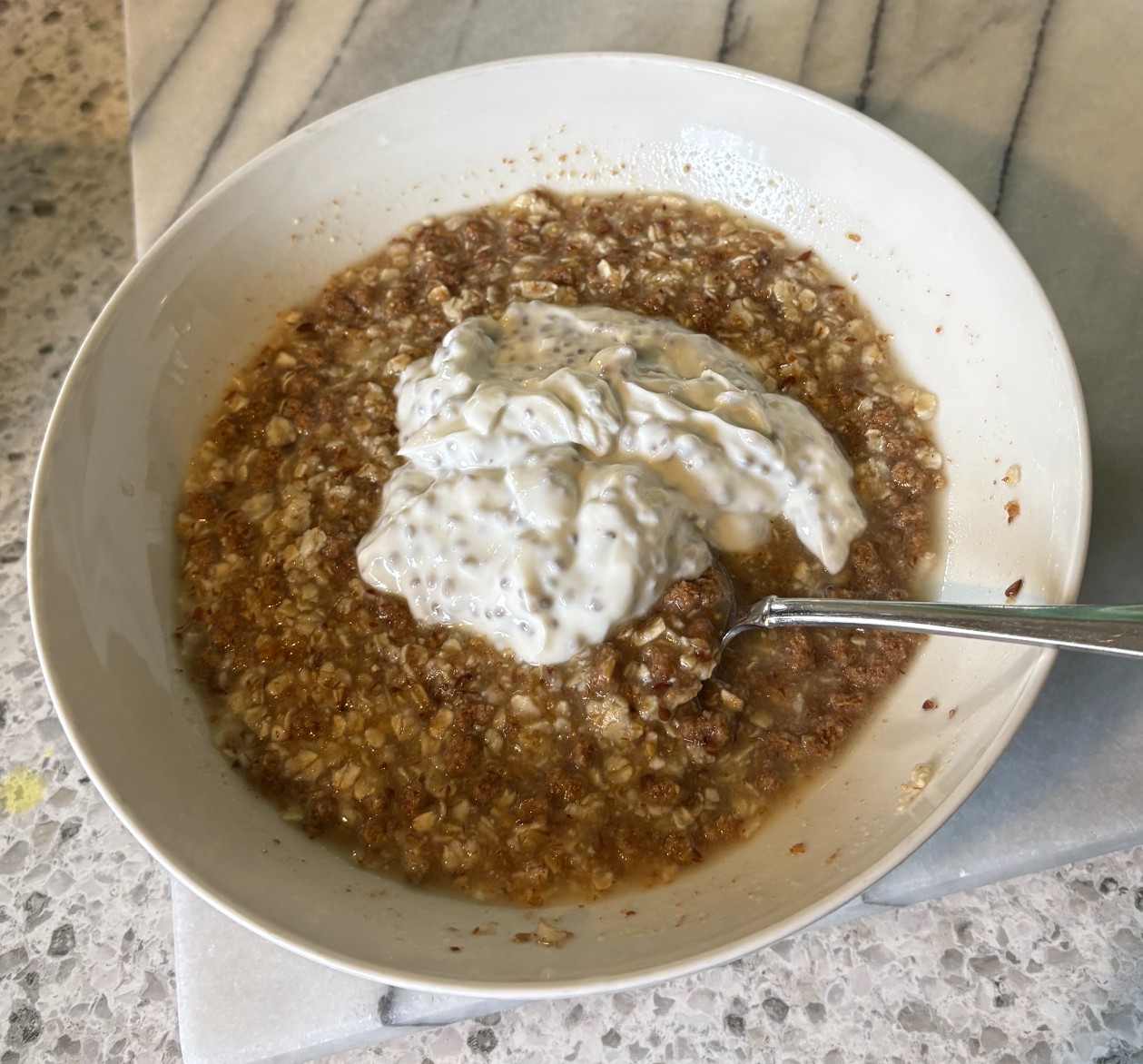
For almost a year, I’ve been eating from a breakfast bowl that often isn’t much to look at, but I can say without reservations that it’s had a great effect on my health.
The goal was to boost my fibre intake, which I had been gradually been trying to address. According to Health Canada, most Canadians don’t meet the halfway mark for daily fibre needs, and I was definitely in that number. (How much fibre — soluble and insoluble, they both matter — varies on age, size and gender, but often-cited numbers are 25 grams for many women and 38 grams for many men.
It turns out that I can get a lot of that work done early in the day. We’ve become mindful of other meals, too (and during the day I sip on a glass of water with holy basil seeds, which packs a huge fibre punch), but breakfast has been my focus.
A quick note about fibre. Our bodies need it for digestive regularity, for starters, but fibre also does a lot of great work inside the body: it keeps cholesterol in a good place, it protects against colorectal cancers, it helps lower blood pressure … there’s a fair bit.
One of my interests has been my weight. On its own, fibre will not take the pounds off. But I’ve found it really helpful over the last year, because fibre really helps with what’s called satiety — that sense of fullness.
I haven’t talked about it much, but I’ve been gradually losing weight for a good while. After a one-two punch in 2020 of breaking my leg and then the COVID-19 lockdown, I lost the plot on my weight. I had stopped weighing myself, but when I started (slowly) turning things around in 2021, I was my highest-ever weight.
I’ve lost about 30 pounds since then, with some bumps along the way. In declining months, the loss has been about a pound a month. They add up, and I feel confident that my approach to breakfast is really helping.
Mixing it up
Most mornings, I throw a variety of things together. It varies day to day and depends on what’s available in the kitchen.
When I’m really organized, I make some of it advance and have some ready in the fridge. The key of this approach is resistant starch, which is basically using chemistry to help you get the most out your food. The oats soften overnight and in the process become gut-friendly, particularly for the large intestine. Resistant starches also lower the impact on blood sugar.
The base of my breakfast is often oatmeal, starting with two or three tablespoons. I often add a tablespoon or so of Red River cereal, which my wife, Martha, likes to use for baking bread. I toss in some bran buds, and a tablespoon of ground flax seed. (Important: it has to be ground to unlock the benefit.) Hemp hearts on hand? A sprinkle of that too.
If I’m organized, I’ll mix the oatmeal into Greek yogurt and leave it overnight. Otherwise I add boiling water and make a quick porridge.
Not going to lie: this can look kind of unappealing. Keep going.
I almost always have a yogurt mixture in the fridge, made with chia seeds. Like basil seeds, chia seeds expand when they are introduced to liquid, and they are incredibly rich in fibre. In yogurt, it turns into a kind of pudding. I’ve read often that some people dislike the texture, but I actually love it. If you like tapioca pudding, you’ll like this.
A good dollop of this goes on top.
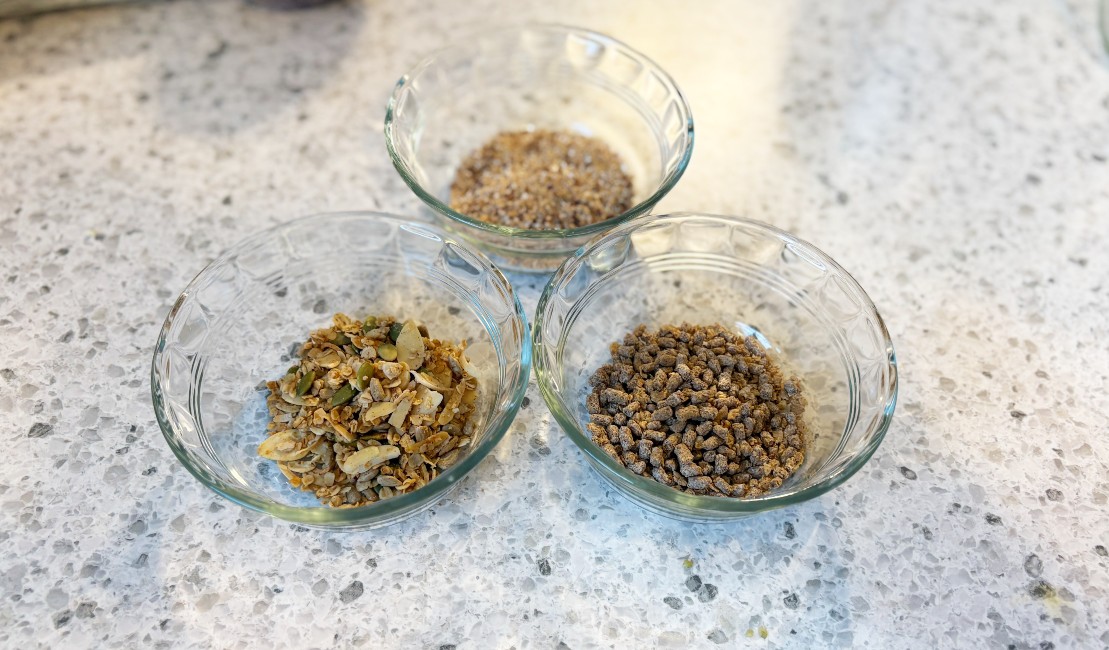
Sometimes we have homemade granola on hand, and I’ll sprinkle that on top for extra crunch, flavour and nutrition (lots of seeds go in our mix).
If I have some fresh raspberries or other fruit, I’ll add a few of those, too. I remember being awestruck when I learned that raspberries are remarkably high in fibre.
When it’s assembled, I’ll often add some milk to loosen it all up. It is cereal, after all! Higher-protein milk is an option here.
And … that’s it! It does seem labour intensive seeing it all typed out, but I can have the whole thing done in a minute or two.
I do tend to make a bigger bowl some mornings now that I am retired, as it tends to last for a while thanks to intermittent nibbling. If I’m writing something, I’ll have a couple of spoonfuls before returning to my thoughts.
Depending on the serving size, it can add up to between 10 and 16 grams of fibre, with a big asterisk or two — my measurements vary by day, and in a hurry I just toss spoonfuls of ingredients together.
For protein, largely because of the Greek yogurt and whether I add milk (and what kind), I can get between 25 and 40 grams per serving.
A key thing about fibre that I learned as I read up on this last summer: you need to adjust your intake gradually, and one step at a time. For reasons that will become obvious, a digestive system cannot suddenly handle a huge change. I followed the advice and made incremental changes, especially in the morning.
Another key bit of advice, which I was late to learn: water. Drink lots of it. If you’re adding fibre, make sure you balance each change with more water. Your system will need that liquid to handle the fibre that you’re sending down. Bonus: it prevents dehydration, which is always good, especially in hotter weather.
That’s the post. I’m turning back to my bowl, and the rest of the day.