A paper chase: I have an article in the new Newfoundland Quarterly
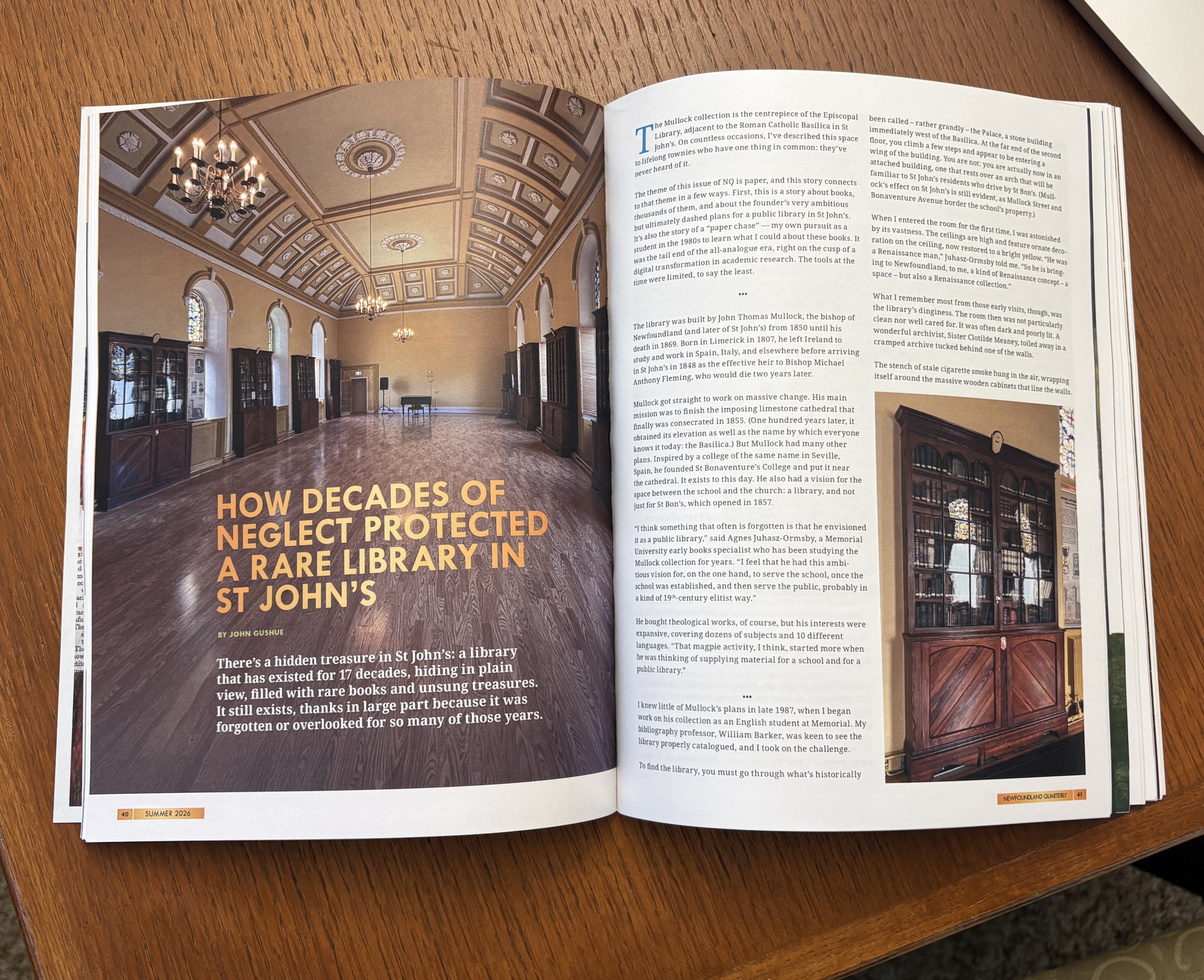
For many years, I’ve delighted in telling people about a library in St. John’s that most folks have never seen — nor even heard of.
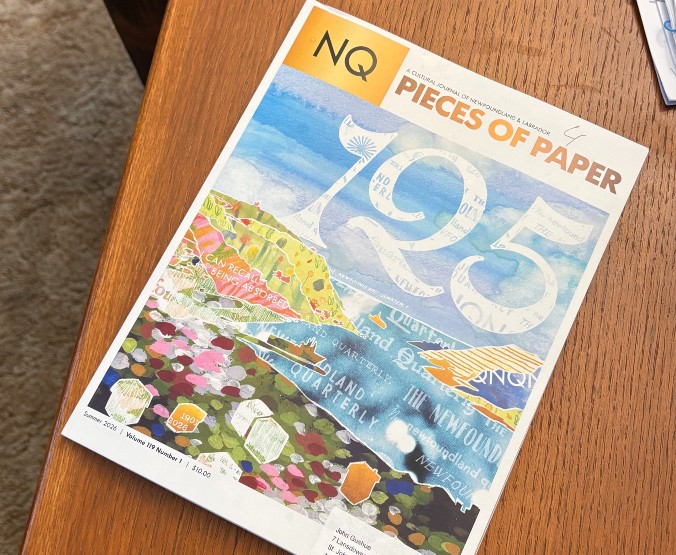
I’ve written an article for the summer issue of NQ, a.k.a. Newfoundland Quarterly, about it.
The theme of the issue is paper, and my article suits it in a couple of ways. It’s a story about a place consisting of scores of rare books, founded in the 19th century with great ambition by a bishop who wanted to build the first public library in St. John’s (not to mention a university).
It’s also a story about bibliography — an undergraduate research project I undertook in the 1980s, working in the Episcopal Library near the Roman Catholic Basilica in downtown St. John’s. At the time, online research did not exist, so all of my work on the books was done the old-fashioned way … on paper only.
John Thomas Mullock founded the library, and it’s connected to a better-known place he founded: St. Bon’s. Inspired by his experiences in Spain, the Franciscan priest had a huge dream for the library. The dream alas was not fulfilled.
The title of my article is How decades of neglect protected a rare library in St. John’s, which sets the table for what happened … or, rather, didn’t happen … after Mullock’s death. Private libraries like Mullock’s tended not to survive the years, being sold or broken apart by collectors.
The article also includes one of the more unusual moments in my life, when I learned in 2016 that work I had done as a student had been followed up over the years by students and academics, leading to a conference and and a scholarly book, The Finest Room in the Colony, which can be read online here.
You can read the whole story in the issue, out now. Information on where to find the magazine or to subscribe is here.
I see from a note on the inside of the edition that this is issue No. 500, which is rather cool.
My thanks to managing editor Joan Sullivan for approving the pitch, and to Agnes Juhasz-Ormsby (who has studied the collection for years, with colleague Nancy Earle), Anne Walsh and Maria Conkey for being generous with their time and insights as I worked on this piece.