Another view of A Room with a View, and being young and in love
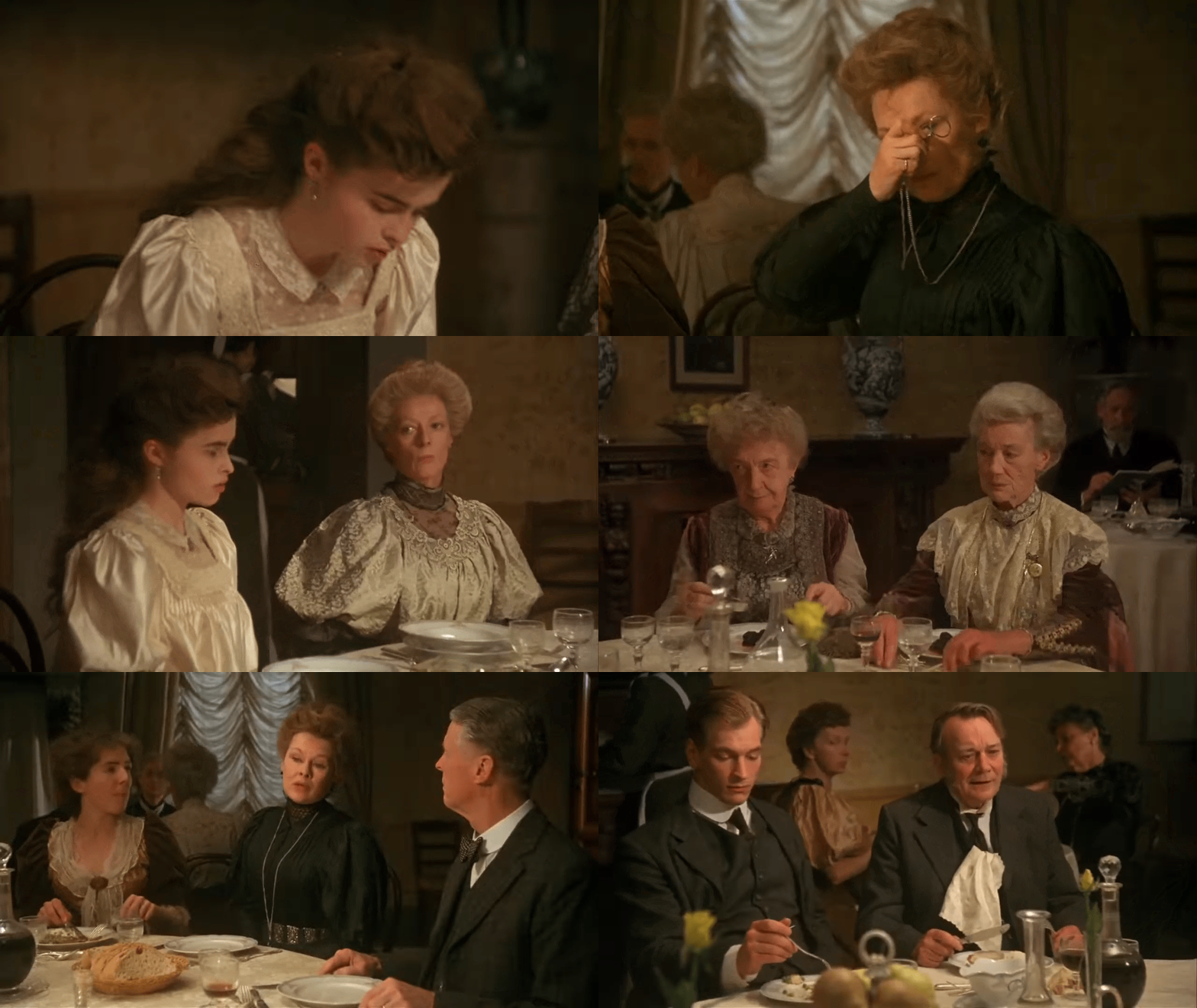
Some nights ago, when there was still a bit of heat in the air and golden light outside, Martha and I sat down to watch A Room with a View.
I’d hesitate to count the number of times we’ve watched it, but it would be a fair bet we’ve probably watched it more years than not since we’ve been together.
We first saw it in the spring of 1986. We had only been together some months at that point, and looking back, we were young and very much in love. A Room with a View fit the bill for a date, not just as a movie but also as a book; the English novelist Zadie Smith calls E.M. Forster’s slim, enchanting story as “a young person’s novel; I think to have its largest effect, it’s best to read it as a teenager or a young person.”
The Merchant Ivory movie struck a chord with us, and how could it not? Filmed on location in Florence (and of course in England), it was funny, wise, gorgeous and charming. Martha and I both wanted to read the Forster novel right after seeing the film, and I remember we each bought a reissued paperback edition (at Ottawa’s fondly remembered Prospero Books, if I recall) because neither wanted to wait for the other to finish.
We were back in St. John’s that summer, and queued up again to see it. The oddest thing: we recognized another couple from the Ottawa screening. Clearly, it was a movie that stood up to seeing again.
And again and again, in fact. We bought the movie on VHS, and years after that, on DVD. Repeat viewings have imprinted lines of dialogue — “you have flowers in your hair,” said with a Simon Callow manner, will always make Martha smile — that we pop out when we’re around the house. “We will incommode you no longer,” “observe my foresight,” “sham aesthetics,” “the tempestuous tulip [and] reckless rose” … they’re like verbal memes to us.
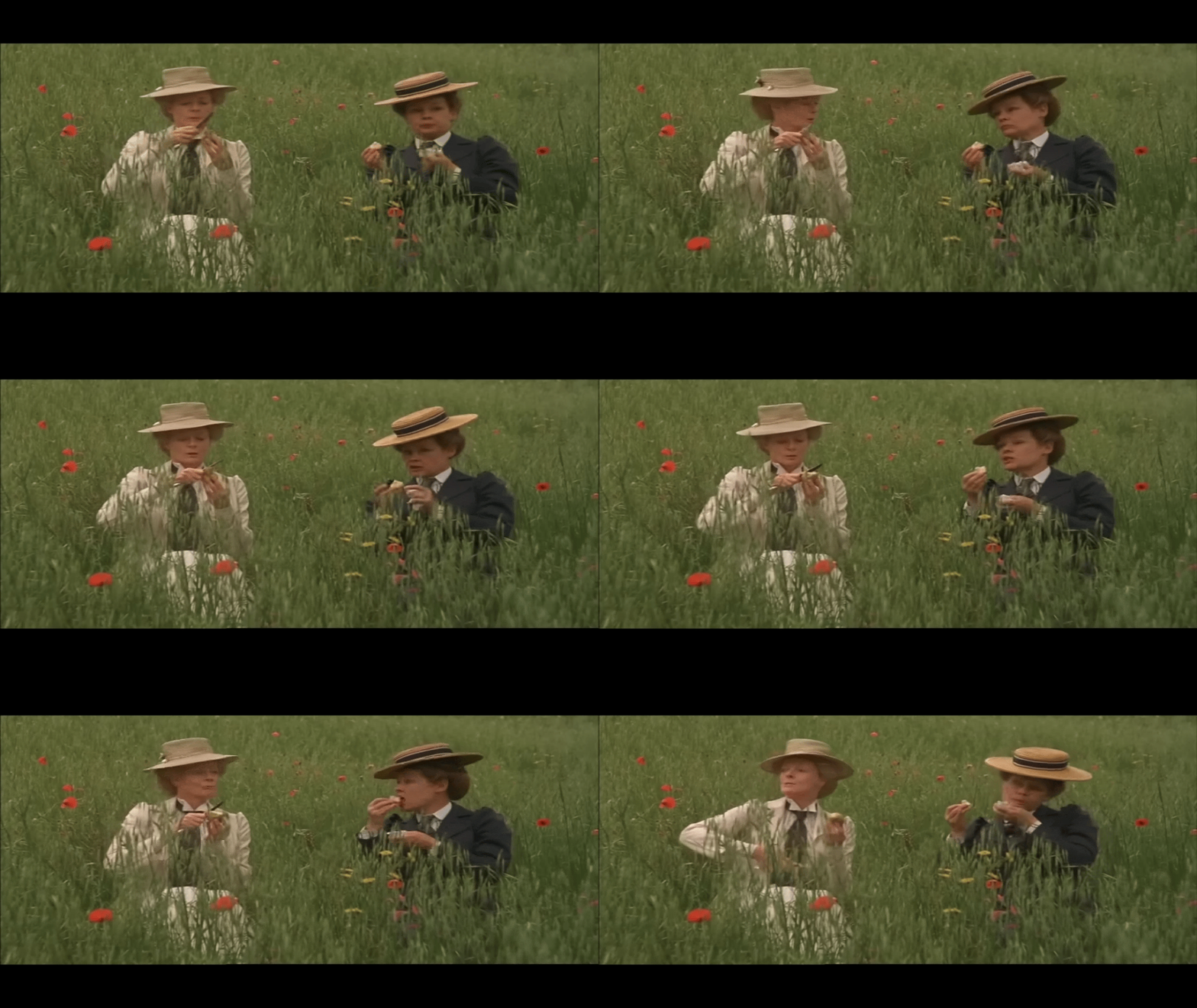
The film is also rich with performances from a remarkable cast. We were introduced to Helena Bonham-Carter but also to Judi Dench; I had never seen her in a movie before, and I finally understood why her stage reputation preceded her. Her scenes with Maggie Smith remain perfection. “I divine it, Charlotte, you had an adventure there,” Dench’s Eleanor Lavish (the name!) says to Smith, the priggish chaperone, at a picnic in a Tuscan field with poppies.
This was also the film where we realized how prodigiously talented Daniel Day-Lewis is.
About a week before we saw A Room with a View, Martha and I saw My Beautiful Laundrette, in which Day-Lewis plays a gay punk with a white nationalist background (yep, that’s the character) who falls in love with a young Pakistani man working for his ambitious uncle.
While watching Room, Martha leaned in to ask where Daniel Day-Lewis was in this film. He’s Cecil Vyse, I told her. Cecil Vyse (another name!) is the pompous ass whom Bonham-Carter’s Lucy proclaims to love, lying to everyone and herself after meeting (and kissing) the quiet, searching George Emerson in Italy.
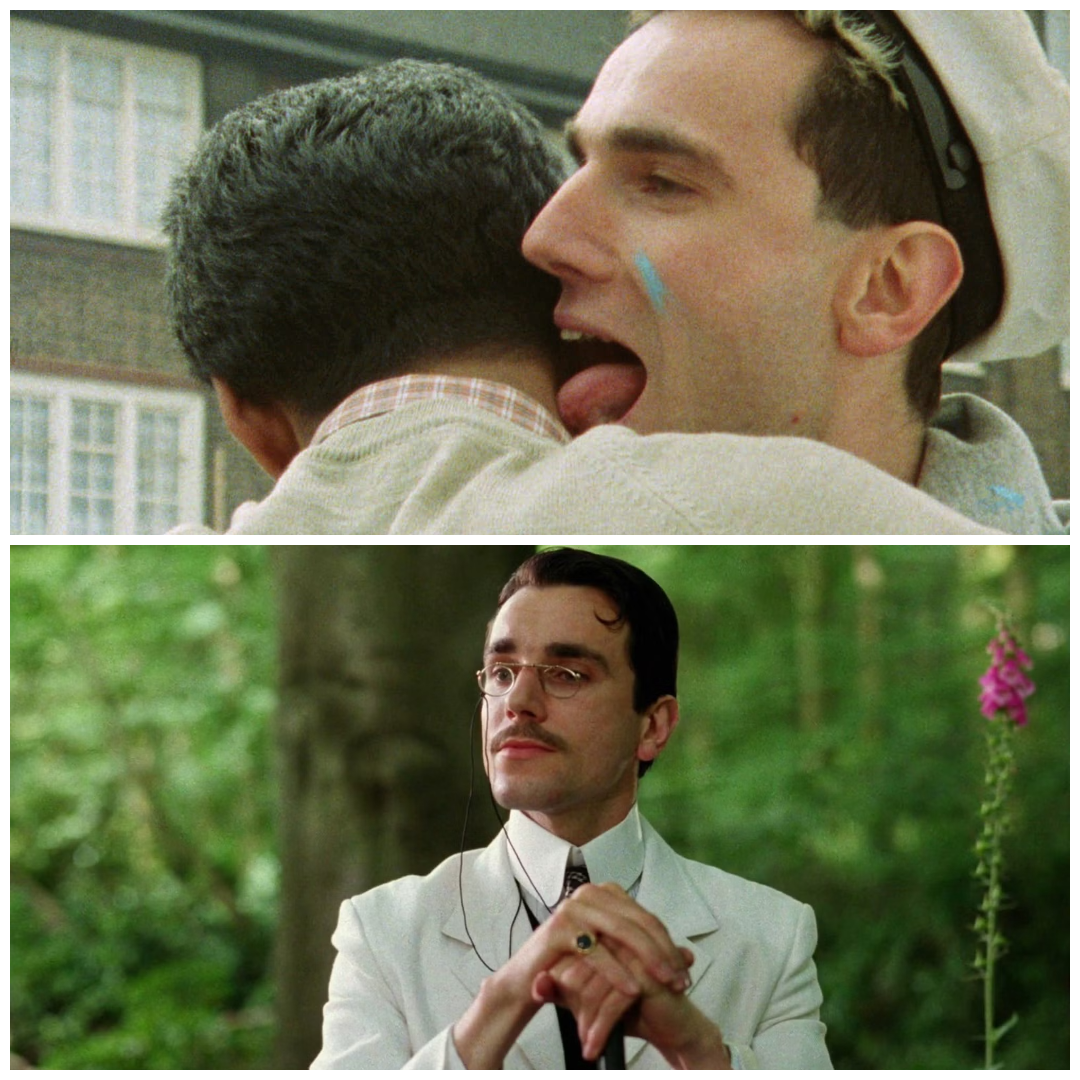
Cecil Vyse was of course an astonishing transformation for Day-Lewis, who in this interview described his character as the “sort of person that you imagine you might be in your worst nightmares … who who can’t open his mouth without clearing a room.”
Literary critics have read a lot into Cecil in terms of Forster’s own sexuality; Forster had long repressed his queerness, not having any sexual experience until his late 30s. He wrote A Room with a View in 1908, when he was 29. The air of innocence in the book took on different shades of meaning when I read more from Forster, and more about him. When George tells Lucy he is making a mistake with Cecil (“the sort who can’t know anyone intimately, least of all a woman,” he says, words that Lucy repeats to Cecil later), you have to wonder how much of himself that Forster put into Cecil.
The contrast of Lucy’s first kisses with George and Cecil are played for comedy, but they’re also poignant in their own way.
It’s significant that the team of Merchant Ivory — producer Ismael Merchant and director James Ivory, professional and life partners for decades — pushed a few queer elements to the fore in A Room with a View, particularly the raucous swimming scene, in which George, Freddy Honeychurch and the Rev. Beebe frolic in the nude in the “Sacred Lake,” before the ladies and Cecil, in full Edwardian dress, stumble upon them. (In the Criterion edition interviews, Callow said the actors were promised two things that turned out not to be true: the pond would be warm, and they would not be filmed below the waist.)
The massive success of A Room with a View put Merchant Ivory on the map, and the clout allowed them to adapt Forster’s posthumously published Maurice, a novel where the gay focus becomes explicit, with James Wilby, Hugh Grant and Rupert Graves. They also went on to adapt Forster’s brilliant Howards End, which is one of my favourite novels. That film, released in 1992, brought Emma Thompson’s first Oscar.
A Room with a View, which is the frothiest of the lot, is something we gravitate to again and again, especially in the warmer months. We seem to latch on to one aspect or another as we age; how poignant Cecil’s final scene is, as he sits on the stairs to put on his shoes after Lucy ends their engagement; how young Graves, who plays Freddy, appears, and what a good character actor he has become; how good the production values are for a film made in a few weeks on an utter shoestring of a budget; the tragic death of Julian Sands, who played George, in a hiking accident a few years ago; our own memories of Florence, the city that is home to Brunelleschi’s dome, itself a symbol of humanism that my dad taught me from early childhood.
It doesn’t have to be a sultry summer evening to rewatch one of our favourite films, one that is a joyful reminder of our early happiness.
But it sure helps. You can’t be 21 forever, but you can remember the feelings.