Searching for forgiveness, at the intersection of love and justice
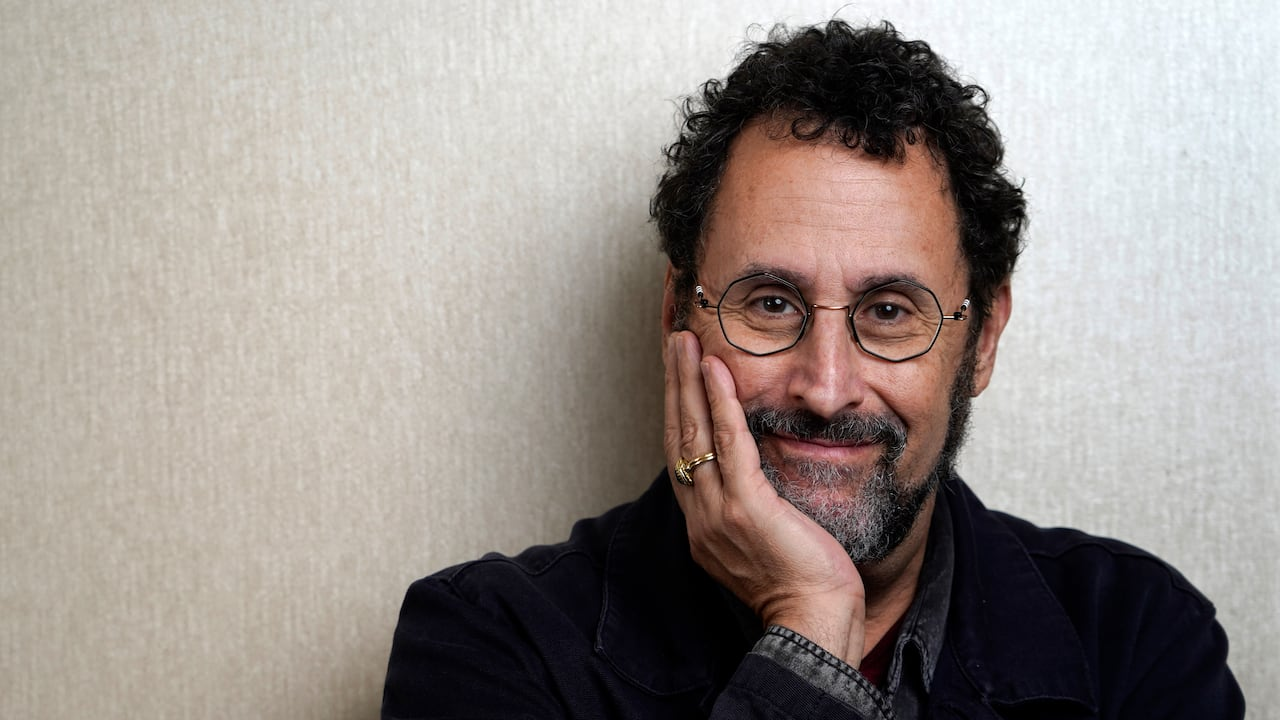
“Forgiveness. Which is maybe where love and justice finally meet. Peace, at last.”
— Tony Kushner
The playwright Tony Kushner put these words near the end of his epic Angels in America, in the mouth of Belize, the nurse who’s known by their drag identity. It’s quite the scene: the hate-filled Roy Cohn (the slightly fictionalized version of the real lawyer/political fixer) has just died of AIDS, and Belize is pleading with his friend Louis to say the Kaddish, the Jewish prayer for the deceased.
It’s a remarkable moment in a play that’s filled with them, and I’m keenly aware of this today because I just finished reading Kushner’s full text. (Why was I reading it, and now? Long story short, I wanted to complete a Goodreads challenge; I saw the play on the list; notably, I was able to borrow an electronic version from a library with no issue.)
Angels in America rocked the theatre world when its two parts — Millennium Approaches and Perestroika — debuted in the early 1990s. I have never seen the play on stage, but we much liked Mike Nichols’s faithful adaptation (using Kushner’s script) as a six-hour movie for HBO in 2005.
So much of Kushner’s writing is vivid and so very alive on the page. Even though he was casting a backward glance at the AIDS crisis in the New York of the 1980s, his dialogue still percolates with timely, of-the-moment thinking. It’s a long play of nearly non-stop talking, and yet reading it, it never felt anything was dragging along. (In the notes at the end of the edition I borrowed, he revealed he didn’t conceive of the play originally as a two-night affair until a colleague suggested it, imploring him to keep and not cut one of Harper’s monologues.)
It may be helpful to revisit the lines above in better context. Through the play, we have seen Belize fight back against Cohn (in the HBO version, Al Pacino plays Cohen to Jeffrey Wright’s Belize), challenging the closeted Cohn over his decades of weaponized hate, including against the queer community. And yet Belize still sees and values Cohen’s humanity. Cohn was too late to benefit from the then-experimental AZT he obtained through his formidable influence, and Belize pilfers the fridge to extend the life of his friend Prior, whose angelic hallucinations anchor the show. He tells Louis, who had abandoned Prior at his lowest moment, of Cohn:
“He was a terrible person. He died a hard death. So maybe … A queen can forgive her vanquished foe. It isn’t easy, it doesn’t count if it’s easy, it’s the hardest thing. Forgiveness. Which is maybe where love and justice finally meet. Peace, at least. Isn’t that what the Kaddish asks for?”
Here’s how the scene was staged in a 2017 version of Angels in America at the National Theatre in London. Belize and Louis haggle near Cohn’s body; the ghost of Ethel Rosenberg, who has haunted Cohn and who will help Louis with the prayer, sits between them.
Kushner’s thoughts about forgiveness — about love and justice, two honourable things that are not necessarily often linked or fused — struck a nerve with me, and I wanted to highlight them.
Forgiveness, of course, is a complicated matter, and often utterly personal. It is, as Mohandas Gandhi said almost a century ago, not of the weak but “an attribute of the strong.” We often find forgiveness at least as much for ourselves as for the other party.
And it’s often complicated, and messy. “Every one says forgiveness is a lovely idea,” C.S. Lewis wrote in one of his religious works, Mere Christianity, “until they have something to forgive.”
While reading Angels in America, I was also drawn back to a better known bit of Kushner’s writing: the terrific moment at the end, when a much healthier Prior convenes in front of the Bethesda fountain in Central Park in the winter of 1990 with Belize, Hannah and Louis. In the midst of a political discussion (it’s about Israel and Palestine, then as now a topic of concern), Prior breaks the fourth wall and speaks directly to the audience. “We won’t die secret deaths anymore. The world only spins forward,” he says. “We will be citizens.”
It’s so powerful, even now. Here’s that scene from the Nichols film, with Justin Kirk as Prior.