Everyone can recognize a braggart. Getting away can be trickier
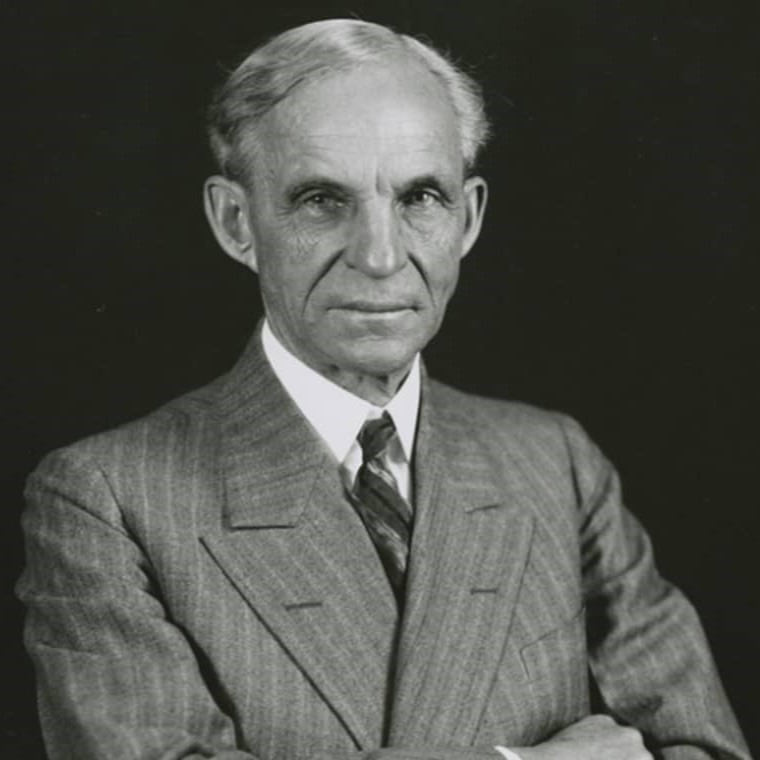
“A bore is a fellow who opens his mouth and puts his feats in it.”
— Henry Ford
Henry Ford’s well-known observation has a decent pun in it, as well as a sharp insight into human nature: people get very tired, very quickly, when someone drones on about their accomplishments, or can’t help but boast on every occasion.
Haven’t we all been there? A conversation that is inevitably tilted toward one person, who somehow finds a way to mention their remarkable deeds. I remember one social event where, in a circle, each of us struggled to find the right moment to get out of it (we assembled later, albeit without our talkative acquaintance.)
Feats don’t fail me now …
As for Henry Ford, he died in 1947, and the enterprise that he founded remains one of the largest automotive companies in the world.
His own accomplishments of course were many, but his legacy is mixed, to say the least; when I was growing up, decades after his death, the damaging impacts of the assembly line on workers were well understood. (Replacing them with robots was not necessarily the best response.) As a student, I was astonished to learn of Ford’s anti-Semitism and how his admirers included one Adolf Hitler.
On the other hand, Ford understood the principles of a living wage, even if he did not use modern phrasing. That said, historians have pointed out that Ford’s motivations were hardly altruistic.
I was curious to come across this essay in Time magazine published in 1953, which not only included the quote above but retrospectively laid out Ford’s life, just six years after he died.
It turns out that the mixed and contradictory perspectives of posthumous evaluation were factors he encountered during his lifetime:
Henry Ford was damned from time to time as a Communist (for his $5-a-day wage), an anarchist, an anti-Semite, a Fascist; he was praised as the greatest living American, whose diverse interests (e.g., planes, rubber growing, synthetics, early American furniture) made him seem a kind of machine-age Leonardo.