Making stock is the tastiest way you can recycle
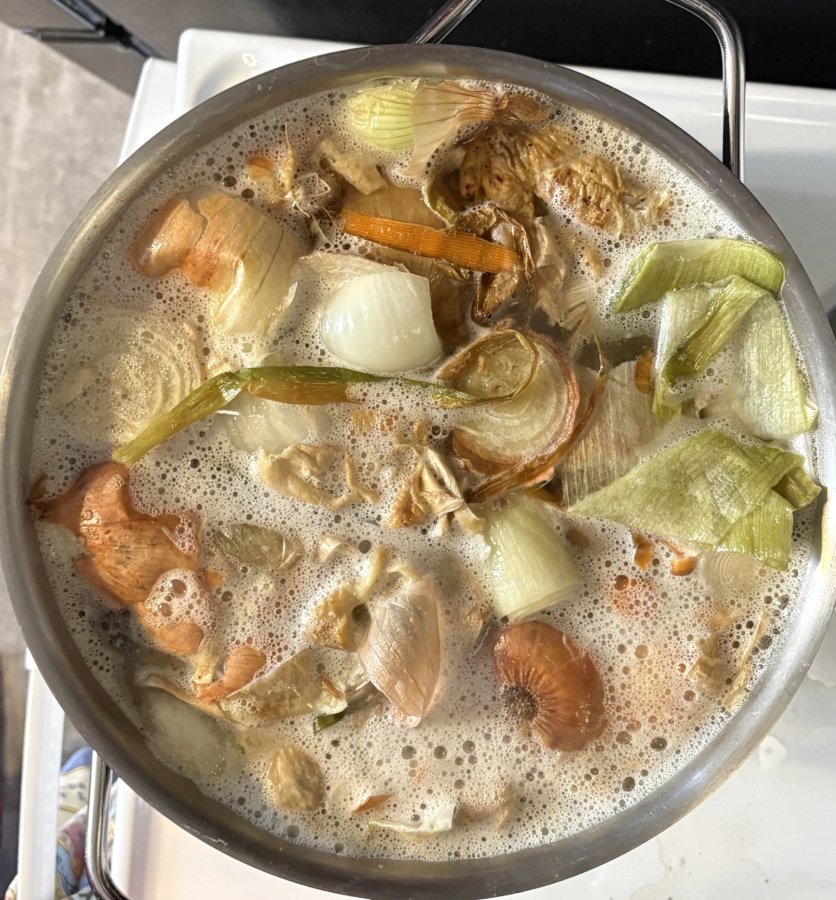
It’s a snowy Friday, and I wish you could smell my kitchen. I have two pots on the stove, filled with chicken bones and water. By the end of it, we’ll have stock and plenty of it.
Somewhere along the way (I think we can agree on or even blame health influencers on social media in the 2010s), good old-fashioned stock became branded as “bone broth.”
Um, whatever.
If it helps get people making stock, I’m all for it. I knew the bone broth thing had peaked in an early episode of The Mandalorian, when the title character orders some bone broth for Baby Yoda/Grogu while they’re on the run.

The official Star Wars site posted a recipe, and there are plenty of videos (like the Binging with Babish one below) out there, inspired by the scene.
Making stock is something we do pretty regularly. It’s easy-peasy, low effort, high yield work.
It also stretches a food dollar. Sure, you can buy stock at the store, but most options are wicked for sodium. Making our own always tastes great.
It’s also a great way to recycle, and avoid food waste. I’m not the most frugal person in the world, but I hate seeing good things get trashed. I’ve been composting mightily since the late 1980s, and making stock feels directly connected to that: everything gets used, if it can.
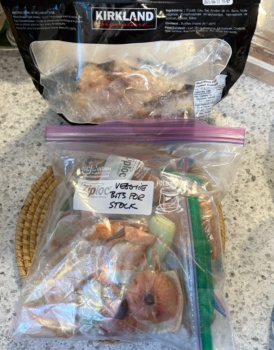
We save bones in the freezer, and when I’m chopping vegetables, I will always put aside bits of celery, onion peels, leek leaves and other things into baggies, and throw them in the freezer.
On a day like today, it all comes out of deep freeze. I have two stock pots full today, because we had extra chicken carcasses from Nick and Mary, who swapped in stuff from their freezer in return for bottled stock I’ll furnish to them later. (More on that soon.)
Each pot has three or four chicken carcasses (one is bigger than the other), plus the frozen veg. I also rough-chopped some onions to get that extra flavour in there. If you’re vegetarian or vegan, making vegetable stock is just as simple and economical.
Beef stock is made less often here, as we don’t as often have bones. Roasting them in advance of the stock is highly recommended.
Have a boil-up, then go low and slow (and long)
The only time you really need to watch the stock is when it comes to a boiling point. (A boil-up, by the way, for the non-Newfoundlanders, is making a fire for tea, lunch or equivalent during an outing in the woods.) The stock can easily spill over or spatter you.
Once it’s come to a boil, it’s simmer time. I’ve seen people recommend 12 hours, but I usually don’t go that long. A good, rich stock can be yours in fewer hours than that. It is, though, something that happens through the course of the day. The house smells amazing as we putter about, letting the stock reveal itself.
Straining comes at the end. I’ve read some people compost the bones, etc., at the end, but I never do that. We had a rat get into our composters once, so my composting operation is effectively vegan: no animal products, including egg shells (this is what attracted the rat last time, I learned to my horror). I’m certainly not going to tempt them with chicken carcasses!
Onto the shelf
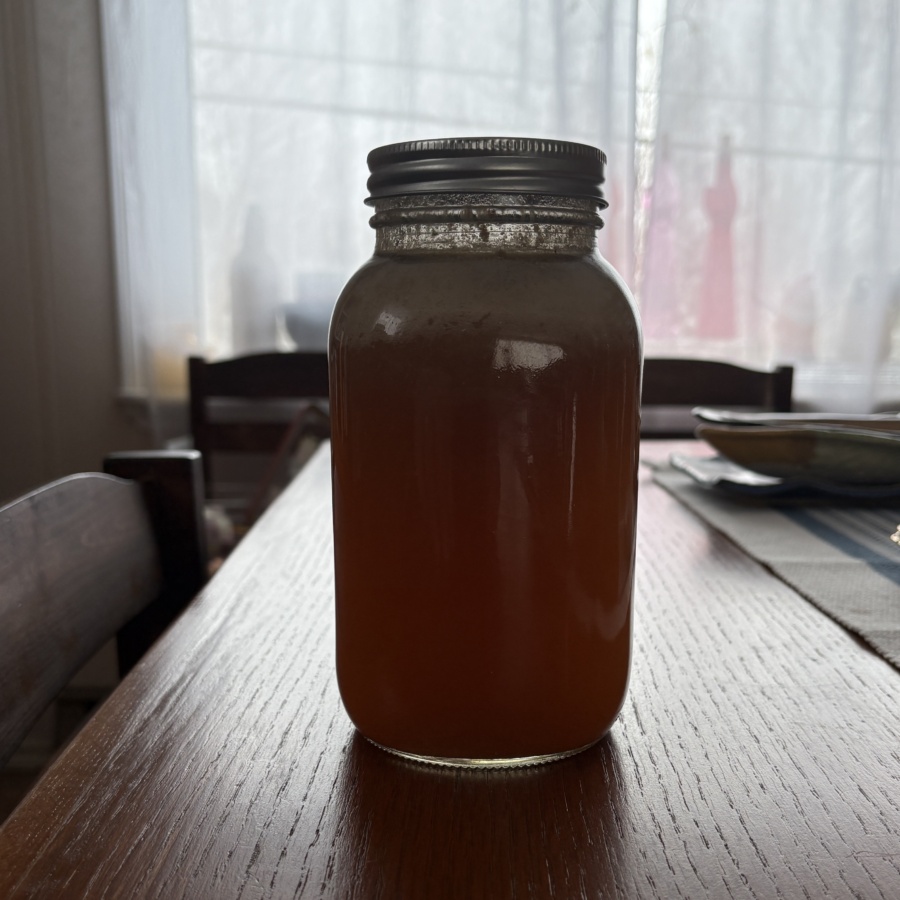
We used to freeze our stock, but we made a change recently.
In the fall we invested in a pressure canner, and it’s a game-changer for stock and other meals. Each bottle is shelf-stable, meaning the stock now goes to the pantry. We’ve been canning things like jams, jellies, etc., for years, so it’s an evolution, but it does require more attention.
The end product is wonderful. It’s the work of a second some evening to get a litre of stock into a pot to make top-shelf chicken noodle soup, or anything else you desire.
I mentioned how stock is economical: for very little extra money, you’ve made an excellent source of food for yourself and hopefully others to share and enjoy.
It’s also healthy. While some of the health claims that attention-grabbing influencers make (like curing disease or eliminating wrinkles) are rubbish, there is excellent evidence for the benefits of stock as a source of nutrients and for helping your digestive system, like other good food choices. Here’s an excerpt from a 2025 review published in a journal called Digestive Diseases and Sciences:
Through comprehensive reviews of animal and human studies, this research highlights that bone broth includes amino acids (glutamine, glycine, proline, histidine, arginine), minerals (Ca, P, K, Mg, Zn) that are beneficial and not just a traditional remedy, resolving questions that have been posed for generations.
For me, I just plain like making stock. Like most things that are home-made, the quality is right there in front of you.
Happy sipping.