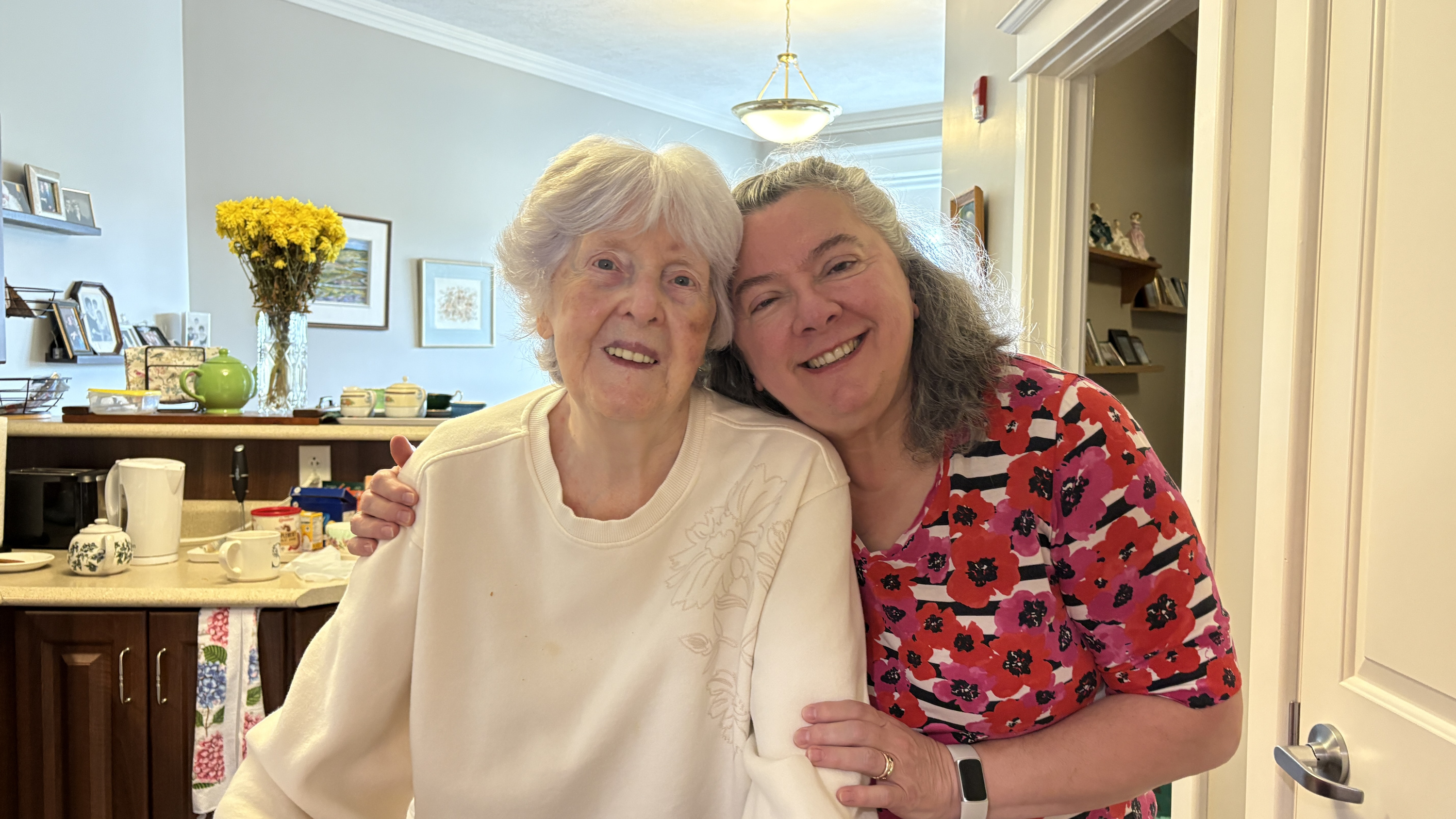
After the fall: Mom recovered from an injury, but Alzheimer’s exacts a toll
The call came in around 3 in the morning, and we were sound asleep. It was a nurse, telling me my mom had fallen in her bathroom.
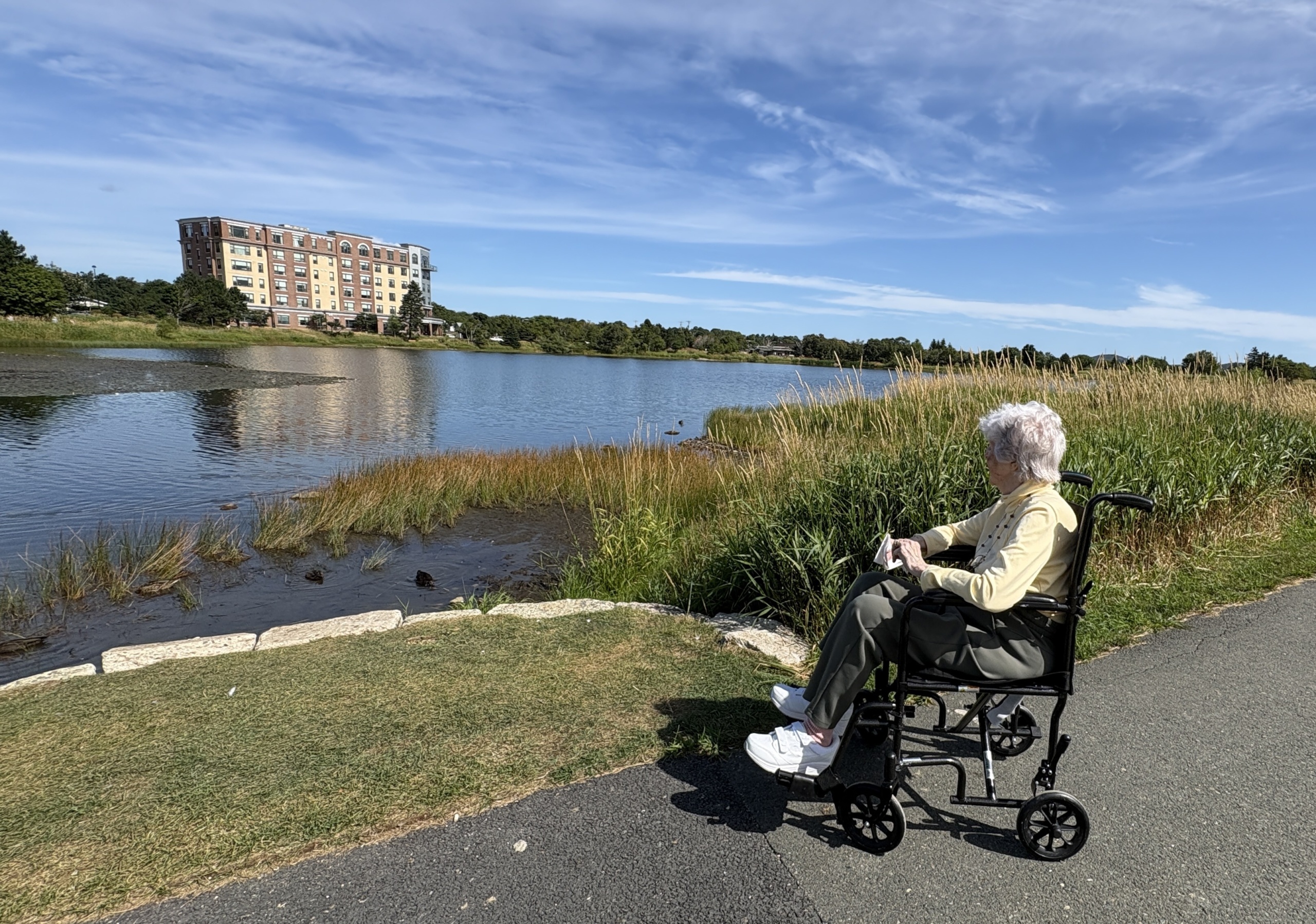
It was a Sunday morning, and ordinarily, I would have darted over to the residence where my mother, Sheila Gushue, has lived for the last two years.
But on this June morning, I was in a hotel room in Toronto, and as the nurse told me about a fall that had happened minutes before — and how they would be monitoring her in the coming hours — I felt somewhat powerless. Too far away to be a comfort, and unable to help directly.
A little later, another call: Mom was not improving, and was showing the symptoms of a concussion. A hospital visit was arranged, and my sister, Lisa, ably took things in hand as Mom spent a long day in the ER for tests and examination.
She did indeed sustain a concussion, and had broken her nose. The tests also showed that Mom had had low-grade, or atypical, pneumonia, which would require treatment with antibiotics.
At 93, and with Alzheimer’s, none of this was good news.
As many adult children of aging parents know, fall risk is a persistent threat, and it grows more serious as the months and years go by. As many clinicians have told me, a fall often precedes a cascade of other things that can go very wrong, often leading to death. Apart from hip, leg or other serious bone breaks, there can be organ damage or internal bleeding. A head injury could be in the mix. Other impacts — depression, bed sores, atrophy — can follow. It’s all awful.
While my father, Bill Gushue, was being admitted to the Health Sciences in St. John’s in early 2024, the attending physician was curious to know more about him. Dad was 95 at the time, and had been in pretty decent health in his senior years: no chronic illness, few medical interactions (which to be fair Dad enabled by avoiding doctors!).
“Do they have a stair lift?” he asked. Yes, I said, for years. And they always use it.
“That’s why your father is 95,” he said, going on to list some of the complications of a fall, many mentioned above.
I was newly grateful Mom and Dad had invested in that lift years earlier, and even more that they were compliant in using it. I had never really given fall risk that much thought during their 80s.
We tend not to think about falls until we have to. This was the case with our family, and we were very focused on — and very worried about — Mom’s health immediately after her fall.
The most obvious effect was her face: the bruising was impossible to miss. But the true anguish was elsewhere: the effects of a concussion were persistent and painful in their own right, but were also difficult for Mom to understand while she was confused enough because of Alzheimer’s.
I have been concussed a few times over the years (I’m six-foot-six, and have banged my head into things, once seriously) and have long appreciated the range of things that can come from such an injury, from endless throbbing to agonizing waves of pain.
The nausea and dizziness that Mom felt were stubborn and lasted a good while. As the days turned into weeks, we saw gradual improvements. Eventually, the nausea left and the dizziness abated. Her demeanour improved dramatically. Mom also returned to more normal things: feeding herself was a priority for her, and although she was nervous about another fall, we were glad she took on the challenge of using her walker once more.
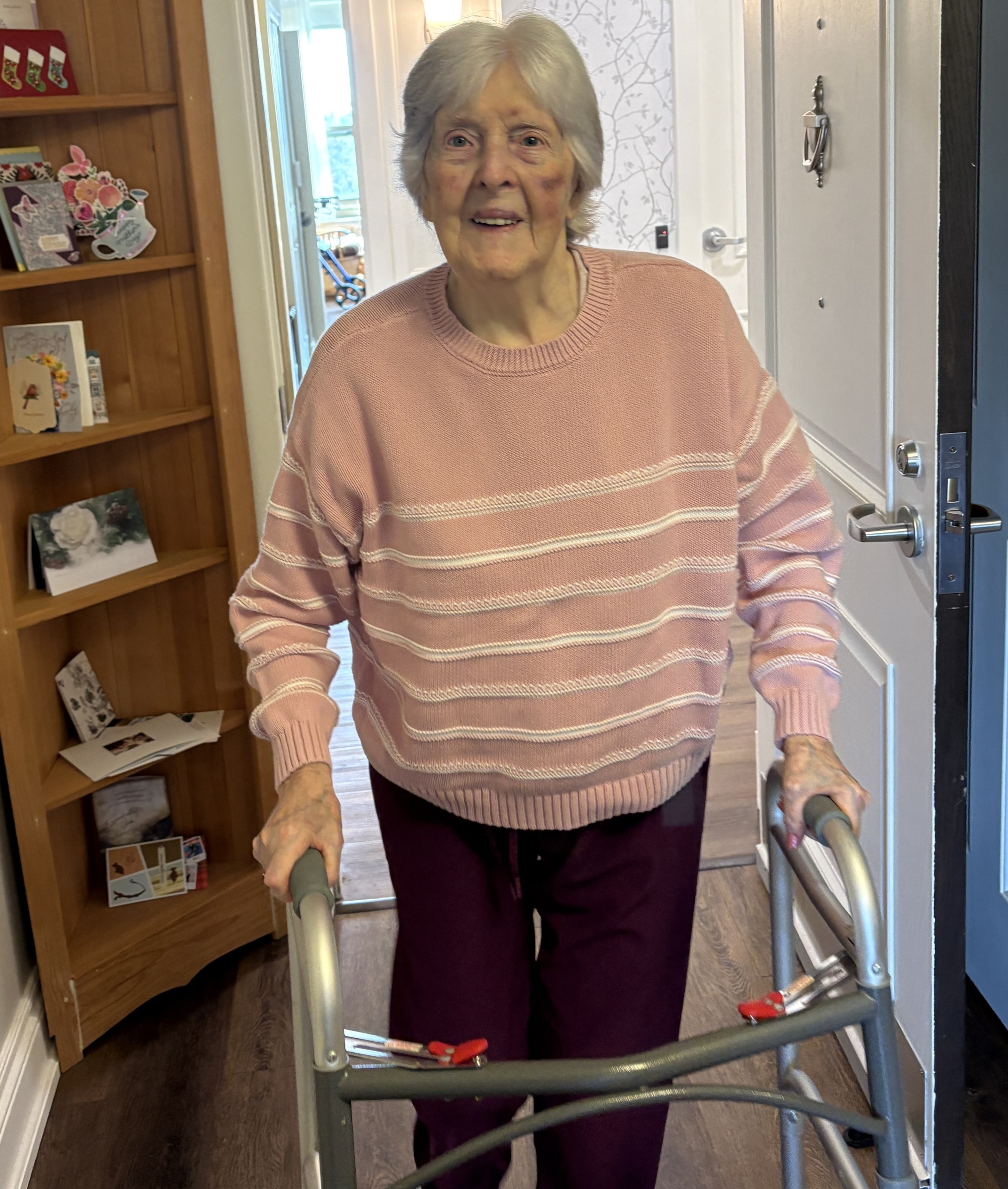
Following the advice of a wonderful occupational therapist, we made changes to Mom’s room: protective rails along the bed, a raised toilet, more rails in the washroom that she can grab. I do have a regret that I did not follow through on earlier recommendations. A good reminder, I guess, to stay on top of preventative measures.
I was cheered as the symptoms and effects of the fall went away. It felt as if a heavy, dark set of clouds were lifting, one by one, or when a harsh bank of fog gets burned off by the sun.
But here’s the thing. And it is something that, to be frank, brought a layer of sadness upon me one day.
Just as you can see the landscape more clearly when the fog lifts, I could not help but see the impact of Alzheimer’s on Mom when the symptoms of her fall had dissipated.
I noticed one morning that Mom’s progression of the disease had advanced. In particular, I saw she needed more prompting than before about things we do together on Sunday mornings. She is not likely now to initiate a conversation, and it struck me that Mom would not be returning to the way she was even just months ago.
Perhaps I had been influenced by the positive aspects of her recovering from the fall, and irrationally I thought things were getting better on the whole. And, of course, they were not.
We’ve been riding along on this journey for a while now, and I’ve been under no illusions about the meaning of a neurodegenerative disease.
It’s just that, once in a while, it really hits you.
After Dad’s death and Mom went into care, we needed to deal with their things. That in itself was a journey (it took months), but I was determined that the stair lift that helped Mom and Dad thrive in their own home in their final years find a new home.
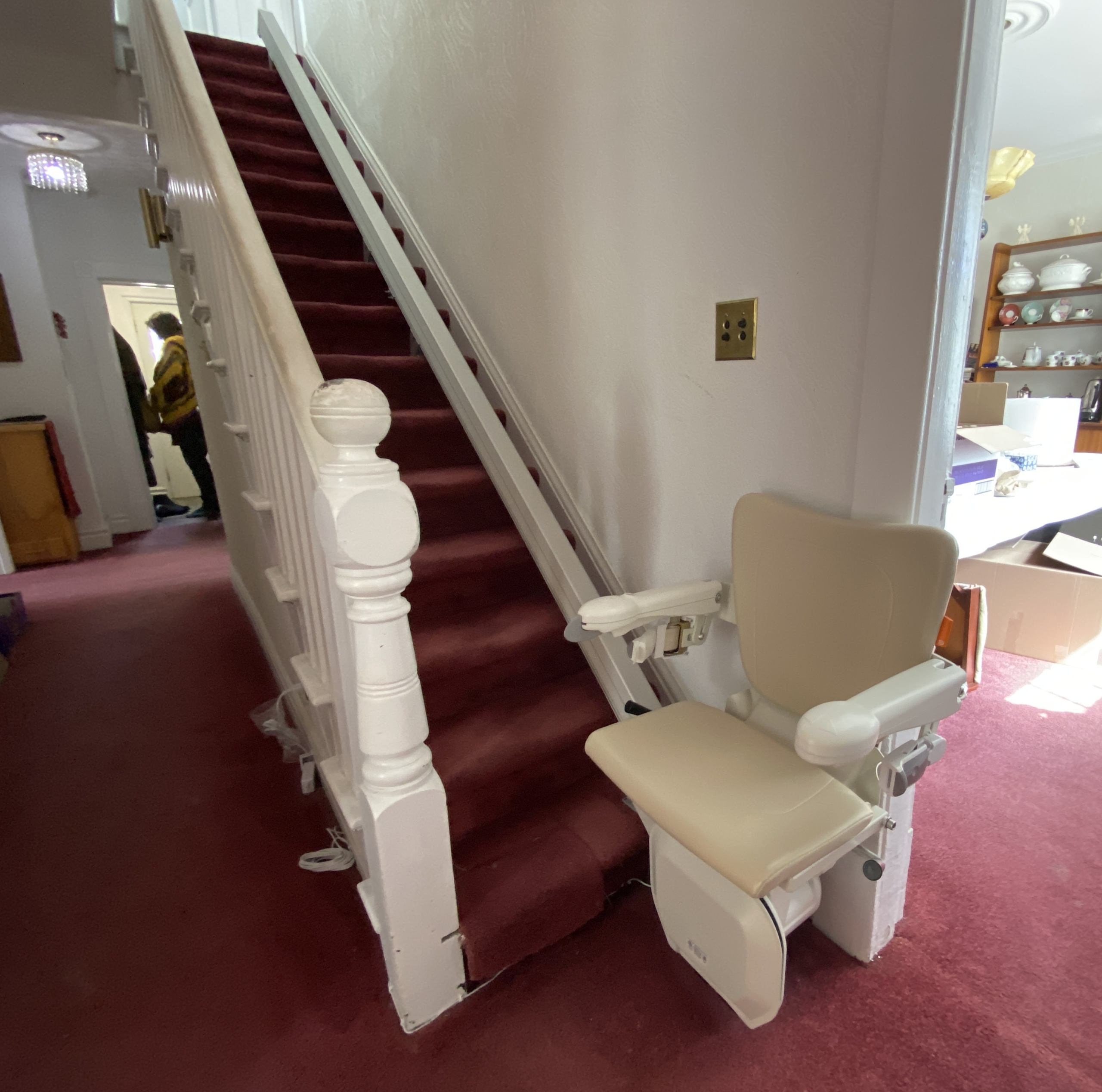
We arranged a donation with the Alzheimer Society of Newfoundland and Labrador, which located a family who could avail of it. It was all done anonymously. I’m grateful that someone somewhere is receiving a benefit from it.
As for Mom, I largely focus on the best of things. She can have some difficult moments, but as I wrote in the first piece in this series, she lives in the moment … and we can make the moment wonderful.
She still knows who we are. She still knows who she is. She is still wonderful, sweet and kind, and I glad and grateful she is receiving care now that she cannot live independently.