Bees, friends, centrifugal force: We spun some honey
Earlier this month, Martha and I drove out to see our friends Jon and Adrienne, who live in St. Philip’s amid a few hundred trees. Some of them are an actual orchard, and we were lucky enough to pick some plums and pears on this trip.
Jon had a surprise in store: we were about to spin some honey.
Several of our friends make their own honey, and our pantry is lucky enough to have bottles with a variety of textures and flavours. Some is best drizzled on toast, another is just right for a hot toddy. It’s all really good.
To date, though, I haven’t seen how the proverbial sausage gets made, if that’s an appropriate metaphor to use to describe how honey gets from comb to bottle.
The process itself is not that complicated, but it requires some focus and definitely the right tools.
Mind your beeswax
Jon put me to work with a scraping tool, one that was designed to be used with frames that otherwise slide into a hive like a deck of very thick cards.
That’s me here with the tool.
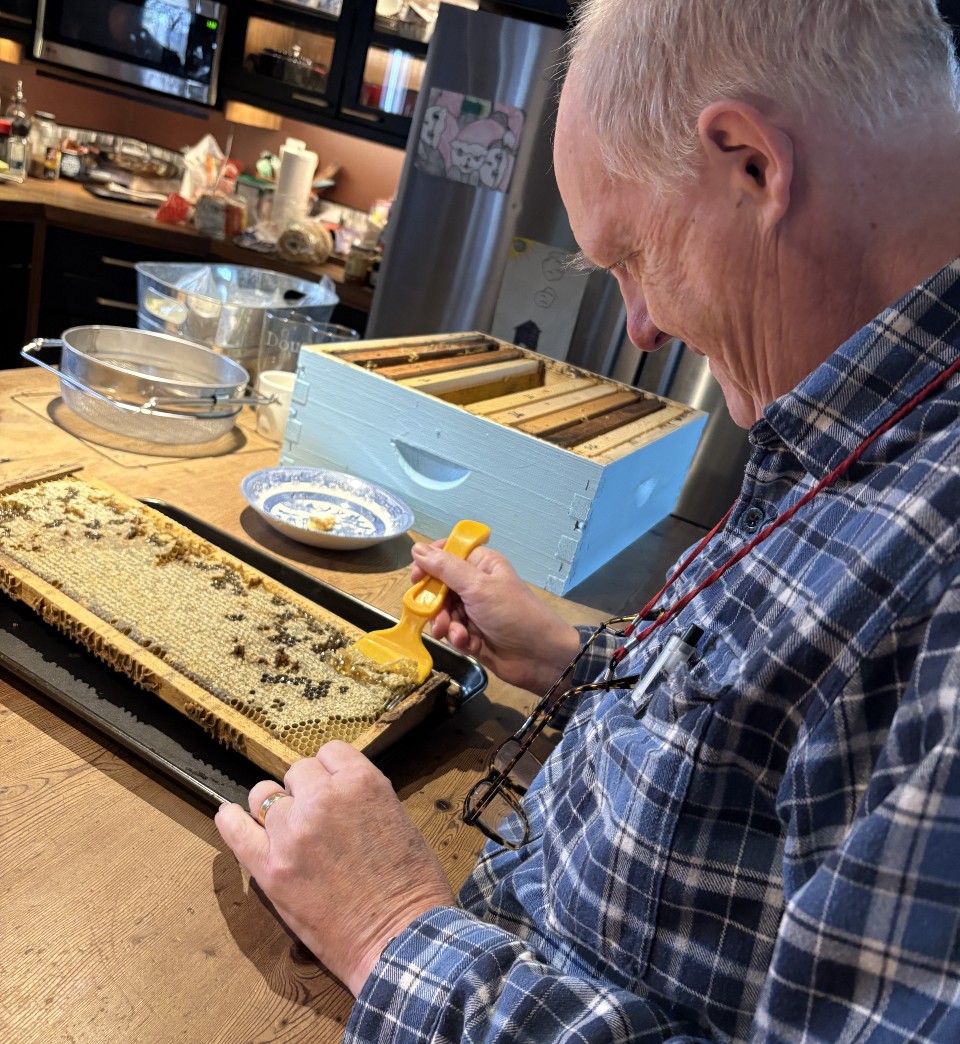
The caps come off fairly easily. The wax does not go to waste: they get fed back to the bees. (Newfoundland bees, by the way, are notably free of Varroa mites and other things that have been plaguing bee populations in much of North America.)
- Like most people, I like food. Read other posts I’ve made about food, cooking, etc.
Underneath the cap of wax, you can see liquid honey, just sitting there. It really does look like liquid gold.
But how do you get it out?
That’s where the spinning comes in.
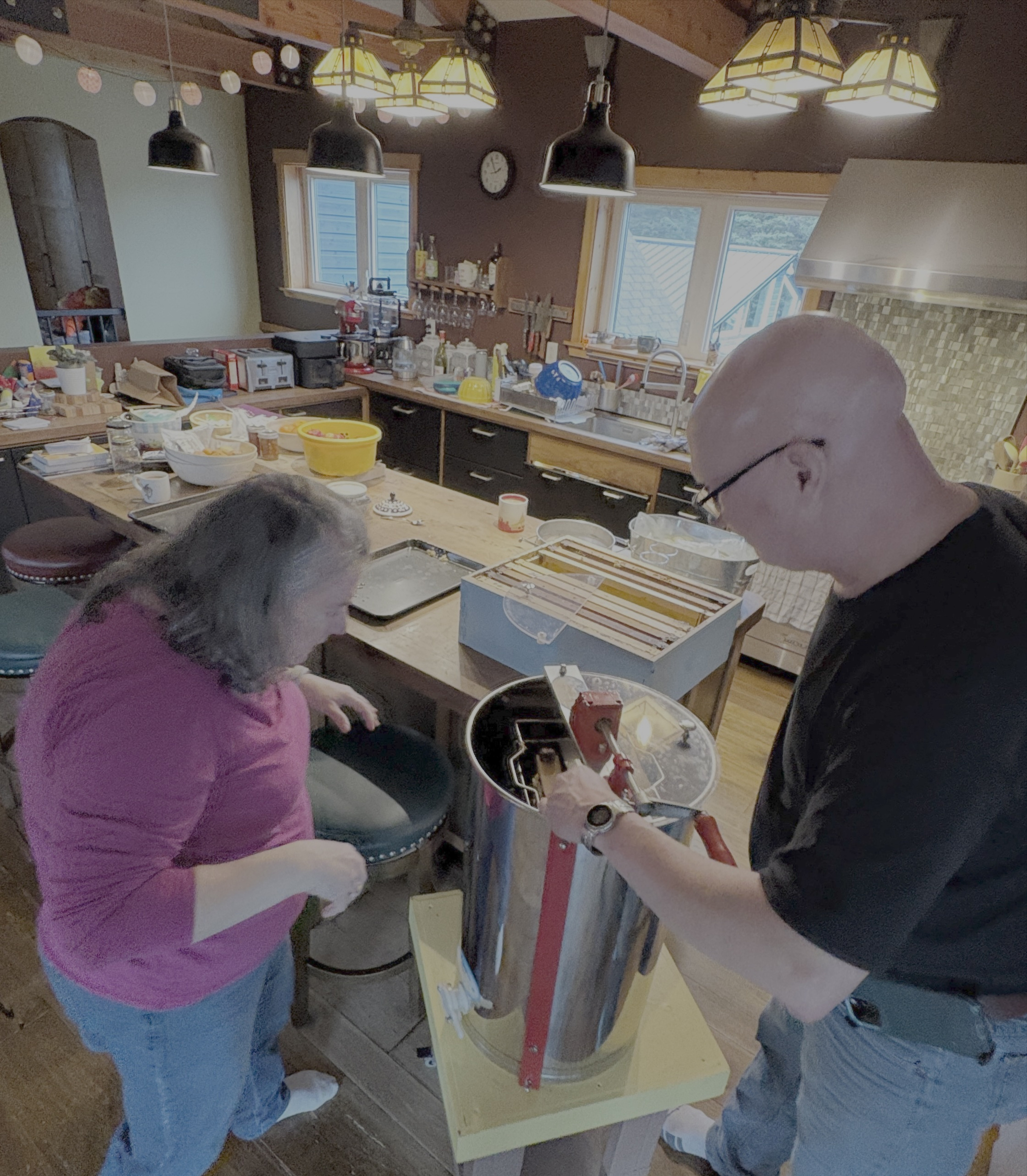
In the photo above, Martha and Jon are setting frames into an stainless steel extractor. They slide in, just so, and are then held in place.
And this is where centrifugal force comes to play … as well as some good old-fashioned effort.
Crank it up
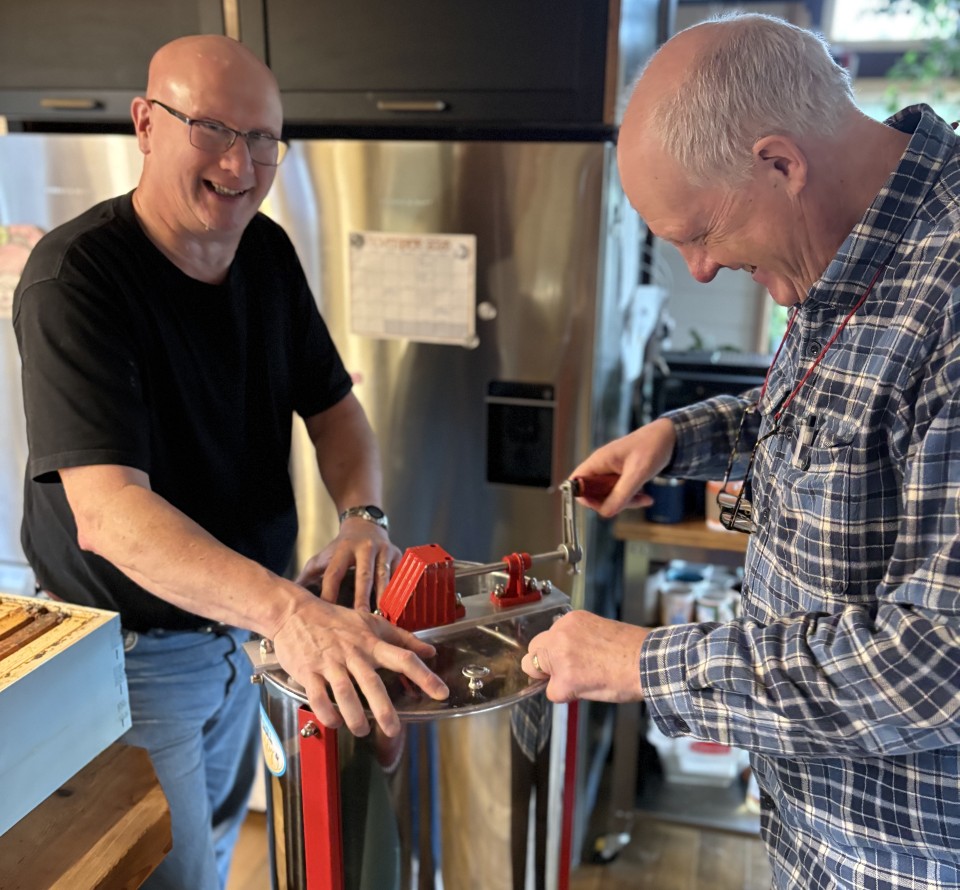
Turning the crank sends the frames spinning around the extractor, and the liquid honey starts pooling at the bottom.
The process is not onerous by any means, but it requires some consistent effort at the crank.
We got through the frames two at a time, and you could see the benefits of all that work pooling below.
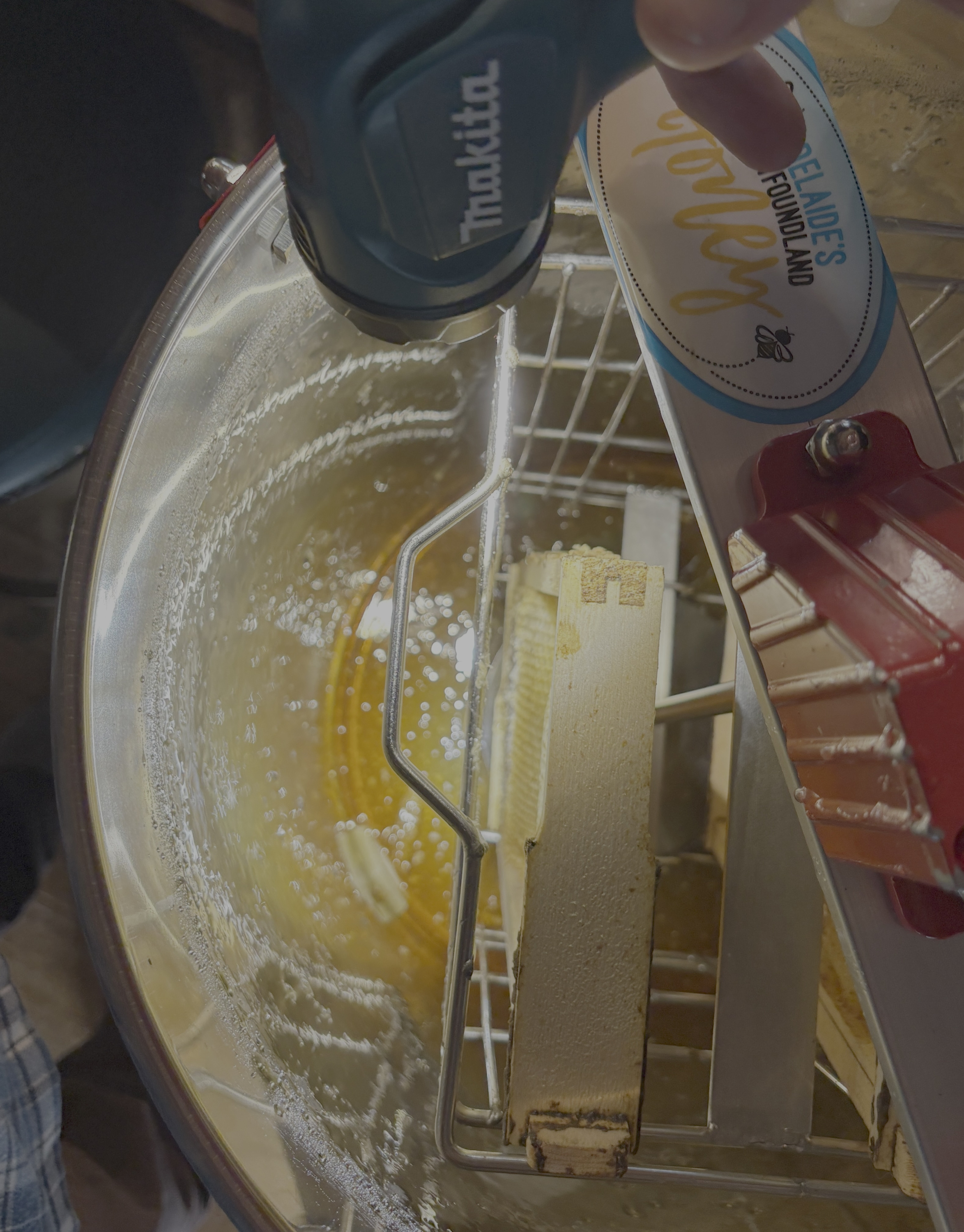
Eventually, it was time to get the honey out of the extractor.
Have a look at this short video.
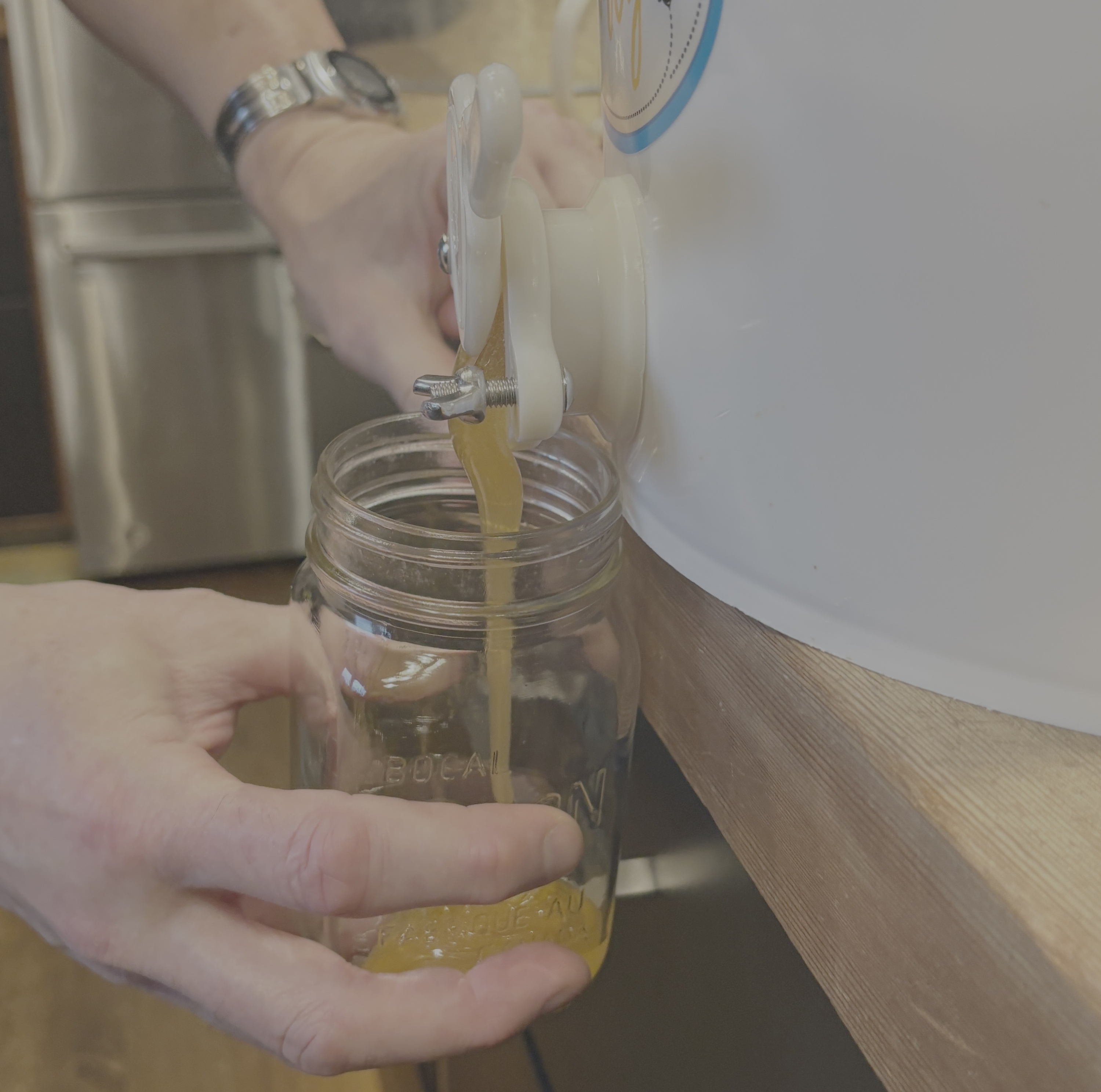
At the top of this post, you’ll see a photo of honey, straight into the jar.
Goodness.
Our thanks to Jon and Adrienne for letting us be part of this seasonal activity. Among other things, it’s a nudge for us to look at a hive as a way of expanding our own activity in the garden next year.