Pitch this: Manuscripts and the speed of a rejection
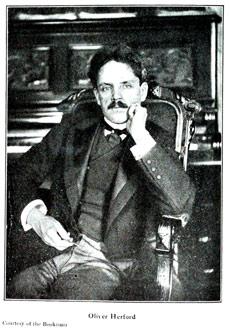
“Manuscript: something submitted in haste and returned at leisure.”
— Oliver Herford
The quote of the day is about something freelancers will know well. It’s also, alas, a bit of an anachronism.
Gifted in multiple ways and prolific, Oliver Herford was a multiple threat for many years in late 19th and 20th century publishing.
He did a lot of things. He wrote prose, he wrote poetry, he illustrated books, he dabbled in magazines, he wrote books. Quite a career! Project Gutenberg has collected no less than a few dozen of his books.
His illustrations alone appeared in numerous publications. The detail in his work is remarkable, including this one from a series on the alphabet, using Queen Victoria as his muse:

The idea of mailing a manuscript is romantic now, and actually has been for years.
So too is the notion of actually getting it back.
Or, for that matter, getting a call back.
I’ve done freelance work throughout a lot of my career, not only while I had day jobs but especially when I was on my own. I kept myself going for well over a year between 2000 and 2001, and I was struck then by how much I had changed since I was doing a lot of freelancing in the early Nineties.
The biggest change: many pitches, which had moved by that time to email, to newspapers, magazines, etc., would go unanswered. Not a peep. Phone calls would often go to straight to voicemail, and again, not being answered was the norm.
That was a long time ago, and I understand from freelancer friends that things are even worse, as a rule.
When I was handling freelance pitches at CBC in St. John’s, I made it a point — at the very least — to reply to a pitch in writing. I made time for chats, over the phone, by video call or (preferably) in person. If I ever did not reply to a pitch, I truly apologize: I know from first hand experience how disheartening the silence can be.
Another freelancing lesson I brought forward, including when I was editing at the St. John’s Telegram in the late Nineties: I did what I could to expedite payment. It bothered me that I had to nag (and nag) some publications to get paid for work done in some cases months earlier. I couldn’t necessarily speed up how payroll worked at my former employers, but as soon as something was certain and/or met approval criteria, I got the paperwork in to speed up the process.