Write, rewrite, repeat as needed: How to get better at writing
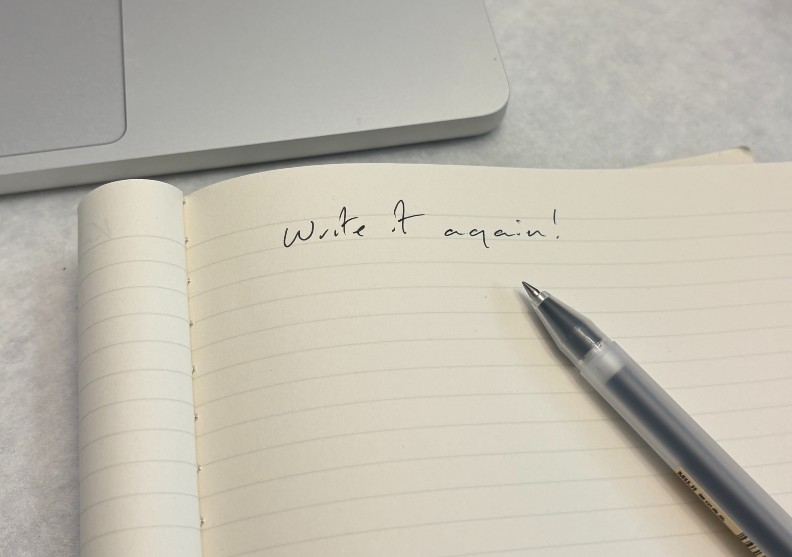
“A clear sentence is no accident. Very few sentences come out right the first time, or even the third time. Remember this in moments of despair. If you find that writing is hard, it’s because it is hard.”
— William Zinsser
Earlier this week, I was delighted to join (by Zoom) Kathryn Gretsinger‘s journalism class at the University of British Columbia in Vancouver. Kathryn and I have both been involved with journalism training over the years at CBC, and she was kind enough to share a recent post on the final bit of advice I gave my colleagues before I retired. They and Kathryn were kind enough to invite me to speak with them for about an hour.
One of the stories I related was about a moment I knew what my path would be — even though I was not sure it would be journalism. I never went to journalism school. My wife, Martha Muzychka, did; she did a one-year program for post-grads at Carleton in Ottawa, and we get a bit of a chuckle over the fact that I wound up in the field and she didn’t. As for me, I instead learned about journalism in the field. Academically, I did an honours degree in English at Memorial — a 45-credit program that covered the proverbial “Beowulf to Virginia Woolf” range.
One of the most influential courses I did was called Composition, Rhetoric and Style, taught by Jean Guthrie (at the time, Jean Chadwick), who opened my eyes to so many things. It was a two-semester course, initially founded by the late Phyllis Artiss, and even though the course numbers were, as I recall, 2010 and 2011, the workload was far from a typical second-year course. Every week, we had a challenging writing assignment, and we tried writing in many different modes and styles.
Here’s the key thing: after every bit of writing, Jean had us rewrite it.
And that’s what unlocked me as a writer. If I had any resentful feelings about having to do an entire assignment all over again, they faded quickly away. I could see my writing improve, every single time.
I had already been working for the student newspaper, and I saw my writing there improve, too. I would eventually find great pleasure in editing others and working with writers.
I also learned that rewriting was closer to true writing than the often mad-dash way I put together a draft. In time, I learned to rewrite continuously. You can’t see it, but I’ve already been up and down this post, nipping and tucking and often deleting.
And, yep, the experience put me on a path professionally.
The quote above comes from On Writing Well, William Zinsser’s indispensible guide, which was already canon for non-fiction writing by the time I started university in 1982. (If you’d like to know more about him, try this New York Times profile published in 2013, when Zinsser was 90.)
I don’t think I mentioned Zinsser by name when I spoke with Kathryn’s class this week, but I certainly did underscore the importance of rewriting — even when you’re on a deadline.
I also extolled another lesson I learned over the years. Talking out your assignment with a copy editor or vetter (as we call them in broadcast), even for just a few minutes, is always smart. It focuses the mind, gets you closer to clarity, and flags problems and gaps before you start writing. It also often saves a lot of time later for writer and editor alike.
Thanks to Kathryn and especially to her bright students, and their many great questions. I wish them all the best. Journalism needs them, and the other young minds that will take the profession forward.