Anticipatory grief: How Alzheimer’s pushes necessary feelings to the fore
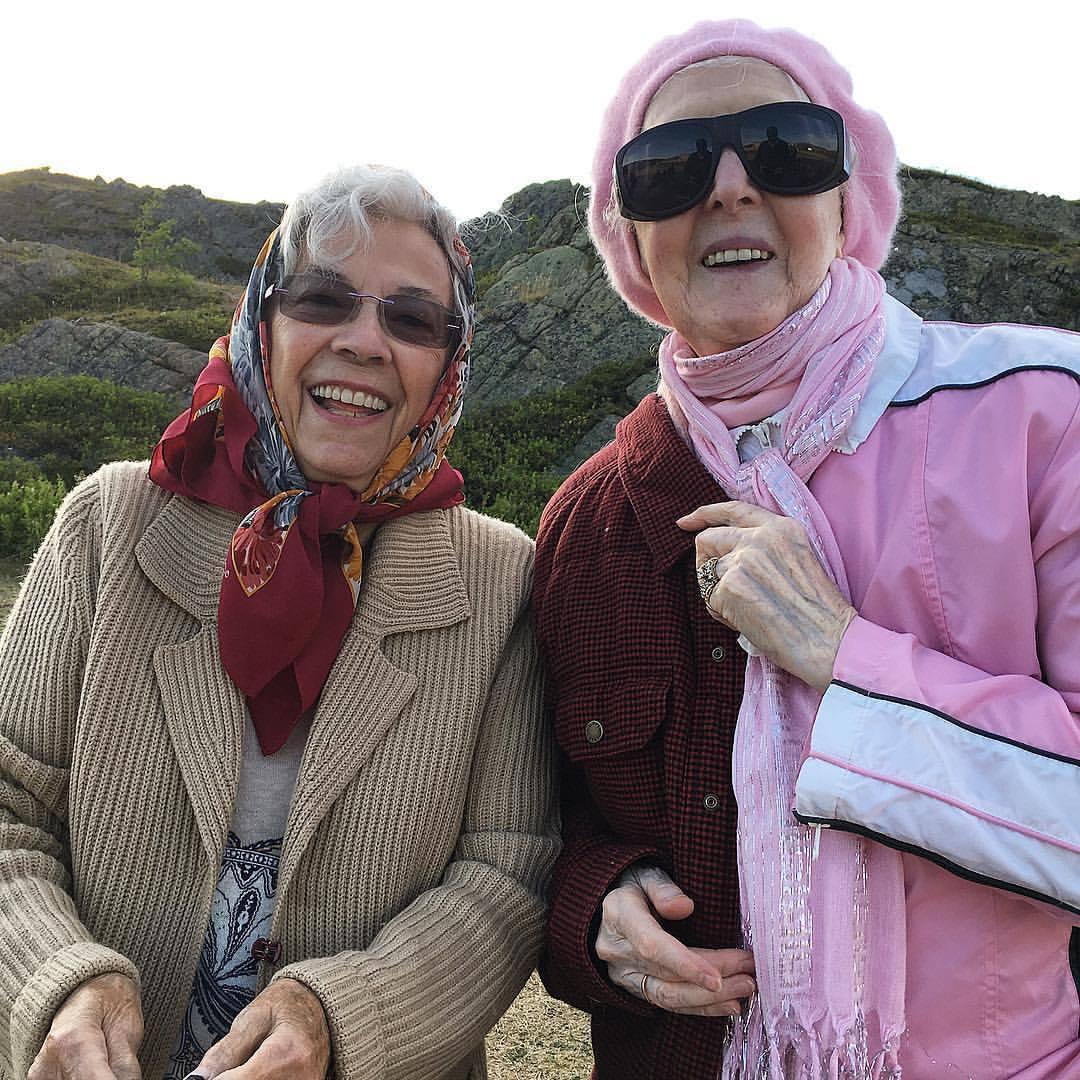
We knew Tuesday was going to be difficult, and it was.
Tuesday marked the anniversary of the death of my mother-in-law, Julita Muzychka. It’s been three years since Martha’s much-loved mom died, and while it’s true that time can be a salve, it certainly doesn’t make grief vanish.
Our memories of Julita are invariably largely happy ones. She came in a small package — there was a height difference of more than a foot and a half between her and me, which is why we were often photographed with me sitting down — but she was a mighty force. She was a pediatrician, an active member of her community, and a woman of countless hobbies, activities, interests and friend groups.
The third anniversary of her death this week helped me frame — again — a topic that has been central to Martha and me for several years now: grief.
Tuesday was a challenging day, and these last years have been difficult, too. We lost Julita in 2023, my dad in 2024, and because of Alzheimer’s, we’ve been losing my mom — bit by bit by bit — during that time and ever since. The process is still very much underway.
“Anticipatory grief” is a phrase I did not pay much attention to until I realized it was precisely what we were experiencing. When Mom was diagnosed more than two years ago, I read about the phenomenon, and recognized it immediately. The feelings have in some ways only become more pronounced since.
It’s not about the anticipation of grief, but seeing it as a form of grief itself. We know death is inevitable, and the mourning process is underway.
We are, in effect, mourning loss itself, in slow motion.
With my mom, as with other Alzheimer’s patients, we see things in contrast to what we once had and enjoyed. The loss of cognitive ability does not happen suddenly, but quite gradually.
It’s also not a strictly linear process. Mom sometimes will have much better days than others, and earlier on, there were times I lulled myself into thinking that the progression of the disease (which came with a steep decline in early 2024 that I described in this entry in the Alzheimer’s Diary) was slower than it actually was.
The grief, and other companion feelings — like sadness, or anxiety, or fear — can be compounded when that optimism evaporates and the cold, hard reality of the disease presents itself. Or, worse, on the inevitable “bad” days, which can require something extra from family.
I notice these little bits of loss all the time.
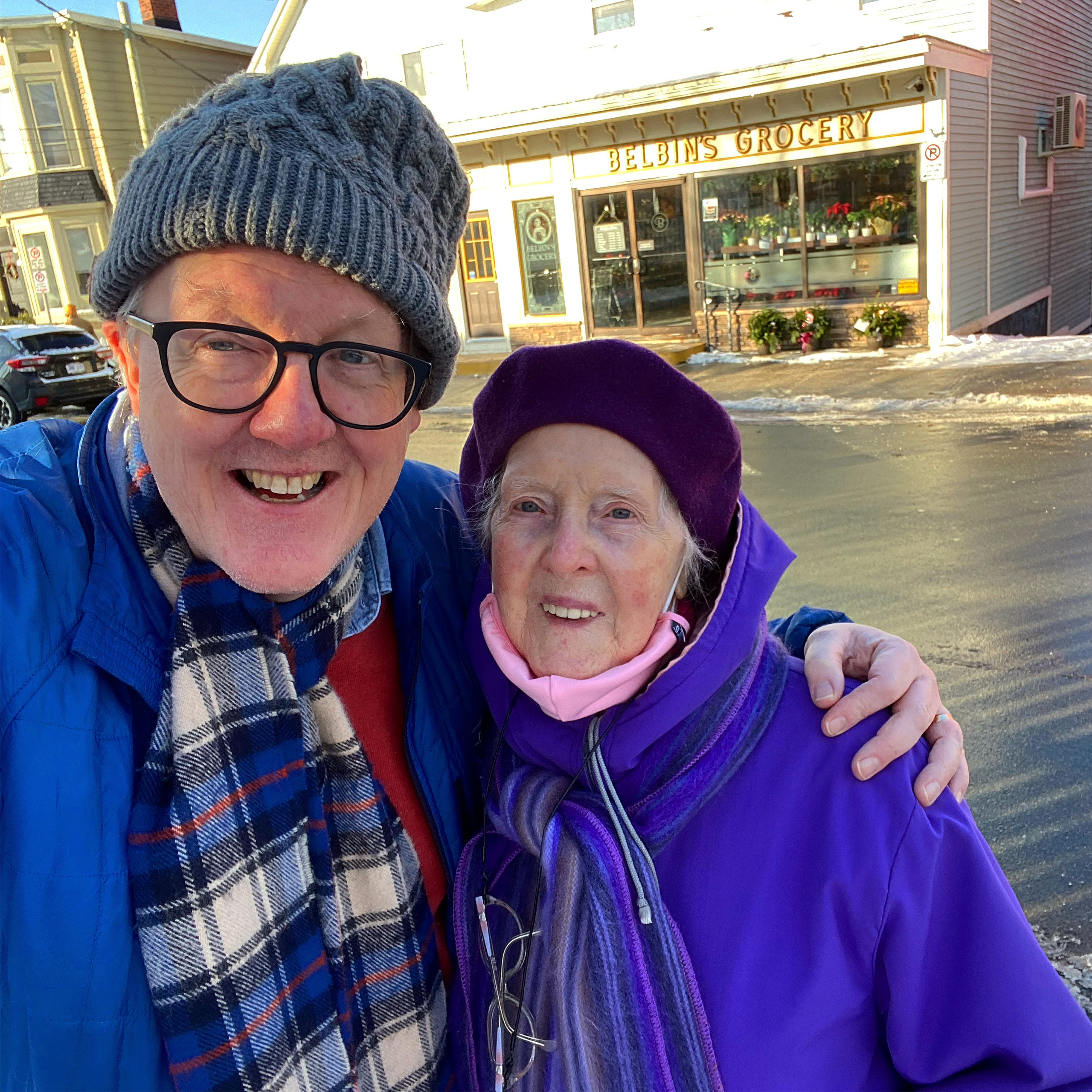
One of them on my mind this week is a lovely tradition my mom and I had in the late fall, of getting ready for Christmas. On a Saturday morning, we would go to buy some goodies: we typically headed to Belbin’s (a St. John’s store she knew for many decades, all the way back to her childhood in the east end). We might go to another store or two. Afterwards, we would relax with a hot chocolate and a treat.
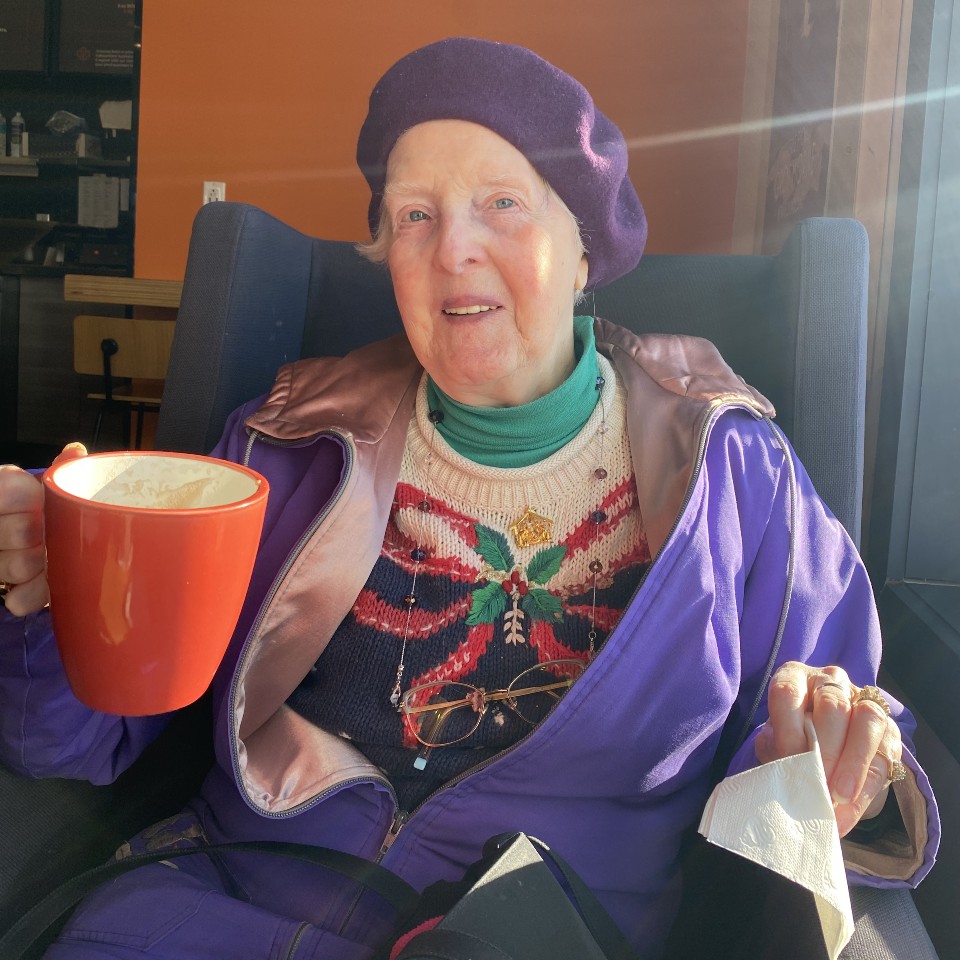
Our last trip was December 2023. I didn’t know that at the time. As we warmed ourselves over hot chocolate at a Jumpin Bean coffee shop on Elizabeth Avenue, Katie, a colleague of mine, dropped over to say hello. She complimented my mom’s sense of style. (Sheila could always rock bold colours.)
My mom beamed. I can’t tell you how happy I am that a moment like that happened in what would be the last excursion of its kind.
But I also get rocked sometimes by little waves of grief. Knowing that something simple and joyous is in the past can eat away at you.
The powerful force of grief
With Julita, the grief came suddenly, almost like an avalanche. Within a week of learning that she had a serious heart issue, she was gone. During the time she was in hospital, our hopes were fairly high for a recovery — enough, that is, that we believed she could leave and have a decent quality of life back home.
Until early one Friday morning, when everything went wrong, and quickly.
Her death was a shock, and the grief was inevitable. Martha and her family are still working through it, and so am I.
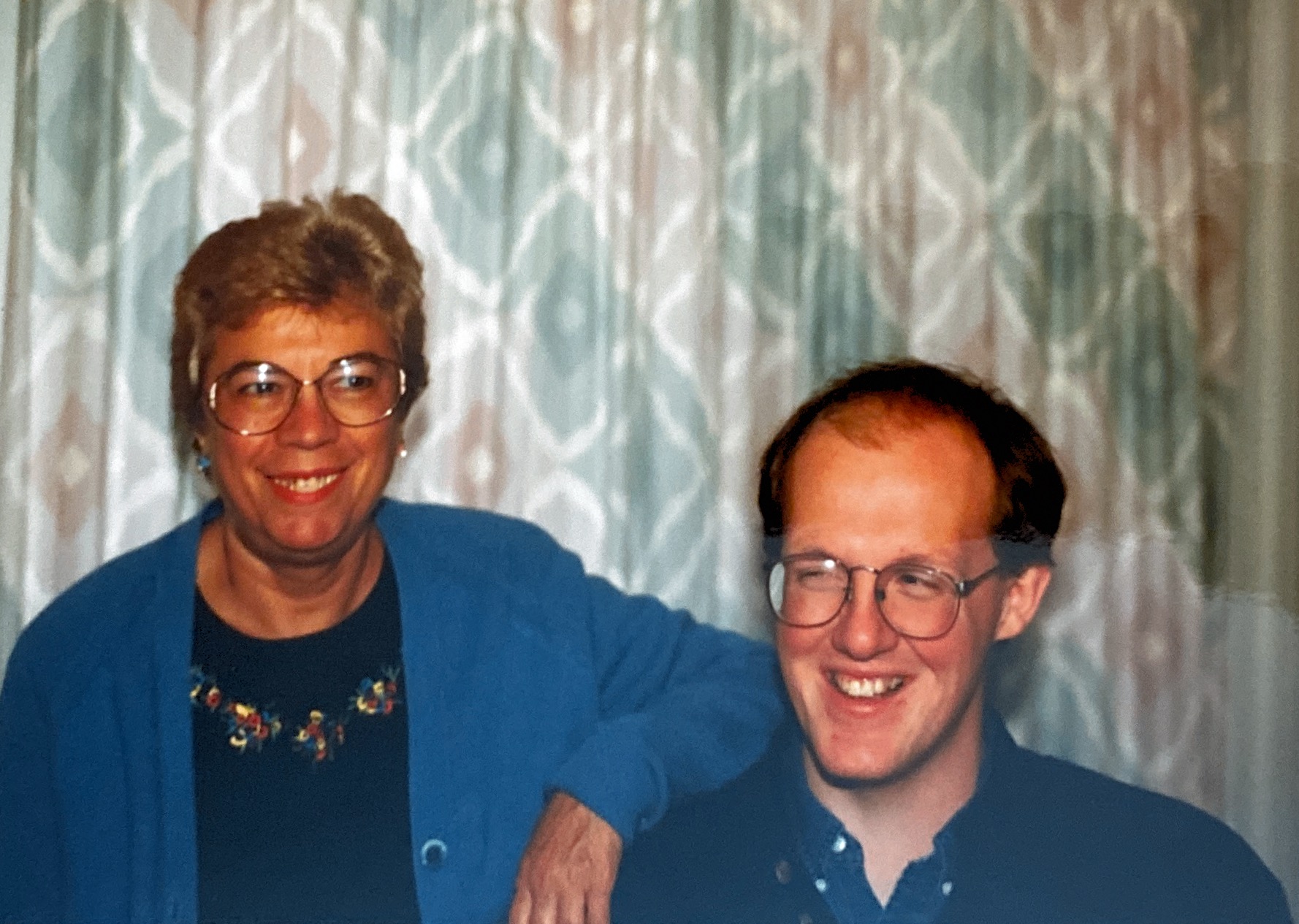
Just three months later, my own dad, Bill Gushue, took ill. Dad’s decline was slow, and painful to watch. I thought we might have lost him that January, although he hung on for six months. Dad did not have any chronic illnesses — no heart disease, no respiratory issues, no diabetes, no cancer, a situation I learned from an internal medicine specialist was unusual for a 95-year-old man — so dying was a slow process.
His death certificate listed frailty as the cause of death. That is, he just wore out.
Or, as he told me from his bed a few weeks earlier, with his trademark sense of humour, “John, I just ran out of runway.”
So, in a way, I was prepared for grief about Dad. Or thought I was.
Processing that grief, I see now, involved a lot of avoidance. I needed to be busy in those final months not just because I was working at a highly demanding job, but I had taken on power of attorney responsibilities, was managing Dad’s care, and — this is no small element — was learning how to help my mom as Alzheimer’s rapidly took over her life.
After Dad’s death, Martha and I spent a lot of the next year dealing with Mom and Dad’s house, filled as it was with two lifetimes’ worth of possessions (and memories), and preparing that for its eventual sale in mid-2025. We were still in the aftershocks, don’t forget, of Julita’s death.
I’ve been working through a lot of things in therapy, and I’m grateful for the professional help I’ve been receiving. I’ve found that kind of help valuable in the past, and certainly even more now.
One thing I can now see clearly in the rear-view mirror was how adept I can be at being busy — and finding things to keep me busy — to avoid being alone with grief.
And yet, here we are
Late last year, I retired. I was fairly upfront with many of the reasons — I felt I had accomplished what I wanted at CBC, I had punched in about 40 years in the profession, it was time for younger colleagues to have opportunities — but I was silent about a key reason: Mom.
I knew that my time with my mom was uncertain, and that the quality of our moments together would change. I didn’t like racing over to see her after work, when sundowning — a far from uncommon spike in confusion and dementia that can happen at the end of day with dementia patients — could sweep into the room.
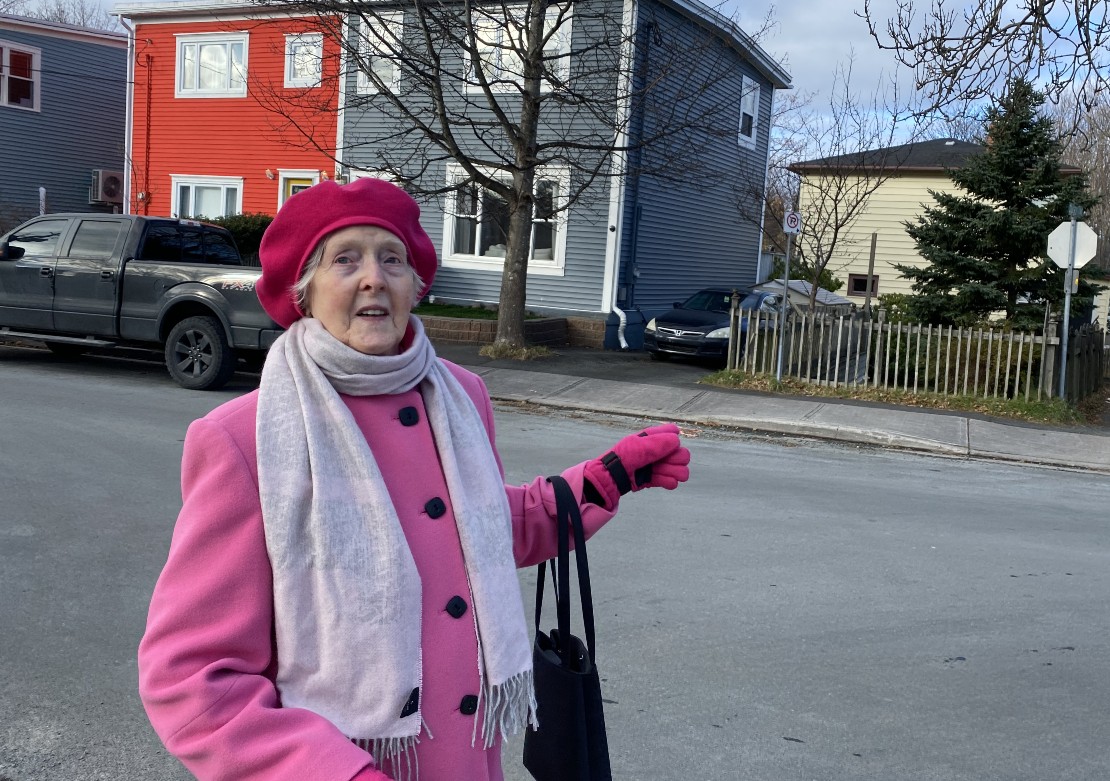
I have been very grateful that I have more opportunities during the day, especially in the morning, when she’s at her best, to spend time with her. As for the end of the day, I’m proud that the whole family pitches in; one of us is there in that pre-bedtime period, and we generally avert sundowning by keeping things light, comfortable and as relaxed as possible.
But it’s not all wonderful.
I can feel that pang at any time, when I realize that Mom’s cognitive abilities are down another notch. She’s stopped initiating most conversations, and a proper chat can tucker her out completely. A couple of injuries since June have meant that taking Mom for a drive or an outing is now out of the question.
And, yes, that includes a simple pre-Christmas trip.
But I cannot accept that joy and a feeling of a full heart are all in the past. They’re not. As I wrote in my first entry, a quickly made mug of hot chocolate brings so much ease to my mom, and settles her mood wonderfully. There are still plenty of occasions when she makes an observation that tell us my Mom is still here with us.
I’m going to focus on that. But I’m also recognizing and accepting grief. Sometimes it’s in the background, like a numbing presence. Other times it’s like a drip of freezing water, as if coming from a looming icicle. And sometimes it’s like a crashing wave: dramatic and harsh and threatening.
But I am recognizing that it’s continuous, and it’s natural. I don’t know if I will ever reconcile myself to grief and the loss it represents, but I’m learning to live with it.