With Alzheimer’s, wanting to ‘go home’ is common — and sometimes it isn’t where you think
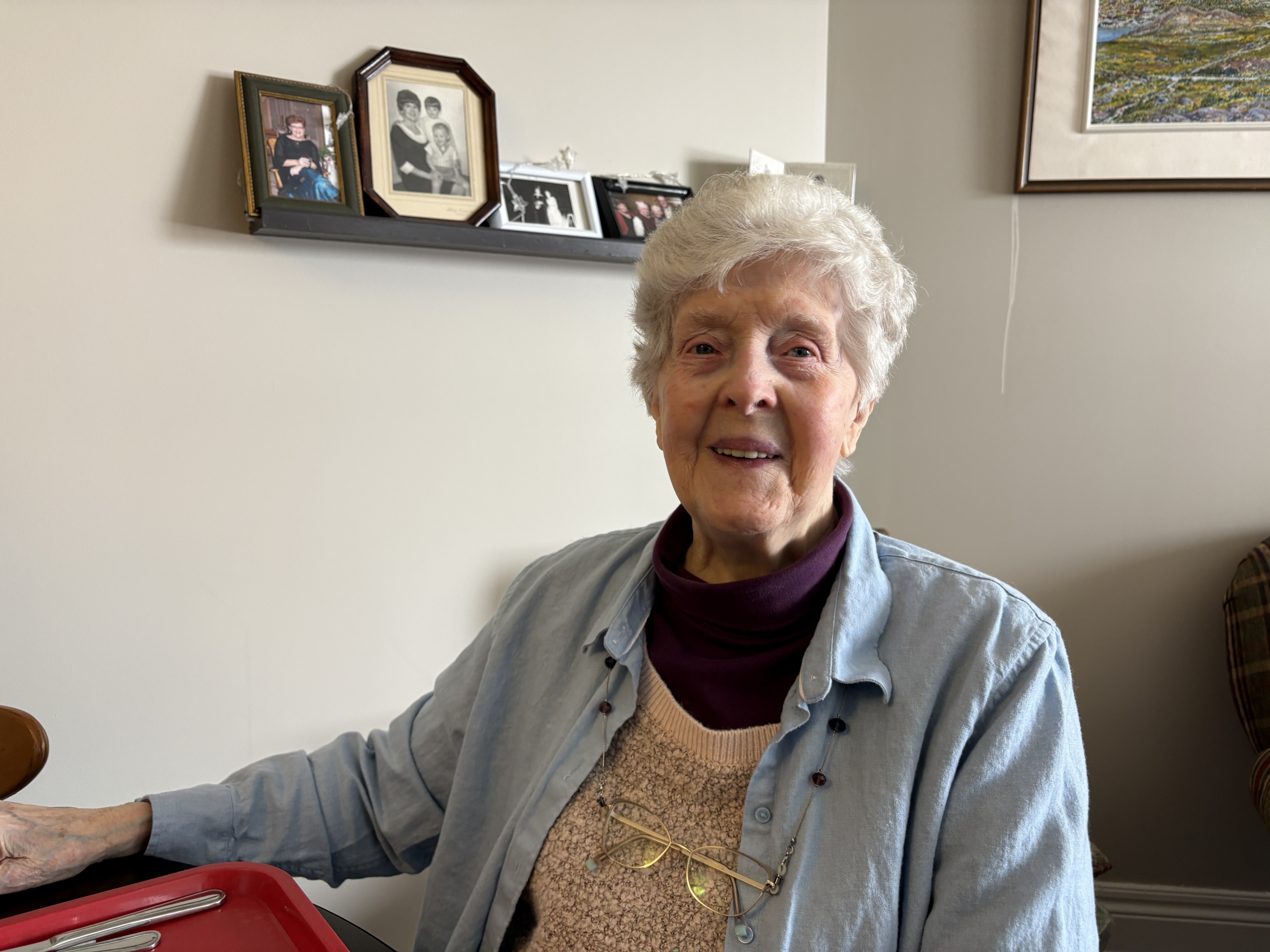
Even before I started reading up on dementia in early 2024, when my mother’s Alzheimer’s was presenting itself, I knew about the phenomenon of wanting to go home.
I heard about it from friends, who described anxious patients wanting to leave the safety of their care in an institution. I had read about it over the years in articles and in personal accounts.
It was inevitable, then, that I would live it as well.
My mother, Sheila Gushue, was diagnosed with probable Alzheimer’s in May 2024, but we knew for at least a couple of months — particularly following a diagnostic test that winter — what we were facing.
In September, not long after my dad’s death, Mom entered a memory care floor at a retirement home in St. John’s. I’ll describe that process in greater detail in an upcoming entry in this Alzheimer’s Diary, but suffice it to say, things went pretty smoothly, given everything.
It wasn’t long, though, before Mom made an indication that she needed to be at her home. Before I was more adept at handling those kinds of questions (I wrote in this piece about why I heartily use deception to keep Mom feeling safe and happy), I’d assure Mom that this was her home now.
It didn’t always go over well. A little confused before, she could become a lot more anxious.
I developed better techniques. I deflected and distracted — changing the topic, for instance — or entertained and embraced.
And I kept reading and understanding more and more about what was really happening.
There is a wealth of material out there on the desire to go home. More formally, the phenomenon has names like “home-seeking behaviour.”
What I’ve come to know with Mom is that when “home” is on her mind, she’s often not talking about an address.
She’s talking about a feeling, and often what she is seeking is not a place, but a sense of safety.
As this resource from Australia puts it, “It may be that ‘home’ is a term used to describe memories of a time or place that was comfortable and secure. ‘Home’ may be memories of childhood or of a home or friends who no longer exist.”
I’ve also seen first-hand how remarkable the brain can be, and the effect that dementia can have on it. Mom, like many people with the disease, will be living in the moment of whatever memory is foremost in her mind. For her, it’s as real as anything.

A stellar example of this happened some months back, when she told me “don’t forget to bring me home — Mommy will be at the window.” Mom’s mother died in 1977, so clearly this was an old memory.
“Refresh my memory, Mom,” I asked her, “where are we going again?”
“Duckworth Street, of course.”
Ahhh. My mom’s family lived briefly when she was a child on Duckworth Street, in the period after they needed to leave their home near the top of Signal Hill at the outbreak of the Second World War (my grandfather was a telegraph operator who worked at Cabot Tower, which functioned for many years as a signal base). They found a permanent home on Cochrane Street, so Mom’s answer gave me a sense of where her memories had taken her.
In other words, in that memory, at that moment, she was a little girl, anxious that her own mom was worried about her.
Sundowning is the well-understood agitation, restlessness and anxiety that can come upon a person with Alzheimer’s in the late afternoon, and unfortunately worsen as the evening grows longer.
With Mom, I’ve often seen these flashes of agitation and how they connect, almost instantly at times, to the notion of home, and the need to get there.
After supper, while we were sitting and enjoying her favourite gardening program, a twitch suddenly came over Mom. She scanned the room urgently. She leaned forward, to look at the door. She glanced at me, and then back to the door, now more intently.
“Are we going home soon?” she asked. It’s actually been a not uncommon scenario, and a while back — depending on her lucidity — it was something we could discuss somewhat matter-of-factly. But seeing her agitation spiking, I gave her some comfort and told her I’d take her home, right after this. I made her a little mug of hot chocolate — a bit of magic I described in the first entry in this diary series.
Minutes later, of course, the agitation was gone. So too was the quest for home.
It can come back, of course. Over the months, Mom has sometimes woken up from her bed. She might call one of us; she might wander the halls, the personal care attendants tell us, looking for home. They’re experienced with this and can gently guide her back to bed.
I’m fortunate that Mom is in a safe place, on a memory care floor where she cannot leave unless escorted.
Home-seeking behaviour with Alzheimer’s can often mean wandering, and that can of course be frightening if you’re caring for someone at home. (Here is a helpful resource on wandering from the Alzheimer Society of Canada.)
I’ve been benefitting from a series of presentations at the local Alzheimer Society called First Link. In one recent presentation, a psychiatrist told us that there is a reason behind every dementia-related behaviour, although it may not be obvious at first. That is, some human need (hunger, a need to go to the washroom, etc.) can drive a behaviour. This insight has helped prepare me for helping my mom. (The next iteration of First Link, by the way, starts in August. The program is free, and highly helpful.)
With my mom, her talk of home is often associated with a memory, or something in the past. A while back, after she had been reminiscing about her childhood in Harbour Grace, she became agitated and told me I needed to prepare to drive her back to St. John’s.
“The roads aren’t paved — they’re terrible, and it’ll be dark,” she advised.
I told her I’d bring the car around soon and we’d get going. I adjusted the blanket around her and gave her a hug.
The feeling passed, and soon enough it was time for PJs, bedtime and good nights.