As rock managers went, Ian Faith always looked for the best way to frame a situation … and to take advantage of a poorly worded question, too.
Ian Faith, of course, never existed. Played by Tony Hendra, the British expat who upended comedy in America with the National Lampoon and many other projects, Ian Faith was the manager of the fictional, hilarious metal band Spinal Tap.
This is one of my favourite scenes from 1984’s This is Spinal Tap, when supposed documentary maker Marty Di Bergi (actual director Rob Reiner) quizzes Faith about the self-evident facts of dwindling attendance.
The scene features a common interviewing mistake and Faith’s answer (I’d like to believe that, in keeping with much of the film, Hendra and Reiner improvised it all) is a familiar path that subjects will take to get out of a sticky spot.
“Discovering witnesses is just as important as catching criminals.” — Simon Wiesenthal
When he died in 2005 at the age of 96, Simon Wiesenthal was the world’s most famous Nazi hunter. A Holocaust survivor liberated from one of the death camps in 1945, Wiesenthal spent decades tracking down not Nazis, and to do that, he spoke with countless people to piece together stories that Nazis and their supporters wanted to bury.
About five years after his death, a biographer who had access to hundreds of thousands of his records published a book that found Wiesenthal was not quite a one-man army for justice, but had in fact quietly had the support through payroll of Mossad, Israel’s secret service. Tom Segev’s book Simon Wiesenthal: The Life and Legends added detail to an effort that, regardless of who paid the bills, had a considerable impact for years after the Holocaust.
We went to see Man of the Year, the first-ever musical from the theatre company Artistic Fraud of Newfoundland, on Wednesday evening.
Dom has been playing in a band for at least 30 years, but still dresses — and drinks, sleeps in and stumbles through life — like his 20-year-old self. He’s still wearing Doc Martens and a plaid shirt over an old tee, but his hair is grey.
His life is more than just a mess. His best friend is struggling to quit the band, if not the friendship, his upstairs neighbour is pregnant by him and can’t seem to get him to hear it, and his estranged daughter has been in therapy for more than a decade.
We also learn he’s a widower. I won’t say much more about the plot, so audiences can discover it for themselves.
Binding the whole show together are songs by Sean Panting, who’s still going strong in the St. John’s music scene. Not quite a jukebox musical — think Mamma Mia or Jersey Boys — Man of the Year weaves songs from Panting’s career to push the story.
“It is good for a man to invite his ghosts into his warm interior, out of the wild night, into the firelight, out of the howling dark.” — A.S. Byatt
Antonia Susan Byatt is best known by her initials. Her books — especially the bestselling 1990 novel Possession, which everyone for a while seemed to have on their coffee table — were highly acclaimed.
The older sister of fellow English novelist Margaret Drabble, she became Dame A.S. Byatt in 1999. She died in 2023.
“One of the surest of tests is the way in which a poet borrows. Immature poets imitate; mature poets steal; bad poets deface what they take, and good poets make it into something better, or at least something different.” — T.S. Eliot
The British poet and writer T.S. Eliot is often credited with the quip “good poets imitate, great poets steal,” which also been attributed falsely — with variations, like substituting “artists” or “writers” as the noun — to Pablo Picasso, Calvin Trillin, Steve Jobs and others.
Eliot wrote many words and phrases that have profoundly influenced the culture (and many others — more on that shortly.)
A supermarket in suburban Toronto is one of the latest companies to pay a penalty for passing something off as Canadian that actually came from another country.
Hawk-eyed shoppers have been scrutinizing food labels with much more intensity since relations between the United States and Canada soured last year. President Donald Trump’s tariffs and relentless jibes about the 51st state, etc., have had a retail impact from coast to coast to coast, and it’s fair to think elbows are up with shoppers pushing their carts around the supermarket floor.
But at a Fortinos supermarket in Etobicoke — it’s around the corner from the Woodbine race track and a short drive from Pearson International Airport — the product that got nailed was not American. It was French.
The $10,000 penalty was one of a series of fines announced Thursday in a statement from the Canadian Food Inspection Agency. Fortinos is a premium brand that Loblaw operates in southern Ontario.
“Saying that men talk about baseball in order to avoid talking about their feelings is the same as saying that women talk about their feelings in order to avoid talking about baseball.” — Deborah Tannen
I’m sure many academics have a dream, however briefly, of breaking through, as it were: popular acclaim for their work, media interviews, speaking tours, acclaim from far beyond their peers.
Deborah Tannen, a linguist who has dozens of academic publishing credits to her name, is better known as an author. You Just Don’t Understand: Women and Men in Conversation was not just a best-seller but a full-fledged phenomenon: the book, first published in 1990, was at the No. 1 position for non-fiction on the New York Times best-seller charts for eight straight months.
The book produced this quote, which gets at one of her points: men often talk about information (like baseball scores) as a way of connecting through common interests, just as women find their own social channels and ways of speaking.
Tannen is now 80 and evidently still active. Just this month, she was interviewed by the New York Times about how the word “tranche” has been used so much in the wake of the widening Jeffrey Epstein scandal.
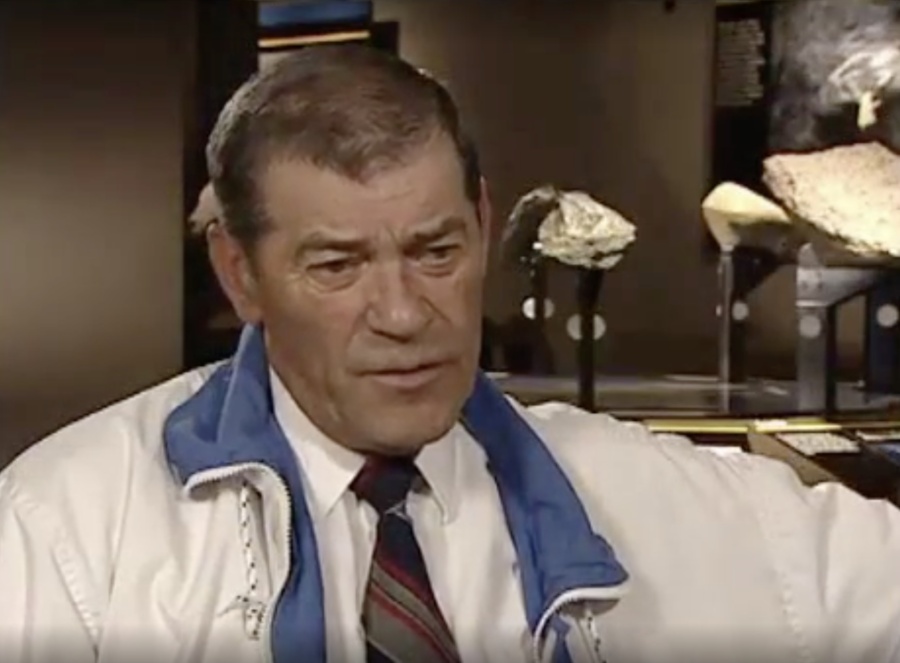
His name was Harold Williams, and he was often called Hank Williams. Like the country star, he had musical talent — he could expertly play the fiddle and the accordion — but, if I can get away with a pun, rock was more his thing.
Or rocks, really. Rocks that he said had a mighty story to tell, if we would stop, look closely and learn.
Williams was a remarkable geologist, and his work advanced what we now accept to be true about plate tectonics and how the continents formed and reformed over many hundreds of millions of years.
He earned a stellar international reputation as a scientist, although in his own much-loved home, he was not very well known. Williams died in 2010, and I believe that he is still under-appreciated to this day.
“While it’s fun to watch James Bond kick ass, we don’t really identify with him. Most people — myself included — feel overwhelmed by life from time to time. And we can more easily understand and empathize with a character who is in over their head and barely keeping it together.” — Andy Weir
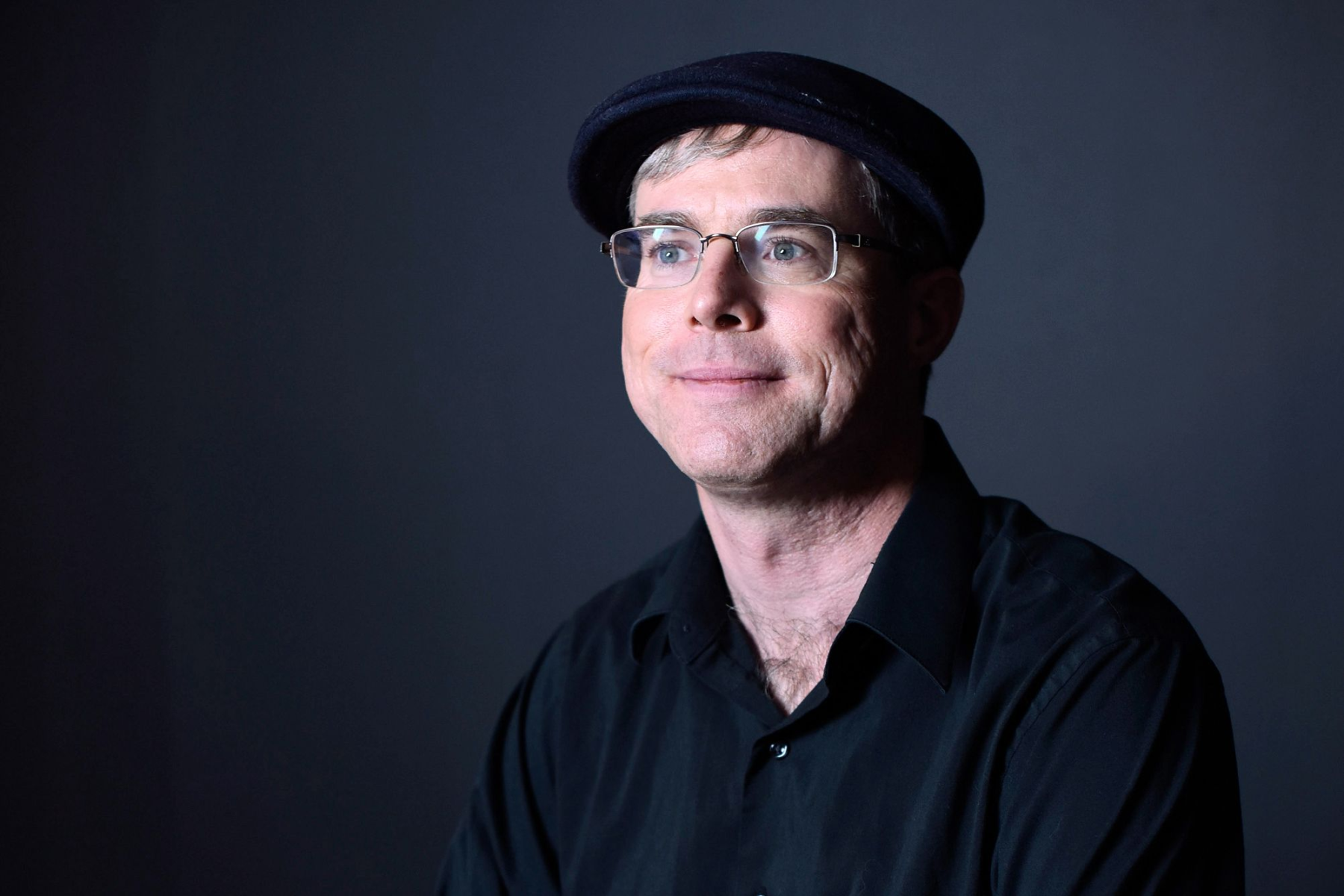
The author Andy Weir made these comments during an interview in 2022, while discussing the release of his book Project Hail Mary. I started digging into the book over the weekend, and plan to see the film adaptation coming out in a few days, with Ryan Gosling in the lead.
Like his prior book The Martian, Weir has dreamed up a story that focuses on someone who is ordinary (well, sort of) but in extraordinary circumstances. In this case, it’s a science teacher who awakens from suspended animation, unaware of who he even is, gradually piecing together the save-all-humanity mission that gives the spaceship and title its name.
Here’s a Cosmic Shed podcast from almost five years ago featuring an interview with Weir.
A young man who believes hammering his face bones is actually making him attractive — and who gets attention by demeaning women, acting like a jerk, getting arrested and rage-baiting millions — has been making me wonder a lot about the state of the world, and our immediate future.
Clavicular is the nom-de-stream of a 20-year-old American named Braden Peters, whose handle has become synonymous with a you-can’t-make-this-up trend called looksmaxxing.
This is a thing that has been part of incel culture, itself something we’ve been living with (and studying) for years. It all gets weirder and more dangerous as the years pass.
Incels get their name from supposedly being involuntary celibate. They typically are young men who loathe and mock women, who are seen as not only rejecting incels themselves but their supposed place of being subservient to men. Over the years, the movement has radicalized young men whose rage at the world has turned to horrific violence. In Canada alone, incel culture has been behind the 2018 van attack murders in Toronto and a murder at a Toronto massage parlour in 2020 so severe it was designated terrorism.
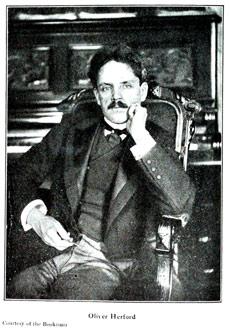
His illustrations alone appeared in numerous publications. The detail in his work is remarkable, including this one from a series on the alphabet, using Queen Victoria as his muse:
The idea of mailing a manuscript is romantic now, and actually has been for years.
So too is the notion of actually getting it back.
Or, for that matter, getting a call back.
I’ve done freelance work throughout a lot of my career, not only while I had day jobs but especially when I was on my own. I kept myself going for well over a year between 2000 and 2001, and I was struck then by how much I had changed since I was doing a lot of freelancing in the early Nineties.
The biggest change: many pitches, which had moved by that time to email, to newspapers, magazines, etc., would go unanswered. Not a peep. Phone calls would often go to straight to voicemail, and again, not being answered was the norm.
That was a long time ago, and I understand from freelancer friends that things are even worse, as a rule.
When I was handling freelance pitches at CBC in St. John’s, I made it a point — at the very least — to reply to a pitch in writing. I made time for chats, over the phone, by video call or (preferably) in person. If I ever did not reply to a pitch, I truly apologize: I know from first hand experience how disheartening the silence can be.
Another freelancing lesson I brought forward, including when I was editing at the St. John’s Telegram in the late Nineties: I did what I could to expedite payment. It bothered me that I had to nag (and nag) some publications to get paid for work done in some cases months earlier. I couldn’t necessarily speed up how payroll worked at my former employers, but as soon as something was certain and/or met approval criteria, I got the paperwork in to speed up the process.
I think it was the Graham Chapman one that made me laugh out loud.
It was one of those reels that are all over Facebook: AI-generated matchups that “reunite” the supposed original actors with the contemporary versions of the actors.
Except if the actor is dead.
In that case, they usually walk on, flash a smile, embrace or touch their younger self and often wave at the camera … all while sporting wings.
No matter what you believe about the afterlife, if someone is famous or at least was on TV, you get to go to a heaven with wings.
“Pictures just come to my mind and I tell my heart to go ahead.” — Horace Pippin
The painter Horace Pippin made this comment in an interview for American Artist magazine, published in 1945, the year before his death. One of the foremost Black artists of the 20th century, his subject matter ranged widely, from self portraits to religious themes to racism in Jim Crow America.
Dozens of people dressed in red, wearing stockings and black sashes, waving their arms just like Kate Bush in the most famous video she made for her 1978 classic Wuthering Heights.
For more than a decade, fans of Bush have been putting off mass communal dances called the Most Wuthering Heights Day Ever. They’ve been held in multiple countries (including Canada), but no one seems to take to them like the Australians.
In Melbourne, apart from getting together and having fun, fans use the event to raise money for an organization that helps women and children get out of abusive situations.
Their numbers, as you’ll see, are well into the hundreds. Here’s the group performance from 2024: