Darth roast

My niece Beth gave this mug to me, and it makes me laugh: it comes with a base with design elements from the Empire in Star Wars, and lights up the glass mug appropriately.
May the fourth be with you!

. . . is Morse code for the letter S, the content of the transatlantic transmission received at Signal Hill in 1901.
My niece Beth gave this mug to me, and it makes me laugh: it comes with a base with design elements from the Empire in Star Wars, and lights up the glass mug appropriately.
May the fourth be with you!

“The press can be surprisingly easy to co-opt. But remember the Woodward-Darman law, which dictates that a friendship between reporter and source lasts only until it is profitable for one to betray the other.”
— Maureen Dowd
The last part of this observation from pundit Maureen Dowd has been repeated for years, but not so much the full quote in context … which makes sense, because the rest of it gets more dated as the years pass. It all comes from a May 1994 New York Times column titled Thou shall not leave a paper trail (gift link is included), which includes some rules of engagement.
Woodward is of course Bob Woodward, whose writings and books on Washington have defined (and sometimes rearranged) power in Washington since Watergate. With Darman, I needed to look that up to get a refresher, which speaks to how time and scandal both shall pass. Richard Darman was the budget director in the George H.W. Bush administration, and in the run-up to the fateful 1992 election (which was not going well for the Republicans), Woodward published articles in the Washington Post about rampant backbiting and internal strife in the White House. You can guess how the sourcing went once things got juicy.
Not two years later, Darman is all over that Dowd column, which is a bit of a rulebook for aspiring politicos (e.g., “always be the first with good news” for the boss, “don’t be afraid to leak”) that still holds up. The faces and names have changed, and of course the tactics, but much of it is still relevant.

“I’m not somebody who ever has regrets — I’m a great believer in doing things with the best of intentions, and then you learn rather than regret. There are lots of things I’ve learned by doing the wrong thing, but I don’t regret them.”
— Monty Don
The British gardening expert Monty Don said these words during an interview, when asked if he regretted any gardening mistakes.
His answer may be about his own work in the garden — his home, Longmeadow, in the western Midlands, is often the backdrop of the BBC series Gardeners’ World — but I like how it applies to many other situations.
Monty Don is a fixture in our family. For the last few years, Gardeners’ World has been a balm to my mom in particular.
(more…)
“Some say that no one ever leaves Montreal, for that city, like Canada itself, is designed to preserve the past, a past that happened somewhere else.”
— Leonard Cohen
It’s been almost a decade since Leonard Cohen died. His relationship with Montreal was deep, and the city clearly still has him in his heart.
So much so that there are two different murals in his honour.
(more…)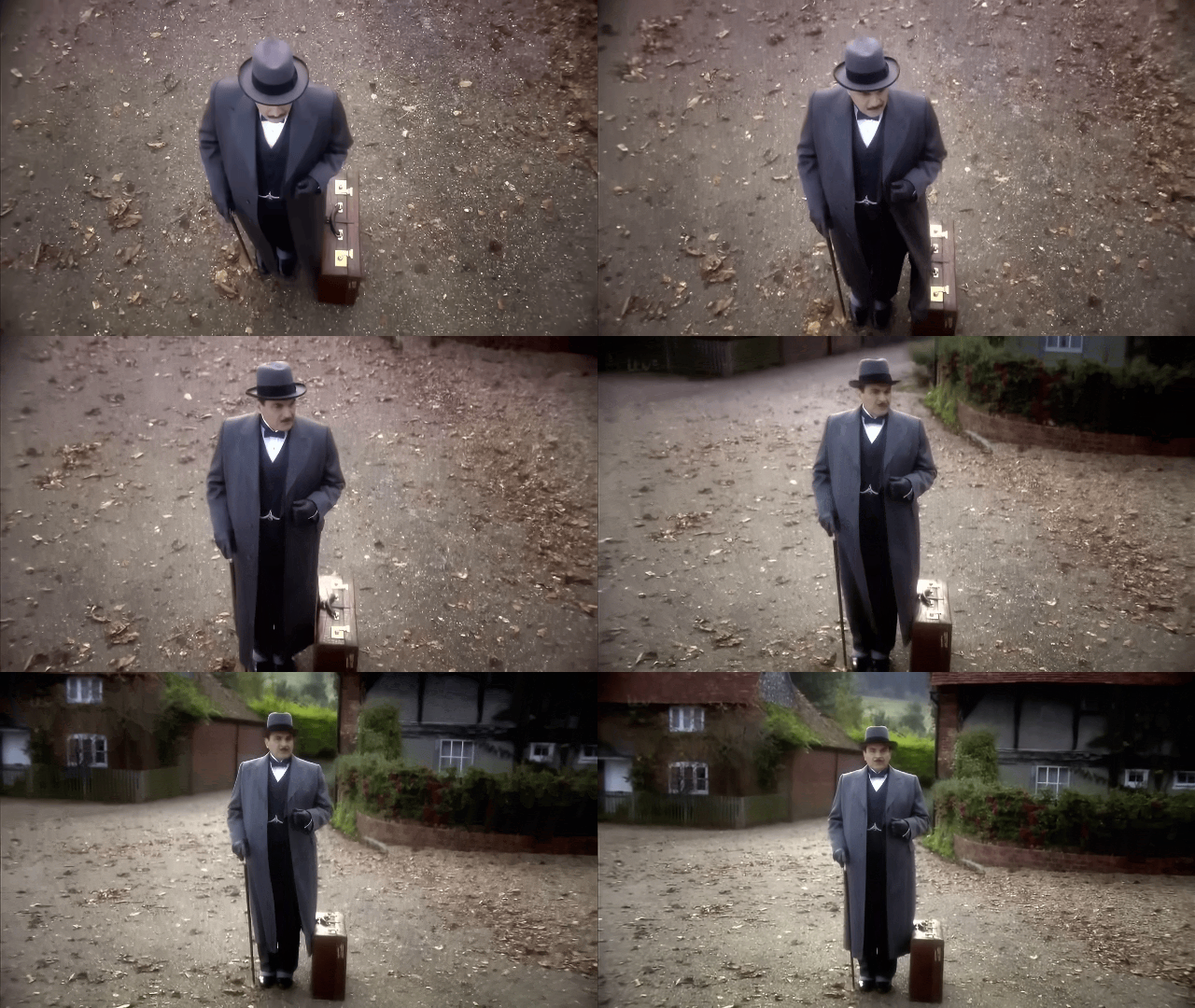
Sir David Suchet was born on May 2, 1946. While he has had an extensive career in the theatre, movies and television, he will always be known for one role in particular: Hercule Poirot.
Suchet was in his early 40s when he signed on to play Agatha Christie’s detective with the egg-shaped head and exacting (if not exasperating) mannerisms, and he knew this would be the role of a lifetime. He was committing to playing the part, it was hoped, in every single short story and novel.
(more…)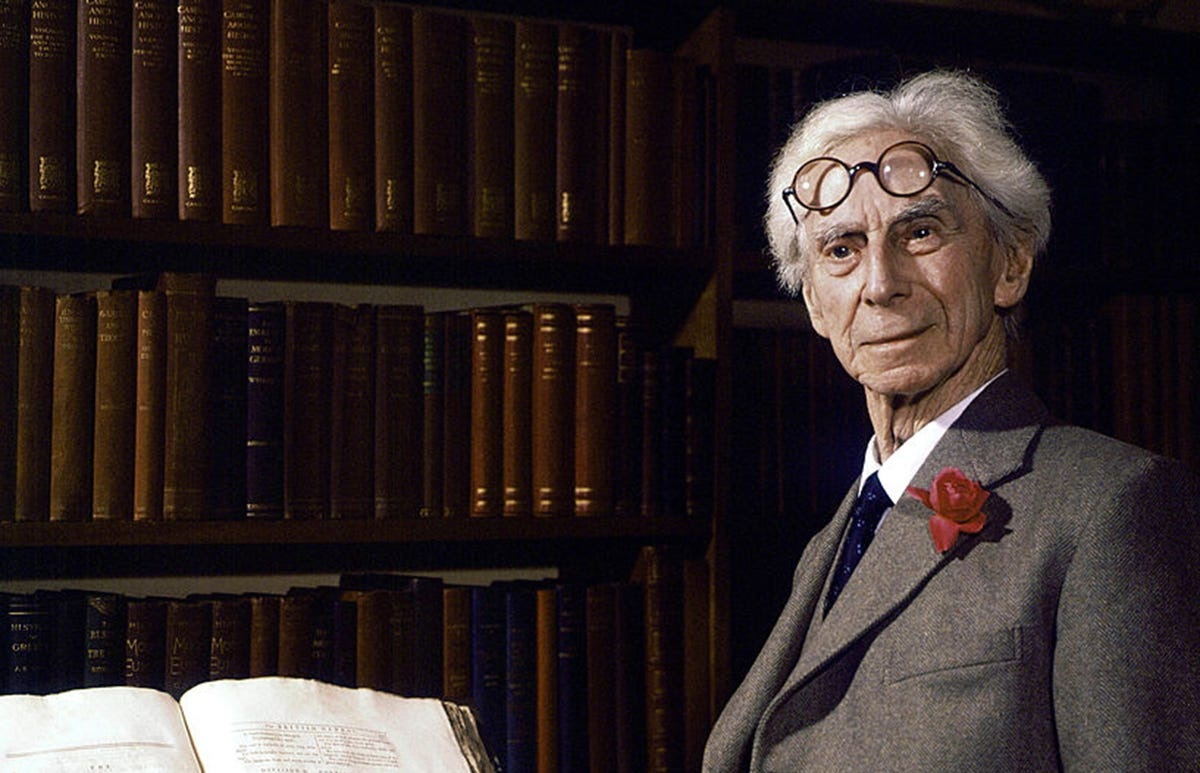
“Fear is the main source of superstition, and one of the main sources of cruelty. To conquer fear is the beginning of wisdom, in the pursuit of truth as in the endeavor after a worthy manner of life.”
— Bertrand Russell
Over the years, optimistic humans believe that fear can be conquered, and superstitions can be eradicated. One can wish.
Almost six decades after the death of Bertrand Russell, who lived to be 97, we are still surrounded by fear, superstition and, yes, cruelty. The politics of our age are entwined in them.
(more…)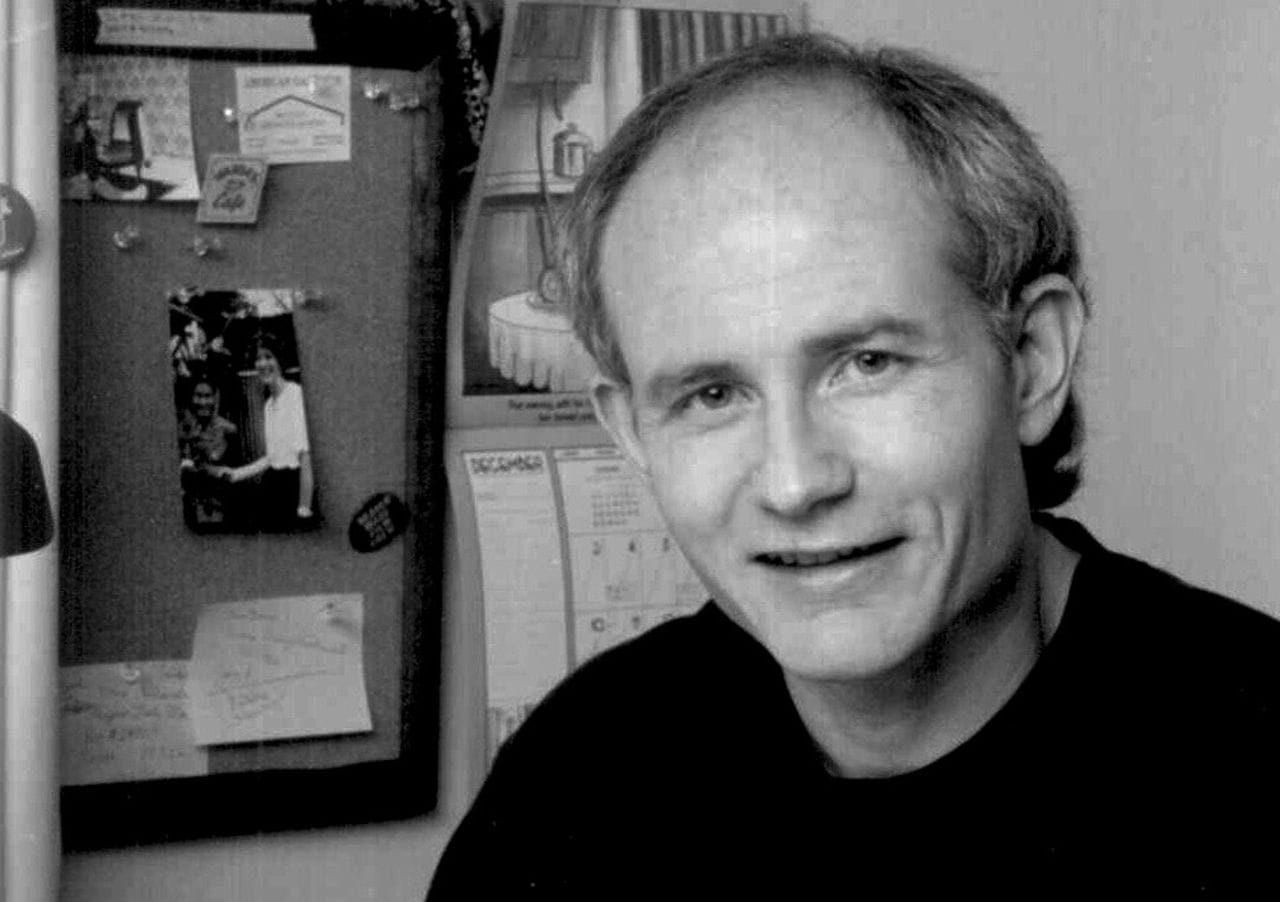
“I don’t know where my ideas come from. I will admit, however, that one key ingredient is caffeine. I get a couple cups of coffee into me and weird things just start to happen.”
— Gary Larson
“Weird things” of course were what brought millions of people back to Larson’s much-loved, much-missed strip The Far Side, which ran in newspapers around the world for only 15 years. Larson put away his pens and inks in early 1995, when he was just 44.
In 2019, Larson delighted fans by bringing The Far Side into the digital world, launching TheFarSide.com. You can get a “daily dose” of Larson, and get nostalgic about some greatest hits. (A bit of St. John’s comedy history: Mark Critch’s teenage troupe was called Cat Fud, named after a famous Larson cartoon.)
(more…)
“My parents were less than thrilled when they got the news. I can understand that: a life in the arts is chancy in at least a hundred ways, ninety of them financial. My mother said, ‘Well, if you’re going to be a writer you’d better learn to spell.’ Spelling was not then, and is not now, my strong point. ‘Others will do that for me,’ I proclaimed. And so they have. Thanks very much, copy editors.”
— Margaret Atwood
In her recently published Book of Lives: A Memoir of Sorts, Margaret Atwood writes about telling her parents that a writer’s life was for her.
The nod to copy editors is significant, and I’m sure other copy editors would find it gracious. Not a few would say it’s unusual, too: writers (often rightfully) get praise for their ingenuity, but there’s generally not much discussion of the importance that copy editors play in the editorial process.
(more…)
“Space belongs to all of us. There is science in dance and art in science.”
— Mae Jemison
The first Black woman to go to space, Mae Jemison has sought out pursuits in the sciences — and in the arts, too. Before she was selected to fly aboard the American space shuttle Endeavour in 1992, she had already earned degrees in chemical engineering and then medicine.
Like many young girls, Jemison had dreams of being a ballet dancer. Her mother pointed her in another direction:
(more…)She considered becoming a professional dancer, but her mother advised her to do so after college, saying “You can always dance if you’re a doctor, but you can’t doctor if you’re a dancer.”
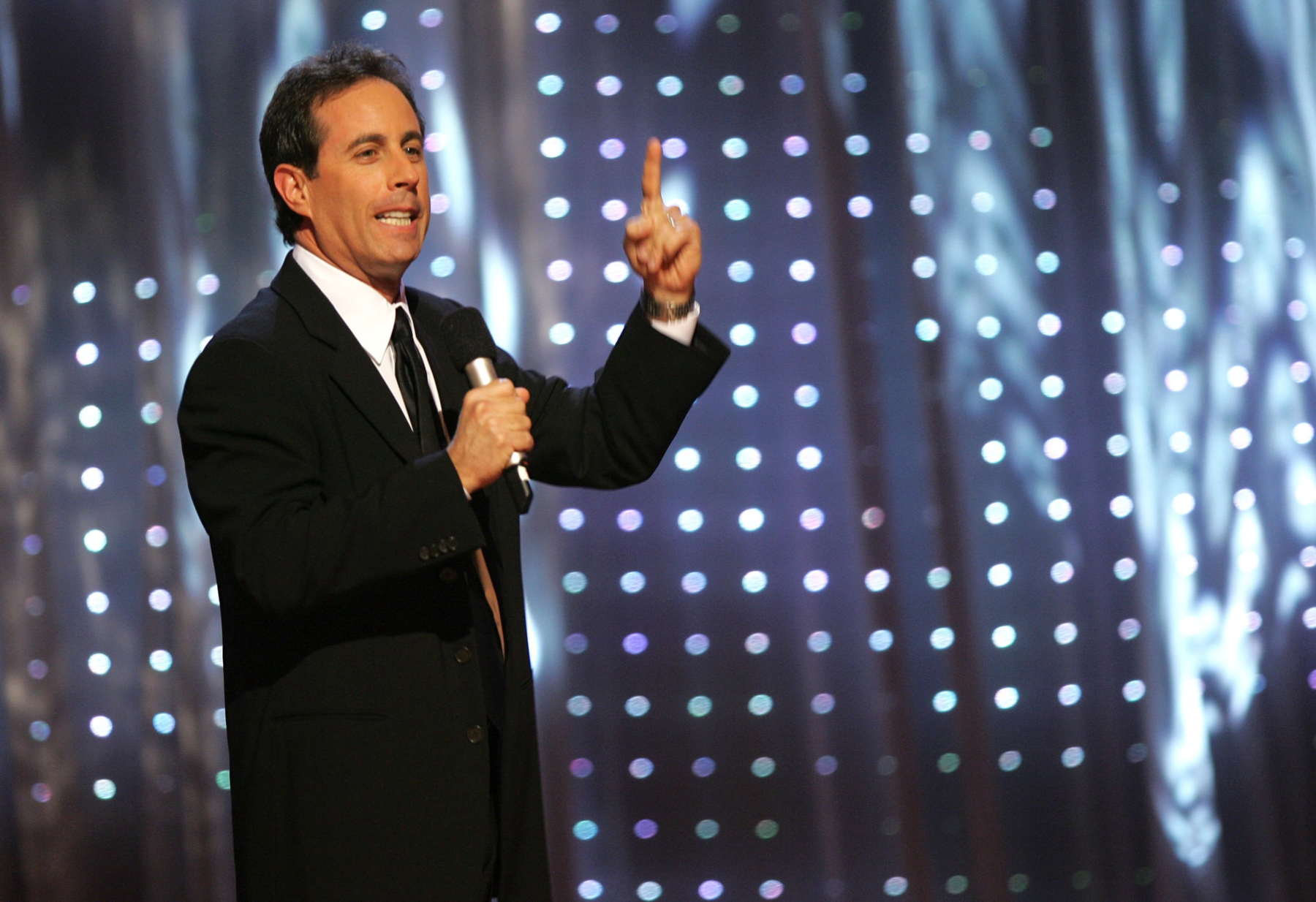
“I’ve found I have started to use small-time mob-boss tactics in my house. I figure out things that they like, and then threaten to hurt those things.”
— Jerry Seinfeld
In November 2006, Jerry Seinfeld was a guest on Late Night with David Letterman. It was a much-watch episode, because he had hoped Michael Richards (who had spewed racist bile at a meltdown of a performance) would appear by satellite.
Everyone tuned in to see Richards try to salvage his reputation; in the interim, Seinfeld and Letterman had a pleasant, witty chat.
One of the topics was about parenting, and Seinfeld described how he was handling being the dad to three kids under six. Here’s that part of the conversation, cued up.
(more…)
“Every baseball crowd, like every theatre audience, has its own distinctive attitude and atmosphere. You can usually tell as they are coming into the park whether it is going to be a happy, responsive crowd or a dead and sullen one.”
— Bill Veeck
The baseball team owner and impresario Bill Veeck made that comment decades ago, in his colourfully titled memoir Veeck — As In Wreck, which a) answered readers’ questions about how to pronounce his name and b) gave them a hint of what kind of life he led. Veeck died in 1986.
I’ve been to a few major league games in a few cities over the years, and I have to say, the crowd can be the show. Years ago, on a family vacation in San Diego, I got some tickets for an afternoon Padres game for Nick and me while Martha was at a conference. We were seated amongst season ticket holders who all knew each other, and my memories are of their warmth and friendship rather than the game itself.

I can tell my mom’s mood from 20 paces. I often see her in the corridor, leaning on her walker, and she turns as she hears me call her name.
Her face might break your heart: it’s filled with anxiety, sometimes fear. “Oh, John, thank God you’re here,” she will often say.
My mother, Sheila Gushue, was formally diagnosed with Alzheimer’s almost two years ago, and several months after that, she moved into a memory care floor here in St. John’s.
A scene like the one above has happened many times, especially after supper, when I arrive to spend some time with her before bed.
I’ve learned what to do, and quickly.
(more…)
“Although it may be true to say that an American is a creature of four wheels, and to point out that American youth attributes much more importance to arriving at driver’s-license age than at voting age, it is also true that the car has become an article of dress without which we feel uncertain, unclad, and incomplete in the urban compound.”
— Marshall McLuhan
This insight into American values comes from a Canadian observer. Marshall McLuhan included it in Understanding Media: The Extensions of Man, which was first published in 1964, and which remained in print for years, often as a popular paperback.
This is the book that popularized McLuhan’s belief that “the medium is the message,” which — in the age when television had rapidly become the dominant technology in the home — turned McLuhan into an unlikely celebrity.
His insight into cars is less well known, but still apt. For decades, auto companies have deployed hefty resources in persuading consumers that their car is just perfect … for you. Consumers shop for many factors (quality, longevity of use, safety) but the branding that companies do cannot be denied as being influential. Close your eyes and imagine the logos and symbols of some manufacturers; most people will have no trouble thinking of them, even if they’ve never driven them.
When McLuhan talked about “the car has become an article of dress without which we feel uncertain, unclad, and incomplete,” it was the age of the Mustang and the GTO, when youth culture and car culture felt intertwined.
It’s a different era now, and in many ways our cities are paying the price for a car-centered culture. Decades on, we have cities built on principles that assume that most people have cars and will commute to get to work, shopping, schools, etc. In my own fairly small city, it bothers me that competing municipalities each sponsored subdivisions for a tax base, all based on the assumption of car ownership.
I read Marshall McLuhan’s six-decade-old observation ith that sad reality of sprawl on my mind. People may well “dress” themselves with their cars but the “urban compound” he invokes has not necessarily improved because of this motor-driven fashion.

“I was given the illusion of power while the real deciders had private calls without me, and you can only be undermined so many times on an adaptation of your own life before you start to question whether you even know who you are.”
— Lindy West
In 2016, the American writer Lindy West published Shrill: Notes from a Loud Woman, a collection of essays on fat-shaming, sexual violence, pop culture and many other things. West had been writing for newspapers, magazines and websites for years, gaining a reputation for being vulnerable, fearless and feminist.
Three years later, a television series also named Shrill — starring Aidy Bryant, who was at that time still in the Saturday Night Live cast — made its debut.
(more…)
“I had friends, for sure. Lots of them. But I still really enjoyed, mostly, being alone and going home and getting under the dining room table after school. And there was this long cloth over it. I had all my colour books and crayons and snacks. And I just liked it. I was always making something or building something that was a secret.”
— Erykah Badu
One of the things we need to learn when we’re growing up is the distinction between loneliness and being alone. They are very different things.
The singer and actor Erykah Badu made this comment during an NPR interview in 2024, while she was promoting a project on Netflix.
I responded to this part of the interview. I grew up in a house with just four of us, but grew up in a neighbourhood in St. John’s that, at the time, was just crawling with children. Tons of them. There were enough kids to form soccer or baseball teams on short notice for a pickup game.
(more…)